
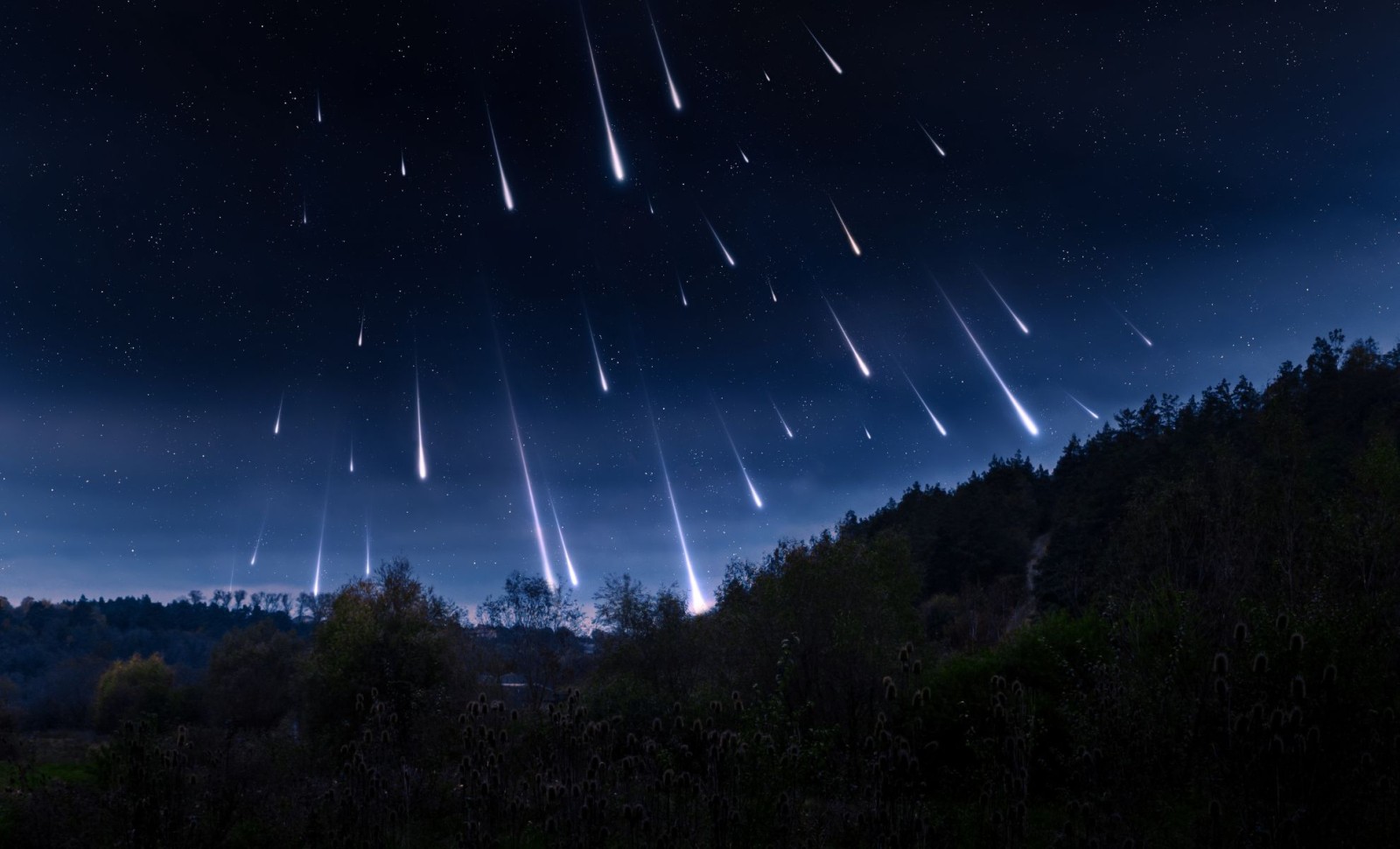
Recent findings indicate that the nearby star HD 7977 passed close to our solar system about 2.5 million years ago, potentially sending a torrent of comets from the farthest edges of the solar system toward Earth. This celestial event might have influenced significant climate changes that played a role in early human development.
For years, researchers have debated the causes behind the notable climate transformations marking the Pliocene-Pleistocene boundary. A new hypothesis from Avi Loeb, an astrophysicist at Harvard, suggests that the star HD 7977’s passage disrupted the Oort Cloud, a distant shell of icy bodies surrounding the solar system, potentially launching a cascade of comets aimed at our planet.
Understanding the Oort Cloud and Stellar Influences
The Oort Cloud is an extensive region filled with icy objects and comets, stretching well beyond Pluto’s orbit. The study reports that when a star ventures near this fragile region, its gravitational forces can alter comet trajectories, sending many hurtling toward the inner solar system. The researchers focused on HD 7977, which passed near the Oort Cloud roughly 2.5 million years ago, coinciding with the dawn of early humans on Earth.

The team’s models suggest that HD 7977’s gravity likely nudged numerous comets inward, intensifying the comet flux near Earth and possibly sparking environmental shifts during the crucial Pliocene-Pleistocene interval, the era that heralded the onset of ice ages.
Simulating the Effects of HD 7977’s Close Encounter
To gauge the star’s impact, simulations were conducted to model HD 7977’s flyby and its gravitational effect on the Oort Cloud. Depending on the star’s proximity to the Sun, between 2,300 and 13,000 astronomical units (AU), the risk of comet impacts on Earth shifted considerably. The closest predicted approach, at 2,300 AU, notably increased the odds of a kilometer-sized comet colliding with Earth, supporting the possibility of a comet shower during that period.
These findings imply that HD 7977’s passage could have agitated the Oort Cloud, boosting comet traffic toward Earth and potentially influencing the climate fluctuations seen during that geological era.
Implications for Early Human Development
The alignment of this hypothesized comet bombardment with the rise of ancient humans is particularly compelling. While asteroid impacts have traditionally been linked to climate shifts during the Pliocene-Pleistocene boundary, Loeb’s research offers an alternative view where a comet surge caused by a stellar flyby might have similarly destabilized Earth’s environment.
Such increased comet activity could have made Earth’s climate more volatile, leaving a mark on the evolutionary pathway of early hominins.
Though speculative, this concept expands the scope of potential cosmic factors that may have shaped our planet’s history and even influenced the emergence of human life. Confirming geological records supporting this theory might reshape our understanding of Earth’s evolutionary drivers.
While unconventional, this idea highlights the possible profound influence of celestial events on Earth’s environmental and biological progress.
- Categories:
- Space








0 comments
Sign in to Comment