
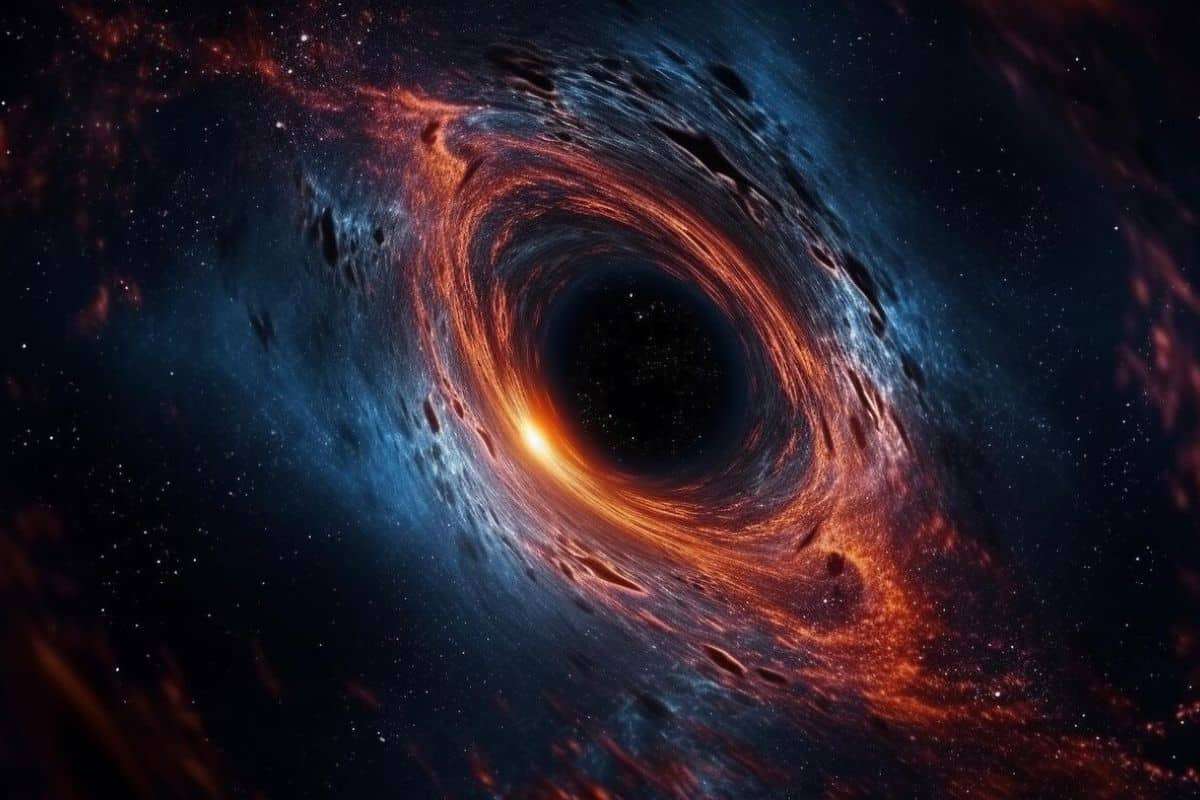
Astrophysicists have uncovered a remarkable collection of 300 exceptionally rare black holes, potentially unlocking long-standing puzzles about how supermassive black holes originate and develop over time.
Utilizing the Dark Energy Spectroscopic Instrument (DESI), scientists examined the light from 410,000 galaxies, revealing the largest ever assembly of intermediate-mass black hole prospects. These results, shared in the Astrophysical Journal, provide fresh perspectives on black hole growth and their influence on galaxy formation.
Bridging the Gap in Black Hole Growth
A persistent challenge in astronomy has been to clarify the evolutionary stages that transform small black holes into immense cosmic giants weighing billions of times our Sun. Black holes are typically categorized as either stellar-mass (ranging from a few to dozens of solar masses) or supermassive (millions to billions of solar masses).

Yet, direct evidence for intermediate-mass black holes (IMBHs), whose masses lie between 100 and 100,000 times that of the Sun, remained elusive. These could represent the critical stage linking the small and enormous black holes. While some potential IMBHs had been detected previously, none had been conclusively verified—until this landmark study.
Methodology Behind the Breakthrough
The Dark Energy Spectroscopic Instrument (DESI), situated on the Nicholas U. Mayall 4-meter Telescope in Arizona, was primarily created to map the universe’s expansion through millions of galaxies. However, its extensive dataset also enabled an unprecedented search for black holes.
Scientists scrutinized emissions from over 2,500 dwarf galaxies exhibiting active galactic nuclei (AGN), which result from material accreting onto black holes. Within this group, 300 objects were identified as candidate IMBHs, tripling the known population and establishing the largest sample of intermediate-mass black holes so far recorded.
Significance of Active Galactic Nuclei
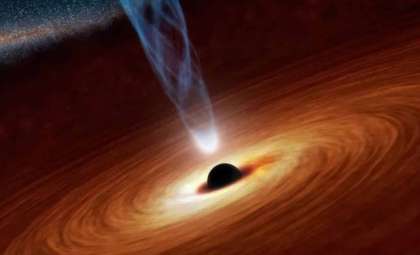
When a black hole feeds on nearby matter, it generates intense radiation known as an active galactic nucleus (AGN). These luminous centers act as markers, enabling astronomers to locate otherwise concealed black holes.
Lead investigator Ragadeepika Pucha from the University of Utah highlighted the role of AGNs: “When a black hole in a galaxy’s core is actively consuming matter, it emits considerable energy, forming what we call an active galactic nucleus,” Pucha explained. “This brilliant activity acts as a signal, revealing hidden black holes within these smaller galaxies.”
Unique Characteristics of These Black Holes
Although adding 300 IMBH candidates is a significant leap, the research also introduced unexpected challenges. It was believed IMBHs would predominantly exist in dwarf galaxies, but only 70 of the identified intermediate black holes came from such galaxies. This discovery questions prior theories and points to the possibility that IMBHs might form in a diversity of cosmic environments.
The findings imply several possible routes for black hole formation. Earlier models suggested supermassive black holes expanded mainly through mergers over billions of years. Now, evidence hints that other mechanisms, such as the direct collapse of massive gas clouds, could contribute substantially to their creation.
Black Holes and Galactic Evolution
Black holes hold a fundamental role in shaping the destiny of galaxies by strongly influencing the dynamics of stars and gas. Their immense energy output can control star formation by heating and disrupting surrounding matter. The newly discovered IMBHs in unusual locations suggest a more intricate interplay between black holes and galaxy development than previously understood.
Future research aims to determine whether these intermediate black holes exhibit consistent growth patterns or if their formation heavily depends on their cosmic surroundings.
The identification of 300 intermediate-mass black holes marks a pivotal advancement in understanding cosmic evolution. These elusive black holes could be key to unveiling the origins of supermassive black holes, and ongoing work with DESI promises to deepen our knowledge of these fascinating celestial phenomena.
- Categories:
- Space






0 comments
Sign in to Comment