
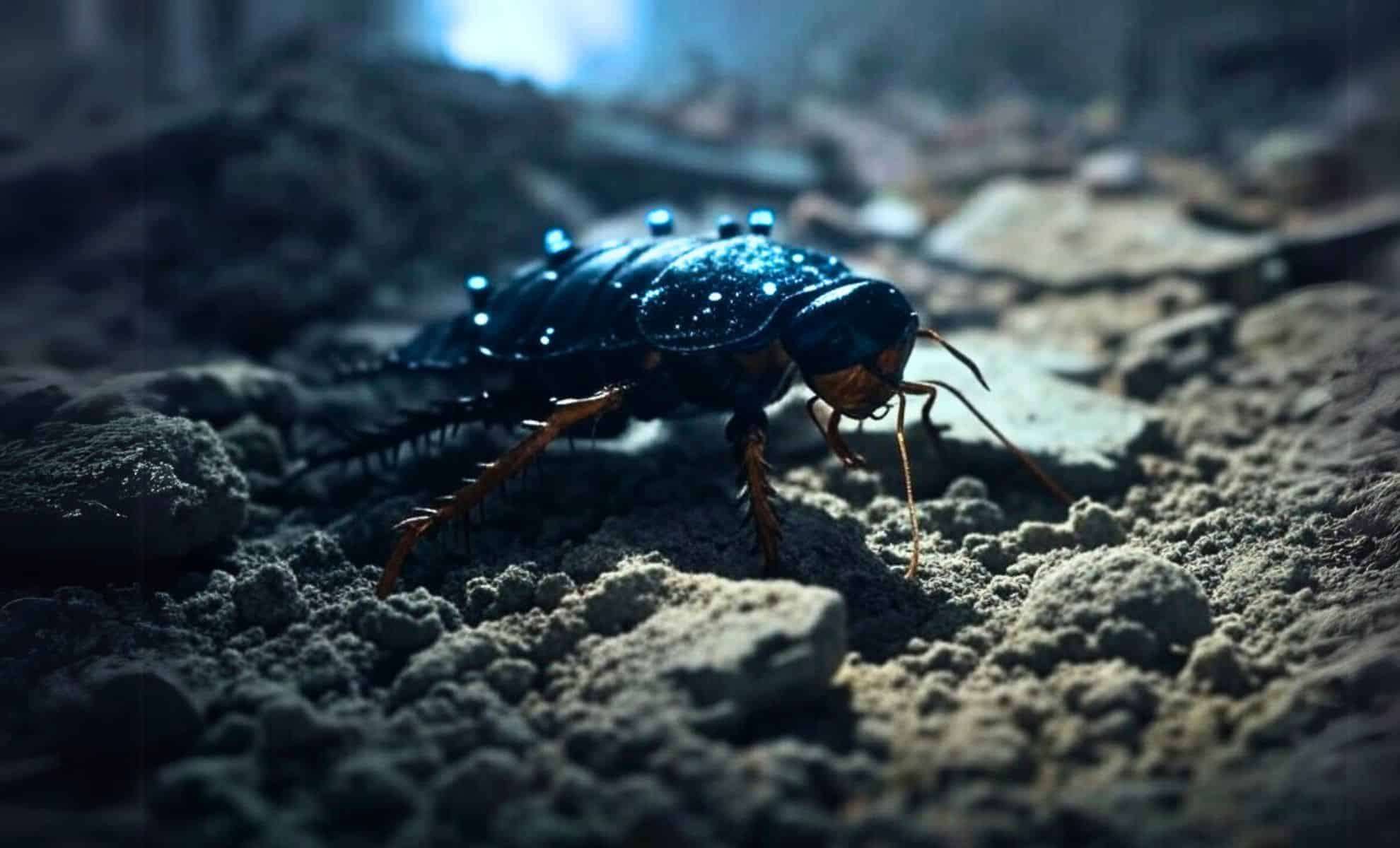
Researchers have started utilizing an unexpected ally for challenging operations: cyborg cockroaches. These insects, fitted with compact electronic devices, are capable of maneuvering through disaster-stricken environments, accessing confined spaces, and accomplishing tasks where conventional robots face limitations.
Instead of designing miniature robots entirely from the ground up, scientists are combining biological traits with technological advancements to develop a new category of biohybrid agents.
Integrating Biology with Engineering
Cockroaches are famed for their durability. Their ability to endure harsh conditions, slip through narrow openings, and operate on minimal energy distinguishes them. Unlike traditional machines that demand constant upkeep and energy supply, these insects offer a naturally sustainable platform.

By installing minute controllers on their exoskeletons, scientists can steer their movements using gentle electrical signals. While the cockroaches maintain their innate navigation skills, they can be guided remotely when required.
This technique is being advanced by Mochammad Ariyanto of Osaka University in collaboration with Diponegoro University in Indonesia. Their objective is to leverage nature’s efficiency instead of complicating robotic design unnecessarily.
Accessing Areas Beyond Human and Robotic Reach
Disasters like earthquakes, fires, and structural collapses pose serious risks to rescue teams. Human intervention in unstable settings is perilous, and conventional robots often falter amid debris, narrow spaces, and power shortages.
Cyborg cockroaches present a surprising alternative. They can maneuver through rubble, infiltrate minute gaps, and collect live data. Outfitted with sensors, they gauge air quality, temperature, and structural integrity, transmitting vital information back to rescue crews.
Compared to bulky robots dependent on heavy batteries, these insects operate on very low energy, making them well-suited for prolonged assignments.
Operational Mechanics of Cyborg Cockroaches
The concept behind these cyborg insects is elegantly simple. A microcontroller is fastened atop the cockroach, linked to its antennae. If the insect veers off route, mild electrical stimuli gently coax it back in line.
The device's featherlight design ensures it does not disrupt the cockroach’s natural movements. Generally, the insect’s instincts guide it, with the system stepping in sparingly.
The technology is also non-invasive, allowing the electronics to be detached so the insect can resume its normal life after completing the task.
An Economical Solution Compared to Mini Robots
Creating tiny robots adapted for complex terrain is costly, requiring investment in intricate components, sophisticated sensors, and AI systems to replicate simple insect behaviors.
Conversely, cyborg cockroaches utilize a pre-existing biological system refined over millions of years. These living machines are self-regenerative, eliminating the need for manufacturing at scale.
Keisuke Morishima at Osaka University suggests that cyborg insects can complete missions with less resource expenditure and energy compared to purely mechanical robots.
Exploring Broader Uses for Cyborg Insects
The potential roles for these biohybrids extend past disaster scenarios. Archaeologists could deploy them in fragile dig sites to prevent structural harm. Engineers might leverage them for investigating ventilation ducts, pipelines, or subterranean tunnels.
Some teams are also exploring the application of different insects, including spiders, for ascending tasks where cockroaches might be less effective.
Additionally, emerging research looks at aquatic exploration, exploiting the cockroaches’ tolerance for low oxygen conditions to aid in deep-water studies.
The research findings appear in the journal Soft Robotics.











0 comments
Sign in to Comment