
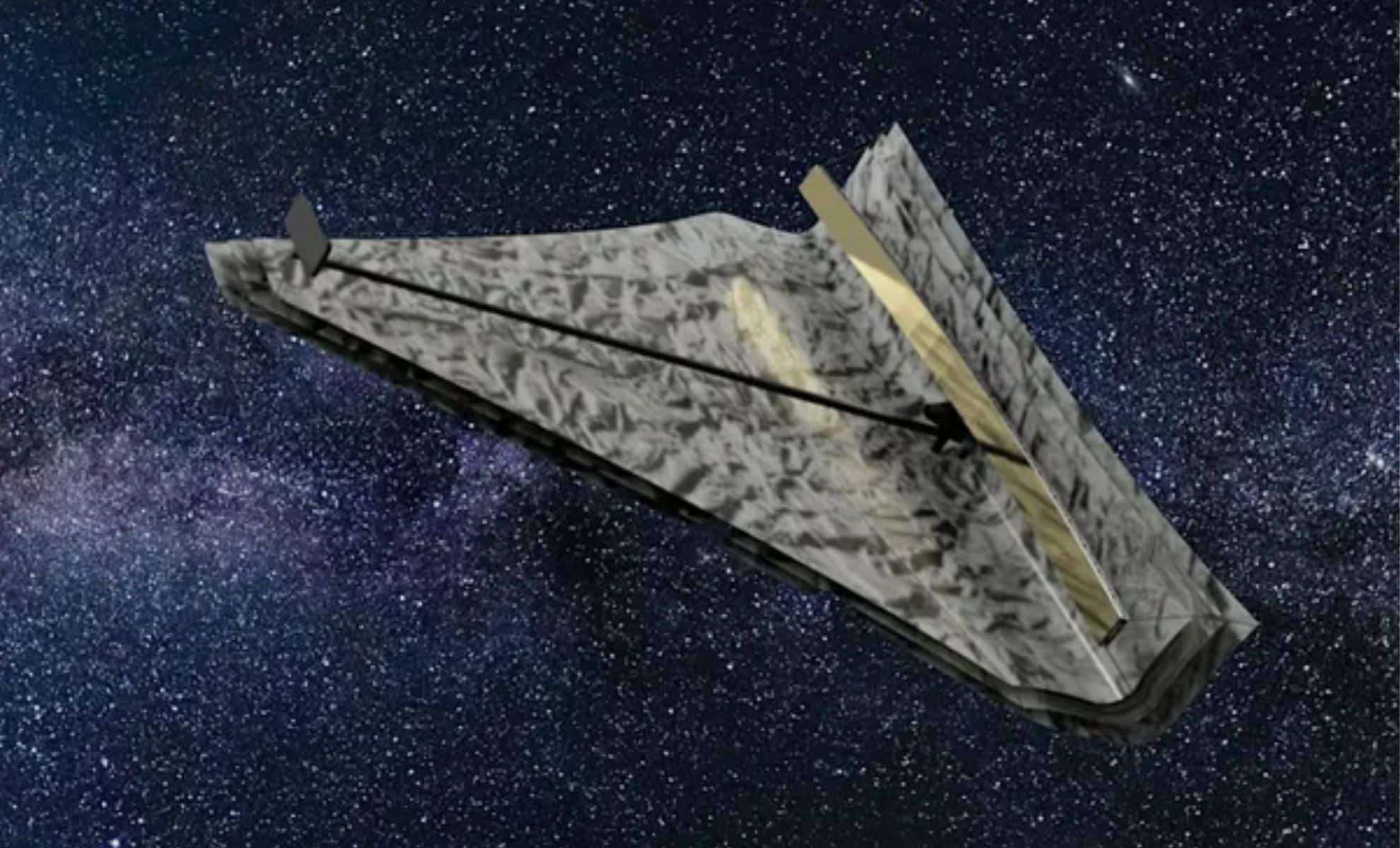
A team of astrophysicists, headed by Heidi Newberg at Rensselaer Polytechnic Institute, has introduced a novel concept for a space telescope featuring a rectangular mirror. This groundbreaking design, recently detailed in a study published in Frontiers in Astronomy and Space Sciences, promises enhanced efficiency and lower costs compared to traditional circular mirror telescopes like the James Webb Space Telescope (JWST). The rectangular configuration could dramatically boost our ability to detect planets in the habitable zones around stars resembling our sun, accelerating the pursuit of an "Earth 2.0."
Redefining Telescope Architecture: The Rectangular Mirror Advantage
Historically, space telescopes have utilized circular mirrors, a design honed over decades of optical engineering. Yet, the quest to find distant Earth-like exoplanets demands fresh approaches. Newberg explains, “We show that it is possible to find nearby, Earth-like planets orbiting sun-like stars with a telescope that is about the same size as the James Webb Space Telescope, operating at roughly the same infrared wavelength as JWST, with a mirror that is a one by 20 meter [65.6 by 3.3 foot] rectangle instead of a circle 6.5 meters [21.3 feet] in diameter.”
This rectangular telescope concept offers several crucial benefits over the conventional circular design. The proposed mirror, measuring 20 meters by 1 meter (approximately 65.6 feet by 3.3 feet), is more practical to build and deploy than a comparably capable, much larger circular mirror. Additionally, this shape enables the telescope to precisely align its optics with specific target exoplanets, maximizing detection potential based on each planet’s position relative to its host star.

The innovation here is that a rectangular mirror can deliver image resolutions equal to or better than larger circular mirrors while simplifying production and lowering costs. This paves the way for smaller, more specialized space telescopes dedicated to finding Earth-like worlds within habitable zones, offering a quicker and more accessible route to discovery.
Focusing on Exoplanet Atmospheres: Harnessing Infrared Light
Finding Earth analogs involves targeting planets residing in their stars’ habitable zones, where liquid water might exist. This is where the rectangular telescope shines by operating around the 10-micron infrared wavelength, a crucial range for detecting atmospheric water vapor. The JWST has already proven the value of this wavelength by identifying water in multiple exoplanet atmospheres.
Newberg’s research highlights the need to concentrate on these infrared wavelengths to increase the odds of spotting planets with life-supporting conditions. Because exoplanets are often billions of times dimmer than their stars in visible light, infrared observation enhances contrast, making planets more noticeable. According to the study, “We show that this design can, in principle, find half of all existing Earth-like planets orbiting sun-like stars within 30 light years in less than three years.”
By optimizing infrared sensitivity at these wavelengths, the rectangular telescope could substantially improve detection of water-rich exoplanets, prime candidates in the extraterrestrial life search.
Comparing Approaches: Rectangular Mirrors Versus Conventional Designs
One of the principal obstacles in developing space telescopes lies in combining large apertures with launch feasibility. Circular mirrors exceeding 8 meters in diameter present engineering challenges, requiring complex folding mechanisms to fit within rocket fairings. Alternatively, the rectangular mirror design proposed by Newberg’s team offers a streamlined, efficient structure that is easier to launch while maintaining the resolution needed to study distant exoplanets.
As Newberg notes, “The difference is that all its collecting area would be in the orientation that is needed to image a planet, with nothing wasted.” This focused approach directs the telescope’s capacity toward the regions where Earth-like planets are most probable, boosting efficiency and reducing costs. The simplified engineering footprint further eases deployment complexities.
Accelerating the Hunt for Earth 2.0: Transforming Exoplanet Exploration
The impact of this rectangular telescope design extends well beyond just enhanced detection capabilities. By honing in on precise celestial targets, the instrument could dramatically shorten the time needed to identify Earth-like exoplanets near our solar system. The study projects the telescope could uncover roughly 30 viable Earth analogs within 30 light years in just a few years.
This represents a significant advancement over current missions, which have struggled to locate large numbers of such planets. Rapid surveying of nearby stars will offer deeper insights into how common habitable planets truly are and significantly elevate the likelihood of discovering an Earth 2.0. Newberg concludes, “If there is about one Earth-like planet orbiting the average sun-like star, then we would find around 30 promising planets.”
- Categories:
- News








0 comments
Sign in to Comment