
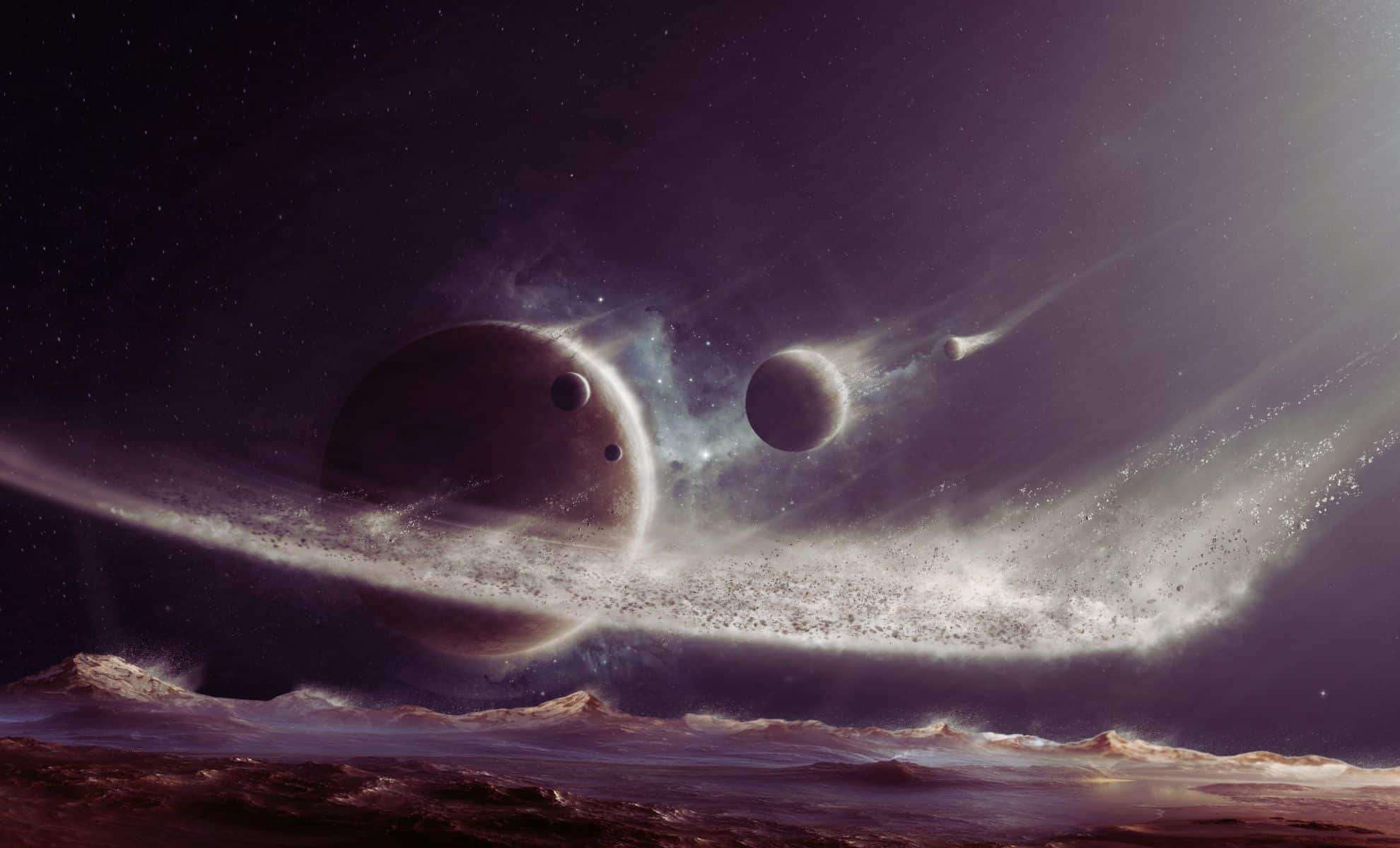
Recently published in The Astronomical Journal, a groundbreaking study suggests that free-floating planets, once thought to drift completely alone, might instead host surrounding material. Observations using the James Webb Space Telescope reveal that a number of these isolated giant planets possess dusty disks—features commonly linked to nascent planetary systems. This finding hints at the possibility that moons or small planetary bodies could form around these lonely wanderers between stars.
Detection of Dusty Rings Around Rogue Giants
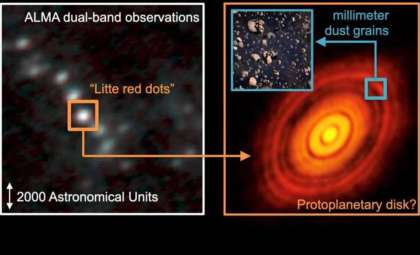
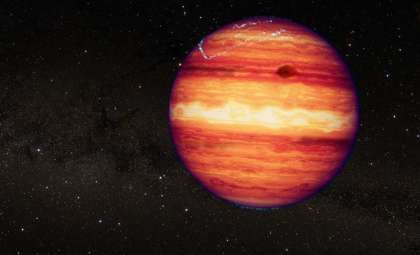
Challenging traditional ideas on planet formation, an international group examined eight hefty objects moving independently within the Ophiuchus molecular cloud complex. Each mass ranges approximately five to fifteen times that of Jupiter. Unlike planets bound to a star, these rogue bodies traverse the galaxy solo. Employing sensitive infrared imaging, the team identified dust and gas disks encircling at least six of these substantial free-floating planets.
These circumplanetary disks bear a striking resemblance to the protoplanetary disks observed around young stars, known as the cradles for moons and planets. Notably, the crystalline silicate particles within these disks are akin to those found in classic planetary birth environments. “This reveals that the ingredients needed to build planets exist even around isolated objects barely exceeding Jupiter’s mass,” explains co-author Markus Damian. The discovery challenges long-standing beliefs regarding the environments favorable for planetary system development.


Rethinking Planetary Formation Without Stars
The conventional view links planetary system birth closely to stars, like our own Sun’s early disk of dust and gas. However, this new research indicates that massive rogue planets might undergo a comparable formation process absent a central star’s gravity. These findings could reshape our fundamental understanding of how planetary systems evolve.
“Our observations suggest that objects akin in mass to giant planets may give rise to their own miniature planetary setups,” says Aleks Scholz, an observational astronomer at the University of St Andrews. “Such systems might mirror scaled-down versions of solar systems, reduced by two orders of magnitude in scale and mass. Whether these formations actually develop remains to be seen.” Confirming the formation of moons or moon-like companions within these disks would vastly expand where we might find potentially habitable worlds.
Exploring a New Realm of Planetary Systems
Beyond moon formation, this discovery points to a novel class of cosmic structures: miniature solar systems orbiting planet-sized bodies without stellar hosts. What was once speculative science fiction is now becoming a serious scientific frontier, suggesting a broader variety of planetary architectures than previously realized.
“The implication is that planetary system genesis is not limited to stars but may also occur around isolated starless planets,” notes Damian. For exoplanet scientists and astrobiologists, this widens the search for moons and habitats beyond the traditional star-centered framework. It also highlights the James Webb Space Telescope’s powerful capability to reveal deep-space phenomena inaccessible to Earth-based instruments.
- Categories:
- News



0 comments
Sign in to Comment