
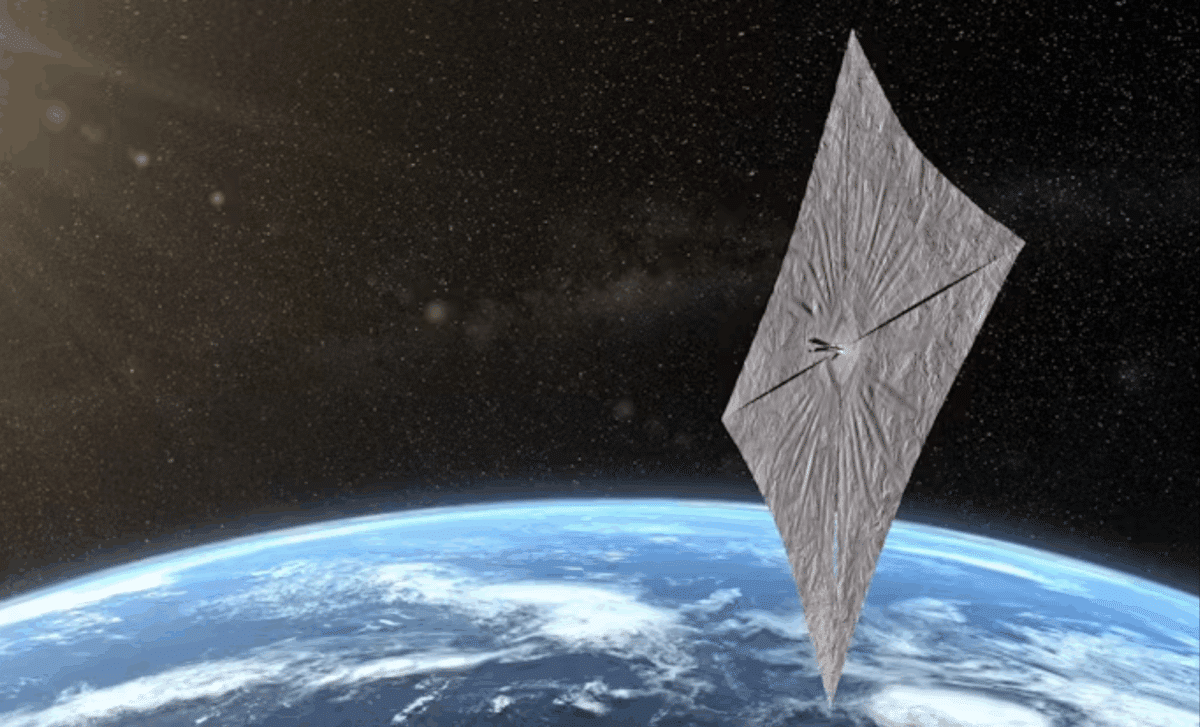
Reflect Orbital, an innovative startup based in the United States, has unveiled an ambitious concept to deliver "sunlight on demand" by employing satellites to bounce sunlight back down to Earth during nighttime hours. While this futuristic approach has garnered significant attention, it simultaneously triggers critical alarm from astronomers. As reported by The Conversation, this pioneering technology could offer exciting advantages but also pose serious challenges.
Aiming to Illuminate the Night: The Idea Behind Reflect Orbital’s Plan
Reflect Orbital proposes deploying a vast network of satellites equipped with large mirrors that would capture and reflect sunlight onto Earth’s surface. This strategy aims to extend the effectiveness of solar power by enabling continuous energy generation even after sunset. The company’s initial demonstration involves launching a single test satellite, Earendil-1, slated for 2026. Their long-term goal is to expand the fleet to roughly 4,000 satellites by 2030, all designed to direct sunlight toward solar farms, maintaining energy supply around the clock.
Beyond just boosting renewable energy, this visionary concept rethinks how space technology can help solve energy shortages on Earth. Positioned roughly 625 kilometers above the planet—comparable to the altitude of the International Space Station—these satellites would reflect sunlight efficiently to provide a continuous and controllable light source for energy production through carefully aimed mirrors.

How Reflect Orbital Plans to Direct Sunlight From Orbit
At its foundation, this approach leverages a classic method: using mirrors to redirect sunlight. However, the scale here is unprecedented. Satellites fitted with reflective panels as large as 54 meters wide would attempt to focus sunlight precisely enough to provide beneficial illumination without creating hazardous hotspots on the surface below.
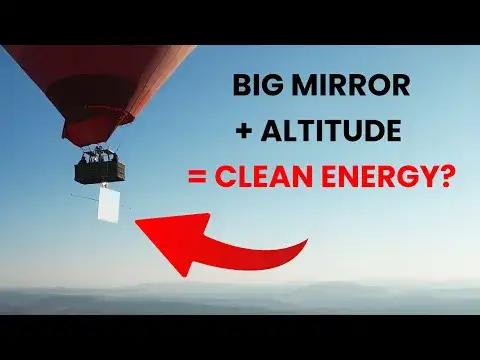
During preliminary trials involving mirrors attached to a hot-air balloon, Reflect Orbital demonstrated that even modest-sized reflectors can cast powerful beams onto solar cells. Scaling this concept to orbit, however, introduces complexity: sunlight reflected from 625 km altitude disperses considerably, resulting in light intensity about 15,000 times weaker than midday Sun but still notably brighter than a full Moon.
The company aims to supply nighttime sunlight at about 20% of daytime intensity to aid solar operations. Since satellites orbit Earth at speeds over 7 km/s, continuous illumination at a single location demands a constellation of thousands of units. Ambitiously, Reflect Orbital anticipates deploying as many as 250,000 satellites to achieve uninterrupted light beams, although such numbers raise concerns about overcrowding in low Earth orbit.
Potential Light Pollution Challenges for the Astronomical Community
Despite the solar energy benefits, this initiative faces strong opposition due to its implications for night sky visibility. Astronomers and environmental advocates warn that the intense artificial illumination could overshadow natural celestial light, severely hampering astronomy. Reflected light from these satellites may appear as bright glints in the sky, interfering with observations and complicating astrophysical studies.
Even a single satellite could cast light rivaling that of a full Moon. The deployment of up to 250,000 satellites would drastically disrupt astronomical work by cluttering the night sky with artificial brightness, making it difficult to track distant stars and other cosmic objects. Additionally, there are safety concerns over the potential eye damage from the concentrated satellite reflections if inadvertently viewed directly.
With space already becoming congested with satellites and debris, this plan exacerbates the challenge, risking permanent degradation of dark skies and hindering valuable space science research.
Environmental and Ecological Impacts of Artificial Night Illumination
The ecological repercussions of continuously reflecting sunlight after dark must also be carefully evaluated. Light pollution is known to disturb wildlife, particularly animals that depend on natural darkness for survival. Species such as nocturnal birds, insects, and mammals rely on nighttime cues for navigation and reproduction, and excessive artificial lighting can lead to disorientation, disrupted behavior, and increased mortality. Expanding reflected sunlight especially near solar farms could generate unforeseen effects on ecosystems.
Human health is another significant consideration. Although extending daylight artificially might seem convenient, exposure to artificial light at night is linked to sleep disturbances, mental health concerns like depression, and elevated risks for chronic illnesses, including cardiovascular problems. The overall long-term consequences of widespread nocturnal illumination remain uncertain and potentially detrimental.
Feasibility and Future Prospects for Reflect Orbital’s Bold Plan
Despite formidable challenges, Reflect Orbital remains optimistic about advancing its project. The company plans to position satellites in sun-synchronous orbits, enabling them to continuously catch sunlight as they circle the planet. Through a coordinated network, the satellites would collectively produce a stable "light grid" targeted at specific regions, enabling solar power generation beyond daylight hours.
Nonetheless, questions linger about the practicality of managing such an extensive satellite array, maintaining precise mirror alignment, and guaranteeing reliable, uninterrupted illumination. Coupled with the substantial costs and significant environmental and social concerns, the project remains highly speculative at this stage.
Reflect Orbital’s vision represents a futuristic blend of space technology and renewable energy innovation. However, careful evaluation is essential to balance advancement with ecological and astronomical preservation before this concept can be realized.
- Categories:
- News











0 comments
Sign in to Comment