
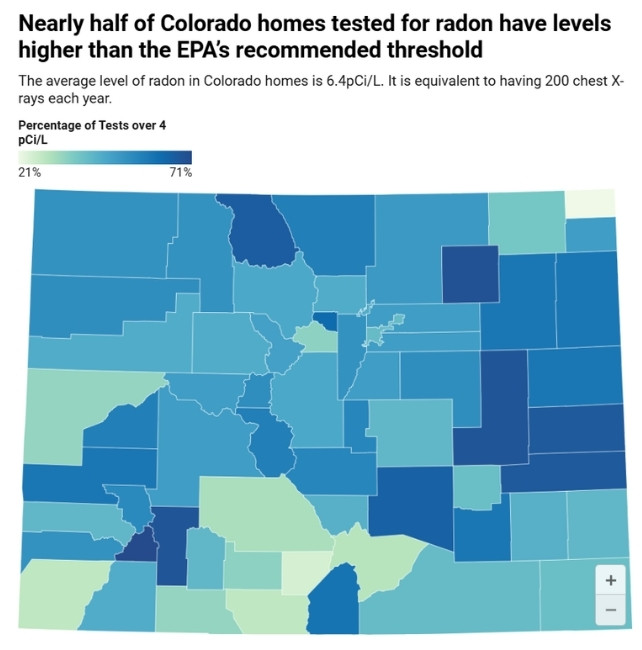
On chilly Colorado evenings, families often seal their modern homes tightly to preserve warmth, creating an illusion of pure, safe air indoors. Nevertheless, measurements reveal average radon concentrations around 6.4 picocuries per liter (pCi/L) in many residences statewide—a level health officials equate to the exposure of nearly 200 chest X-rays annually.
Nationwide, prolonged radon exposure is estimated by federal entities to cause roughly 21,000 lung cancer deaths each year. According to the Environmental Protection Agency (EPA), radon stands as the primary lung cancer cause among non-smokers and ranks second overall, surpassed only by tobacco, as detailed in its official radon health risk summary. In Colorado, the Department of Public Health & Environment (CDPHE) attributes about 500 annual lung cancer fatalities to radon exposure, a statistic reiterated in their informative radon awareness release.
Radon's presence often goes unnoticed due to its lack of color, odor, or taste and its inability to cause immediate symptoms like coughing. As reported by ScienceAlert, only about half the homes in Colorado undergo radon testing. Alarmingly, nearly half of these tested dwellings reveal radon levels exceeding the EPA’s action guideline of 4 pCi/L, leaving many residents unknowingly exposed.

Why Does Colorado Face Elevated Radon Levels?
Radon naturally originates as uranium in soil and rocks decays. This radioactive gas ascends through the earth, seeping indoors via foundation cracks, gaps around utilities, and unsealed crawl spaces. While outdoor concentrations typically remain low due to dilution—as noted by the EPA—inside enclosed spaces, radon can build up to hazardous concentrations over time.
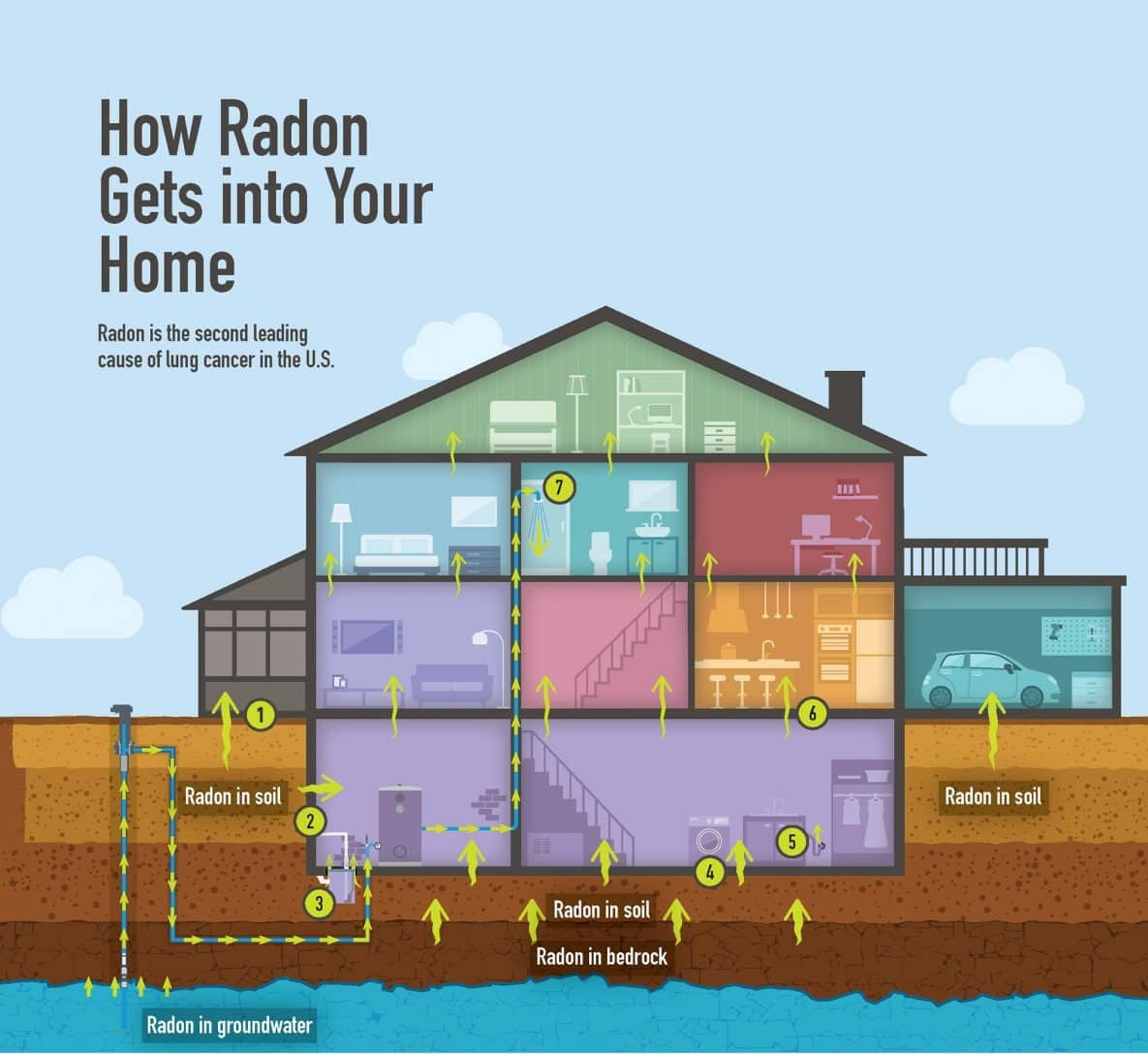
Colorado's geological landscape intensifies this risk. Vast areas sit atop granite formations rich in uranium, raising indoor radon averages to between 6.4 and 6.8 pCi/L, significantly surpassing the EPA's threshold. These statewide metrics mask substantial variation, even among neighboring houses.
Seasonal factors and construction further exacerbate radon accumulation. During colder months, warm indoor air escapes upward, decreasing pressure in basements and crawlspaces, which in turn draws radon-laden soil gases inside. Modern airtight, energy-conserving homes trap these gases more effectively. Additionally, groundwater in private well systems can harbor dissolved radon, releasing it into air through water use, prompting simultaneous air and water testing in some homes, as warned by CDPHE.
The Impact of Inhaled Radon on Health
Once indoors, radon gas continues decaying into radioactive particles with potential to be inhaled into lung tissue. These particles emit energy bursts damaging lung cell DNA, and over years, unrepaired damage elevates lung cancer risk. A comprehensive analysis in the Journal for Clinicians reports that although tobacco remains responsible for about 86% of lung cancers, radon and other ionizing radiation sources contribute a smaller but notable portion.
EPA highlights radon as the top lung cancer cause in lifelong non-smokers and the second cause overall. For those exposed to 4 pCi/L throughout life, about 7 in 1,000 may develop lung cancer. Smokers face amplified risk since both tobacco and radon damage overlapping lung tissues.
Children are especially susceptible due to faster breathing rates and spending more time close to surfaces where radon decay products settle. Colorado health advisories emphasize that homes of any age may harbor elevated radon; structural gaps and airflow patterns, not building age alone, dictate indoor levels.
The Advocate Behind Colorado’s Radon Awareness
Cancer epidemiologist Jan Lowery has been instrumental in raising radon awareness across Colorado, guiding residents on testing and exposure reduction strategies. She notes that only half of the state's homes have undergone radon testing, with nearly half of those revealing hazardous concentrations above the EPA action level.
She highlights that over 1,600 radon testing kits have been distributed by the University of Colorado Anschutz Cancer Center across 55 counties, with about 40% of returned tests exceeding EPA safety levels. These statistics underline the widespread nature of elevated radon in the region and the importance of testing.
Detecting and Addressing Radon Hazards
Accurate detection of indoor radon requires testing, as no home’s radon level can be reliably predicted by location alone. The EPA recommends that all residences up to the third floor be tested using short-term kits (lasting 2 to 90 days) or long-term devices (over 90 days) to approximate yearly exposure. Testing kits typically cost under $50 or can be accessed free via state initiatives and partners like the Anschutz Cancer Center.
If radon concentration reaches or exceeds 4 pCi/L, installing a mitigation system is advised. These systems usually feature a vent pipe with a continuously operating fan that safely redirects radon from beneath foundations to outside air above rooftops. The EPA states that mitigation can reduce indoor radon by as much as 99%, bringing levels well below concern, often for installation fees between $1,000 and $3,000.
Financial assistance is available via Colorado’s Low Income Radon Mitigation Assistance program for qualifying households to cover much or all mitigation costs. While radon maps and rankings like those from World Population Review offer regional insights, only direct testing reveals a home's true radon status. Officials, the EPA, and researchers like Jan Lowery emphasize: testing is essential to detect and properly manage radon exposure.
- Categories:
- News









0 comments
Sign in to Comment