
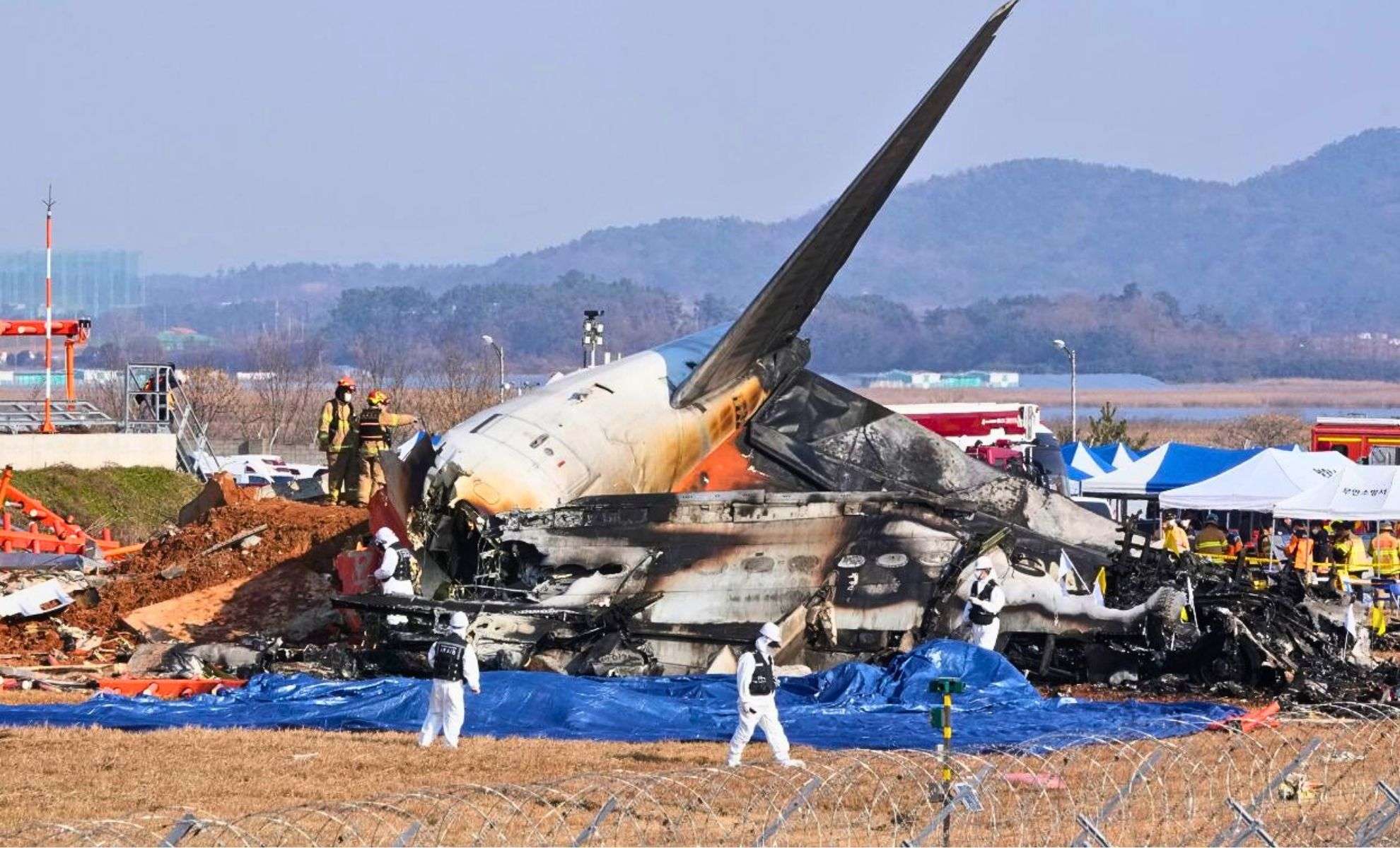
A devastating crash involving a Jeju Air flight occurred at Muan International Airport in South Korea on Sunday, resulting in the deaths of 177 passengers and crew members. This incident stands as the most fatal aviation disaster in the nation in recent decades, with only two individuals surviving the accident. Officials have labeled it “one of the most severe calamities in South Korean history.”
Sequence Leading to Disaster
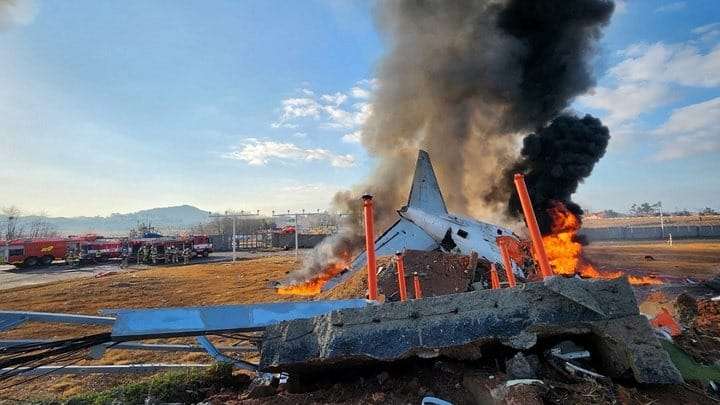
The Boeing 737-800, known for its reliability, veered off the runway before striking a concrete barrier. Camera footage reveals the aircraft landing without its landing gear extended, causing it to touch down on its belly. The collision ignited a fire that engulfed most of the plane. Fire officials reported that “only the tail section maintains some semblance of structure, while the majority of the wreckage is unrecognizable.”
The flight departed from Bangkok, Thailand, carrying 175 passengers alongside six crew members. Among those who lost their lives were two Thai citizens, with the remainder being South Korean nationals.

Concerns Over Emergency Procedures
There has been criticism surrounding the emergency response at Muan International Airport. Aviation analyst Geoffrey Thomas raised concerns about the preparedness of response teams, questioning, “Why were fire tenders not positioned beside the runway? Why wasn’t foam preemptively applied on the runway?” Such lapses may have contributed to the rapid spread of the fire that destroyed much of the plane.
Eyewitnesses described the response as sluggish, and initial firefighting efforts failed to contain the blaze effectively. With only two crew members surviving, questions remain regarding the airport’s capability to manage catastrophic events promptly.
Reviewing Aviation Safety and Maintenance
Although both Jeju Air and the Boeing 737-800 maintain strong safety records, this crash raises questions regarding routine maintenance and inspection protocols. The malfunction of the landing gear is being examined as a potential technical fault. Additionally, investigators are considering the possibility of a bird strike contributing to the event. Yet, experts like David Soucie urge caution, stating, “Speculation is the worst enemy of an investigator.”
This disaster also sheds light on South Korea’s aviation regulatory environment, prompting scrutiny over whether current oversight can sufficiently guarantee aviation safety in a modern context.
Determining the Root Causes
An official inquiry is underway to uncover the definitive reasons behind the crash. Initial evidence suggests multiple factors:
- Landing Gear Failure: Early footage shows the landing gear did not extend before touchdown.
- Bird Strike Alert: Prior to landing, the pilot had received warnings about bird presence near the runway, though conclusions are pending. David Soucie advises against hasty judgments, emphasizing, “Speculation is the worst enemy of an investigator.”
- Weather Conditions: Preliminary reports indicate clear weather, ruling out adverse atmospheric influences.
Authorities recovered both black boxes, which will be crucial to the ongoing investigation. Collaboration with international aviation bodies is expected, though it may take years to fully understand the cause. Aviation consultant Scott Hamilton remarked, “At this stage, it’s impossible to determine the exact cause of this tragedy.”
- Categories:
- News










0 comments
Sign in to Comment