
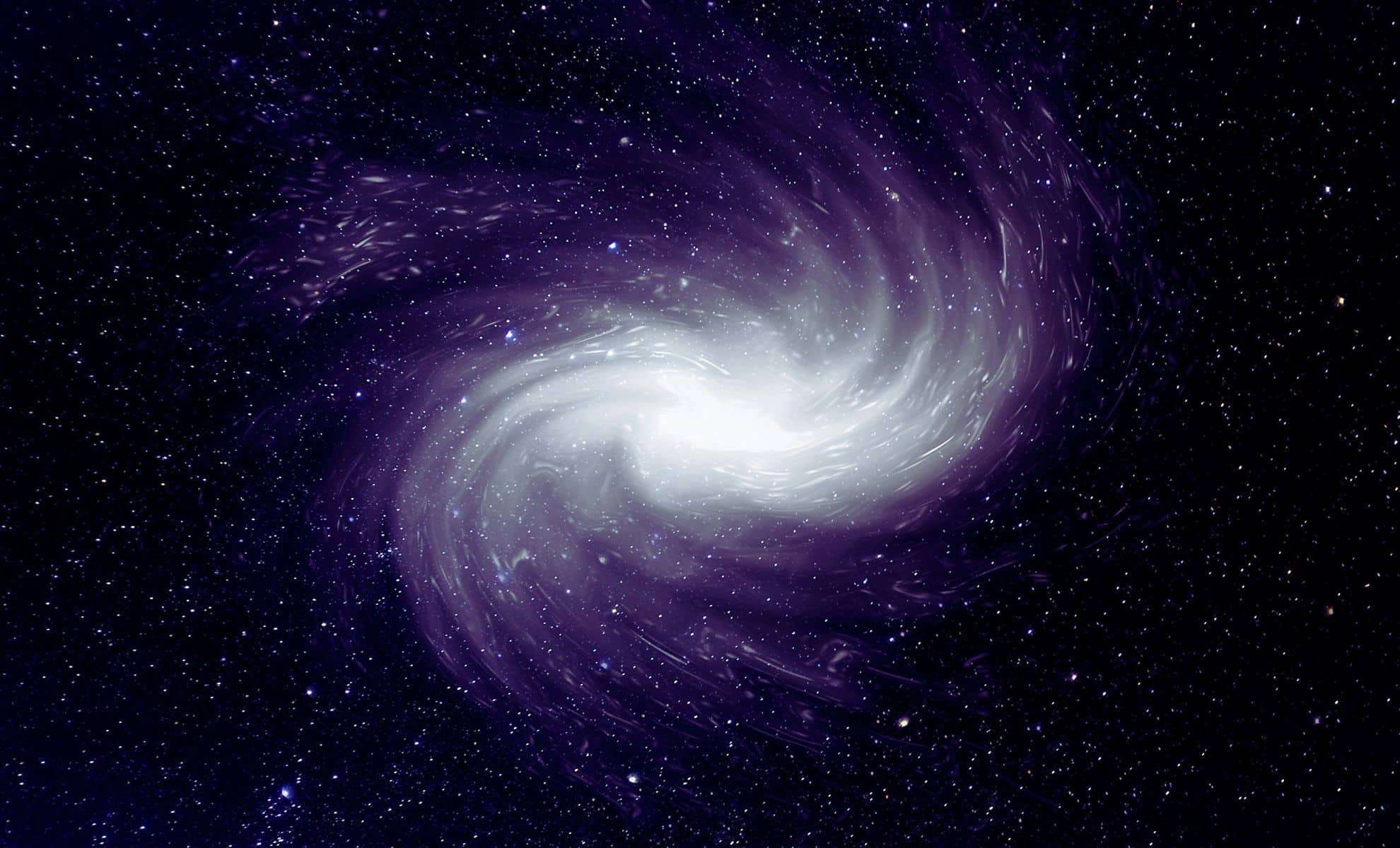
For decades, scientists have sought to understand the forces steering galaxies across the expansive cosmos. A pivotal 2014 study documented on arxiv.org revealed a gravitational anomaly influencing the movement of over 400 galaxies, including our own Milky Way. This enormous, unseen entity, known as the Great Attractor, resides in a part of space hidden behind dense cosmic dust and the Milky Way’s galactic plane. What exactly is this gravitational pull, and why does it draw nearby galaxies toward it?
The identification of the Great Attractor has sparked intrigue in the astrophysical community, challenging previous ideas about universal expansion. Although the universe is continually expanding and galaxies generally drift apart, the Great Attractor appears to exert a strong inward pull on surrounding galaxies, indicating a more intricate gravitational dynamic.
The Hidden Power of the Great Attractor
Fundamentally, the Great Attractor is a gravitational anomaly exerting a substantial pull on nearby galaxies, drawing them toward a shared hub. Despite its influence, the precise nature of this force remains a mystery. Astronomers initially noticed irregular galactic motions during the 1970s, hypothesizing the existence of a colossal mass. However, pinpointing the source was difficult because it lies within the Zone of Avoidance, an obscured region shielded from observation by thick galactic dust and the Milky Way’s plane, complicating direct study.

Recent advancements, leveraging redshift data and careful analysis of galaxy flow patterns, have helped researchers identify the approximate location of the Great Attractor. Galaxy trajectories converge near the Norma and Centaurus clusters, highlighting this area’s significance as the gravitational center of an expansive cosmic framework.
Observations show that the Milky Way, along with roughly 400 neighboring galaxies, is steadily moving toward this formidable cosmic entity. Though invisible, the Great Attractor’s existence is inferred through its powerful gravitational impact on these galaxies.
Discovering the Laniakea Supercluster
Further exploration into the Great Attractor led astronomers to uncover that it’s not an isolated phenomenon, but the heart of an immense, interconnected structure known as the Laniakea Supercluster. Comprising about 100,000 galaxies, this enormous supercluster is among the largest structures mapped within the observable universe.
Encompassing both the Milky Way and the Great Attractor, the Laniakea Supercluster defines a colossal zone of space. The 2014 research highlighted that “Local flows within the region converge toward the Norma and Centaurus clusters in good approximation to the location of what has been called the ‘Great Attractor’.” This convergence suggests the Great Attractor is the core of a more extensive cosmic network, representing the intersection where multiple galaxy streams unite, effectively anchoring the supercluster’s gravitational center.
Introducing the Laniakea Supercluster offers a comprehensive picture of our cosmic neighborhood. Spanning over 500 million light-years, it reveals a gravitationally bound region where numerous galaxies, including ours, are interconnected. This revelation reshapes our cosmic perspective, illustrating that the Milky Way is part of a vast, unified web of galaxies moving in concert through the universe.
- Categories:
- News







0 comments
Sign in to Comment