
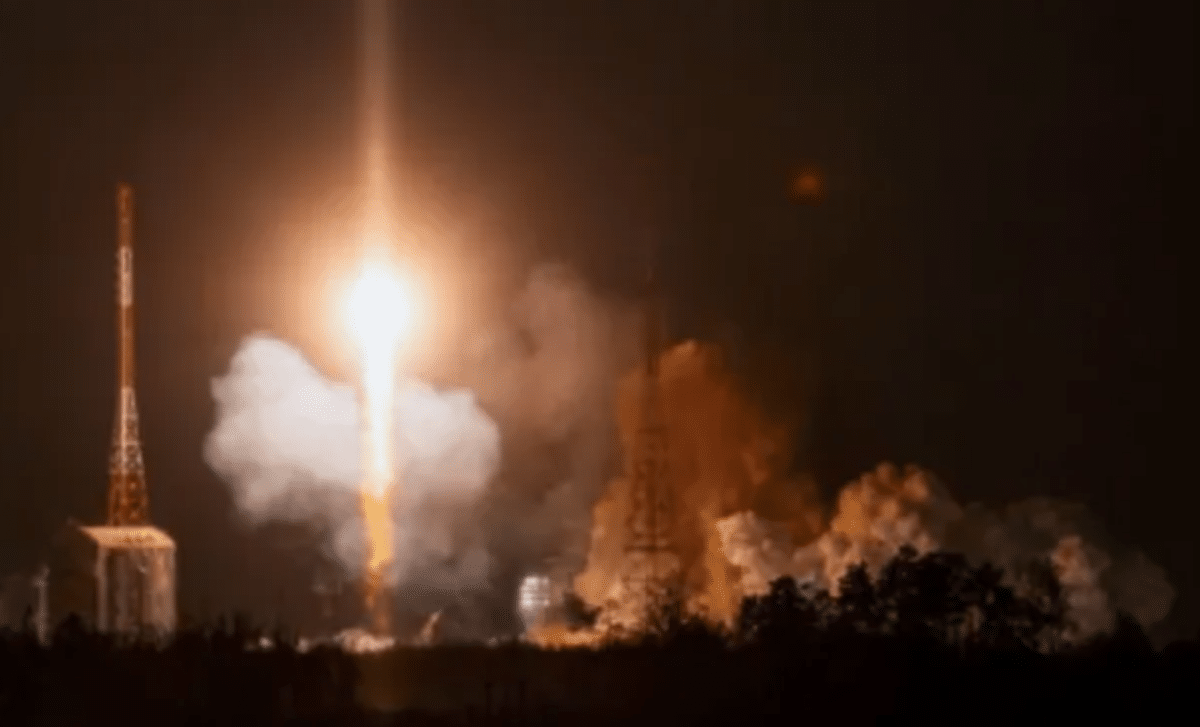
Utilizing a Russian Soyuz rocket, Iran successfully sent three domestically developed Earth-observation satellites into orbit during a coordinated rideshare launch from the Vostochny Cosmodrome in Siberia.
Significant Advancement for Iran’s Satellite Program
In a mission launching multiple payloads, the Soyuz 2.1b rocket deployed a total of 52 satellites into low Earth orbit. This included Iran’s trio of satellites: Paya, Zafar 2, and Kowsar, each intended to enhance environmental and agricultural surveillance from space. The rideshare also carried satellites for various Russian institutions, such as universities and the Hydrometeorological Service, alongside commercial spacecraft from entities like the UAE’s Sputnix Group.
According to Iran’s official news outlet IRNA, the satellites will be utilized for mapping natural resources, agricultural tracking, and environmental data gathering. As reported by Space.com, this mission highlights one of the most prominent instances of Iran-Russia space cooperation in recent times.

Referencing Reuters, Iranian Ambassador to Russia Kazem Jalali stressed the event’s strategic importance:
“These satellites were designed and produced by Iranian scientists … despite all the sanctions and threats,” Jalali told state television.
This statement underlines Iran’s ongoing drive to enhance its aerospace technology amid persistent Western sanctions and technological limitations imposed on the country.
Expanding Iran’s Footprint in Space Technologies
The three newly launched satellites—Paya, Zafar 2, and Kowsar—illustrate Iran’s focus on dual-use space applications, which serve both civilian and possible military observation objectives. This launch follows a series of smaller-scale, yet strategically significant, satellite deployments by Iran’s space program, which have drawn concerns from Western intelligence agencies.
Iran’s collaboration with Roscosmos, Russia’s state space agency, reflects strengthening bilateral ties, particularly as Russia faces increasing global isolation following its invasion of Ukraine. Launching from the Vostochny Cosmodrome—Russia’s newer spaceport meant to lessen reliance on Kazakhstan’s Baikonur Cosmodrome—offers an advantageous launch location for Iran, which is subject to export controls.
As highlighted by Space.com, this same mission also launched Russia’s two Aist-2T satellites and numerous CubeSats developed by academic and meteorological organizations. The event exemplifies how rideshare missions are allowing countries with limited launch capabilities to reach orbit without investing in their own launch vehicles.
Balancing Sanctions, Diplomacy, and Scientific Goals
Iran’s government consistently frames its space ventures as peaceful and scientific endeavors. Emphasizing indigenous innovation and resilience under sanctions, officials portray each satellite launch as a powerful symbol of national pride.
“These satellites were designed and produced by Iranian scientists … despite all the sanctions and threats,” repeated Ambassador Jalali, underscoring the government’s strategic messaging.
Iran’s dependence on Russian launch platforms highlights both the practical limitations caused by international sanctions and shifting geopolitical alliances within Eurasia. While Iran has not yet developed an operational independent launch vehicle, missions such as this boost the country’s role in regional space surveillance and intelligence efforts.
Despite global scrutiny, Iran maintains that its space program is dedicated to peaceful development, focusing on climate monitoring, disaster management, and agricultural progress.
- Categories:
- Space








0 comments
Sign in to Comment