
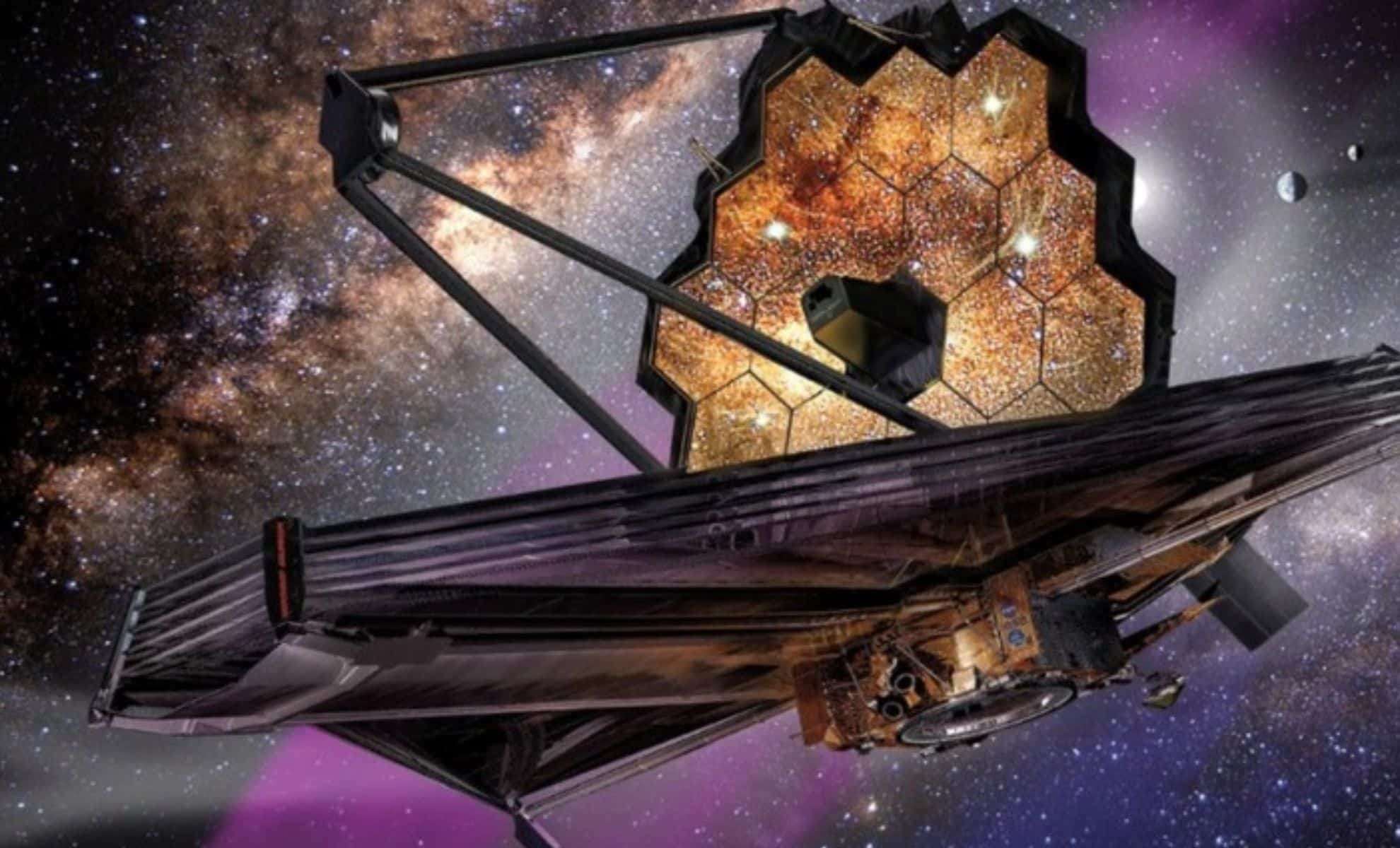
New data from the James Webb Space Telescope (JWST) has intensified one of cosmology’s most challenging enigmas: the Hubble Tension. This unresolved discrepancy between different approaches to measuring the universe's expansion rate could revolutionize our grasp of the cosmos.
After extended analysis, the merged findings from both the JWST and the Hubble Space Telescope strongly suggest that the mismatch is not due to observational mistakes, indicating a profound gap in our cosmic understanding.
Unraveling the Hubble Tension
For many years, researchers have grappled with the Hubble Tension, which describes the disagreement between two primary techniques used to determine the universe’s expansion velocity.

One approach utilizes observations of the Cosmic Microwave Background (CMB), the residual afterglow of the Big Bang, captured by the Planck Satellite. This method estimates the Hubble constant at approximately 67 km/s/Mpc.
The other method relies on studying Cepheid variable stars, whose periodic brightness changes enable astronomers to measure cosmic distances. This technique yields a higher rate, close to 74 km/s/Mpc.
This persistent gap has baffled scientists, who earlier suspected that calibration errors could be the root cause. But the latest insights from the James Webb Space Telescope have effectively ruled out this explanation.
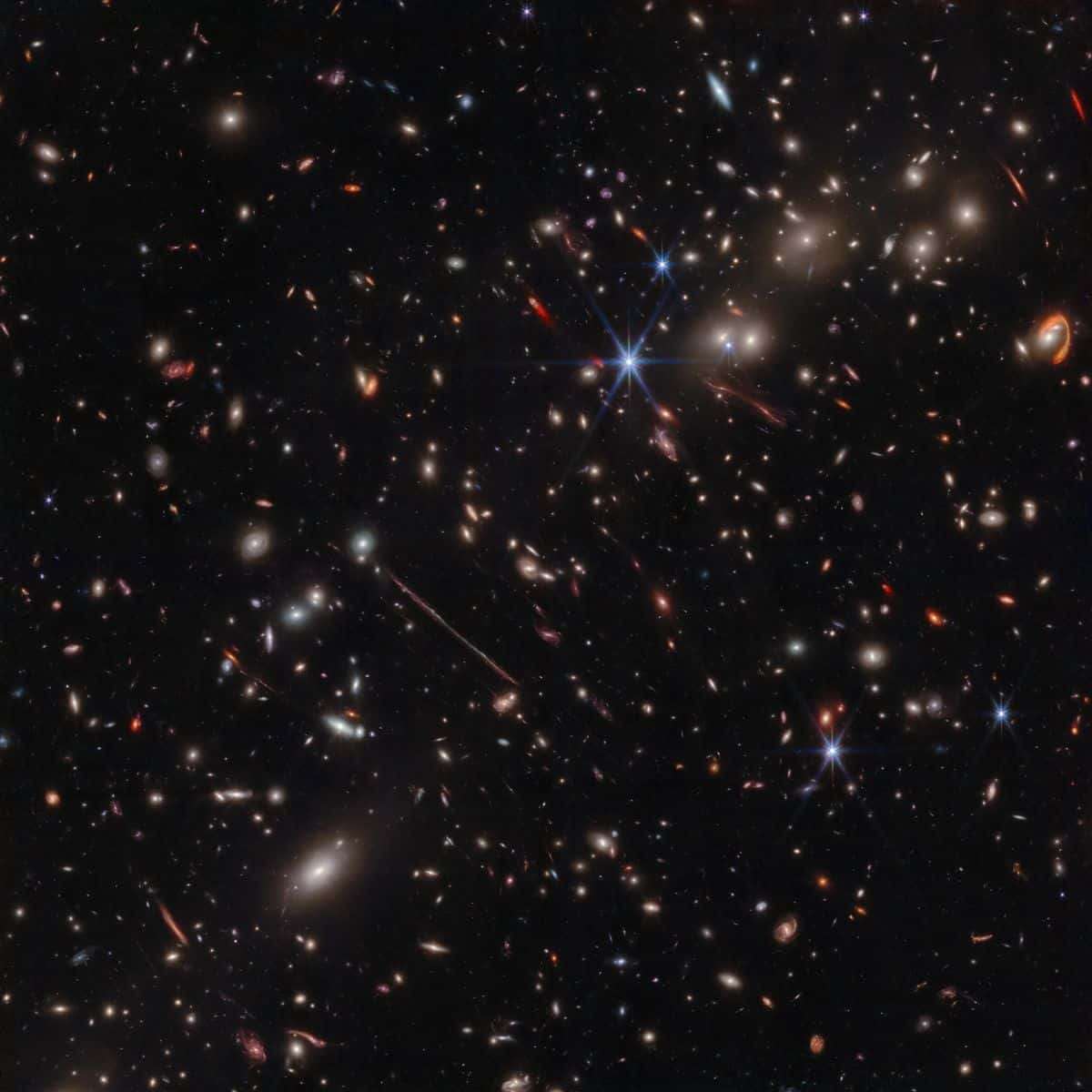
Thanks to JWST’s infrared sensitivity, astronomers have achieved more precise observations of these Cepheid stars, reinforcing the accuracy of prior results from the Hubble Space Telescope. This reinforces that the discrepancy is genuine and demands further investigation.
A Turning Point for Cosmology
The verified presence of the Hubble Tension signals a pivotal moment for our cosmic theories. Adam Riess, lead author of the recent study featured in the Astrophysical Journal Letters and physics professor at Johns Hopkins University, stated,
“What remains is the real and exciting possibility we have misunderstood the universe.” This underscores the profound implications—that our current cosmic model might be incomplete or flawed.
In fact, this growing evidence suggests a significant crisis in cosmology. Nobel laureate David Gross characterizes it as more than a mere problem, urging the scientific community to reconsider foundational assumptions.
As the divergence between measurement methods persists, scientists may need to rethink or adjust prevailing frameworks involving dark matter and dark energy.
JWST and Hubble: A Synergistic Breakthrough
The partnership between the two space telescopes has been instrumental in consolidating evidence for the Hubble Tension.
Using JWST’s cutting-edge infrared instruments, astronomers refined their observations of Cepheid stars to an unprecedented degree, validating earlier findings from Hubble and excluding potential measurement faults.
According to Riess, “Combining Webb and Hubble gives us the best of both worlds. We find that the Hubble measurements remain reliable as we climb farther along the cosmic distance ladder.”
This robust confirmation implies the Hubble Tension represents a real cosmological puzzle, not a statistical anomaly or error, posing a challenge to well-established models.
Exploring New Horizons in Cosmic Theory
With the reality of the Hubble Tension now firmly established, researchers are investigating novel explanations.
One hypothesis involves unparticles, hypothetical entities that might account for the universe’s accelerated expansion. Others consider the influence of extra dimensions, a concept derived from string theory, potentially affecting cosmic expansion rates.
There is also intriguing speculation that gravitational behavior at immense distances might diverge from predictions based on Einstein’s relativity. Variations in gravity could help resolve the contrasting measurements of the Hubble constant.
Future data from James Webb and upcoming missions like the Euclid spacecraft and NASA’s WFIRST will be vital to test these theories and deepen insight into how the universe expands.
- Categories:
- Science










0 comments
Sign in to Comment