
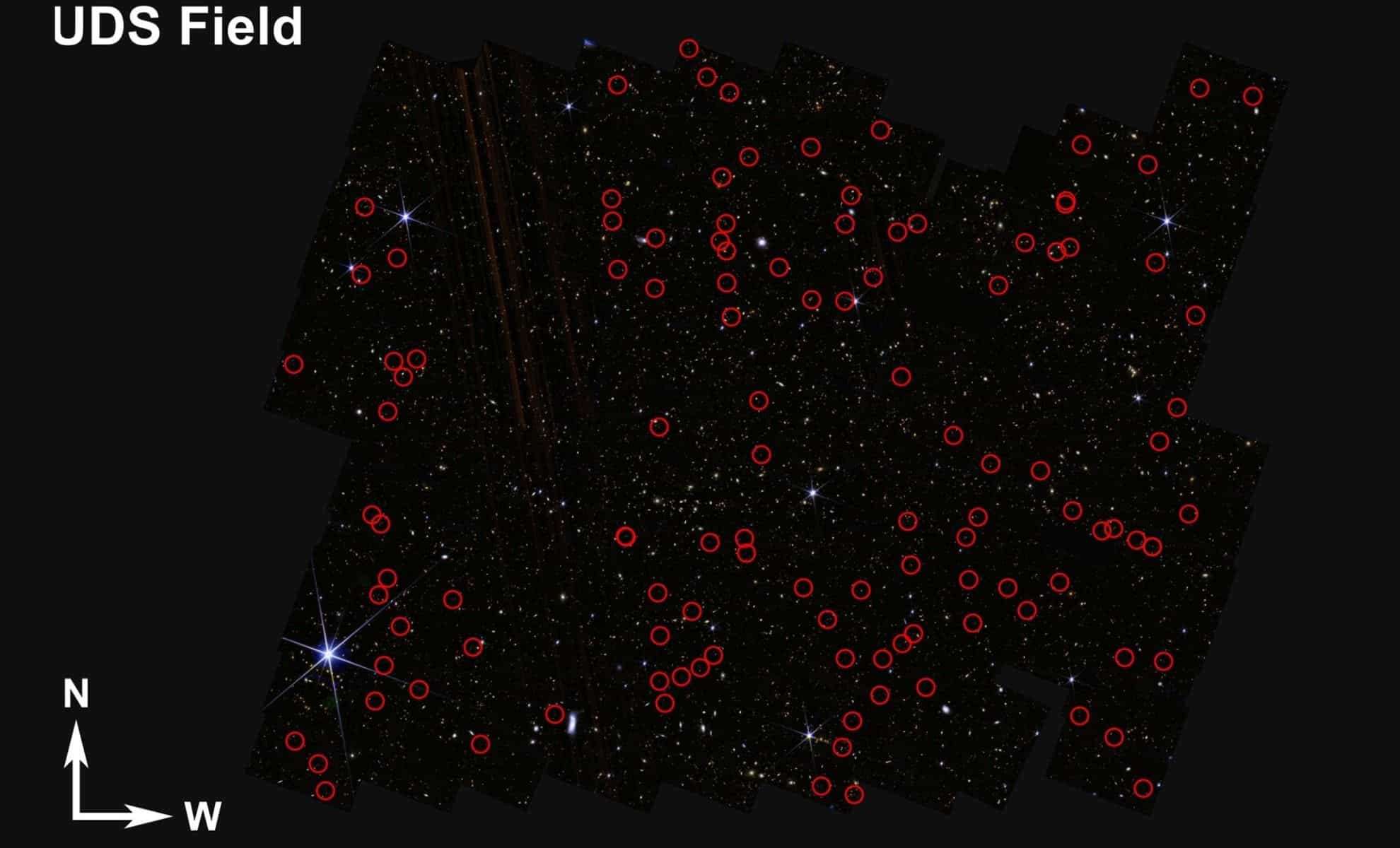
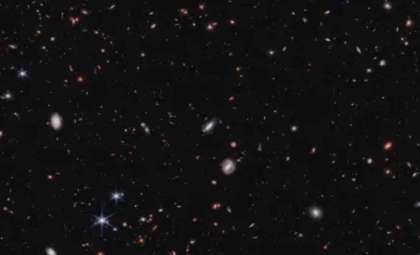
A new investigation spearheaded by researchers at the University of Missouri, featured in The Astrophysical Journal, has unveiled extraordinary observations facilitated by the James Webb Space Telescope (JWST). The team identified 300 luminous, enigmatic objects in the distant cosmos that could redefine existing perspectives on galaxy formation during the universe’s infancy. Leveraging JWST’s advanced infrared imaging, these astronomers detected objects that might represent some of the earliest galaxies ever recorded, offering new insights into the dawn of galactic evolution.
These groundbreaking results have the potential to challenge long-held scientific viewpoints about the universe’s formative epochs, particularly during the period when the first stars and galaxies emerged. Continued analysis of these unusual findings might not only question previous assumptions but also revolutionize our understanding of the early cosmic timeline.
Surprisingly Intense Luminosity of Remote Objects
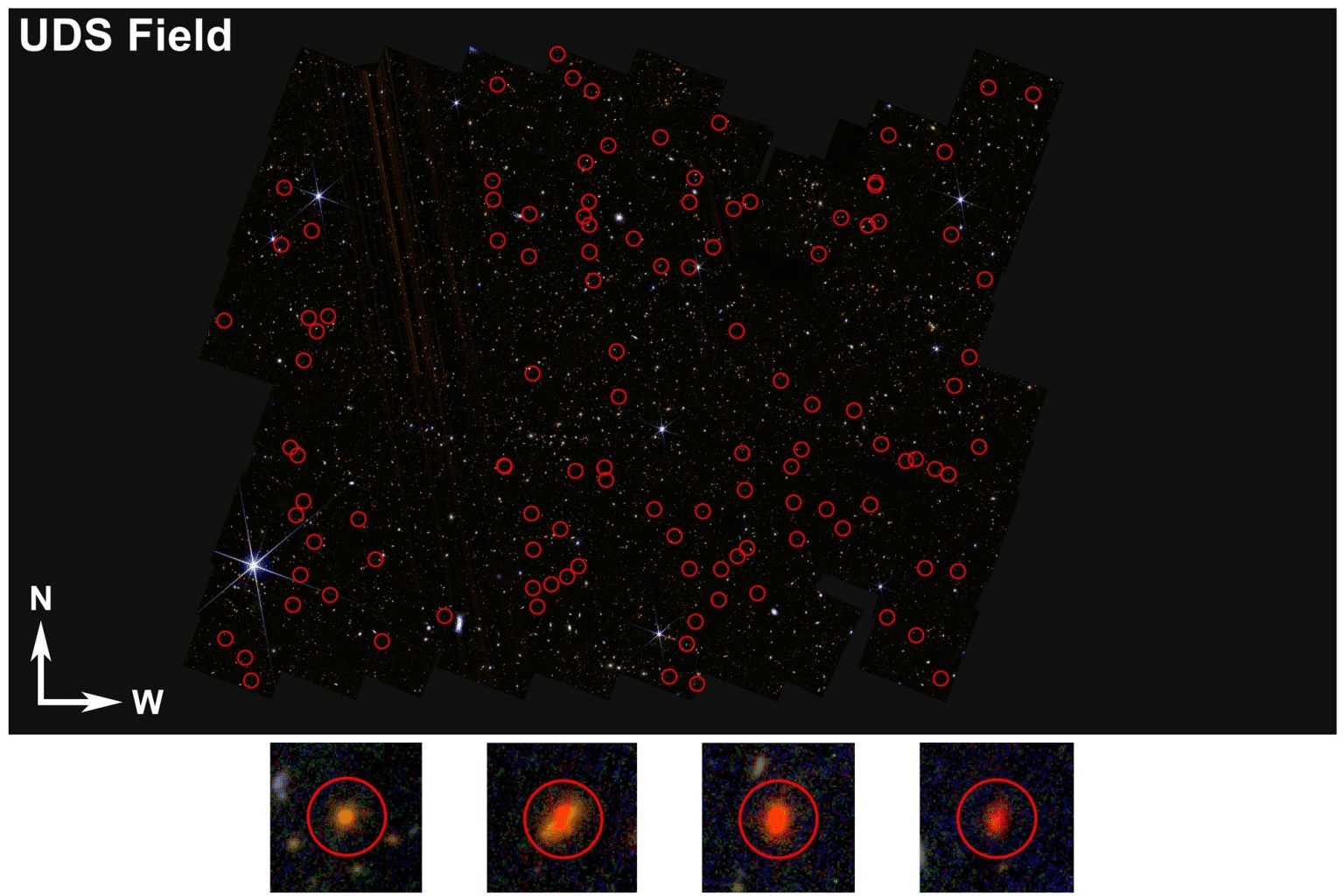
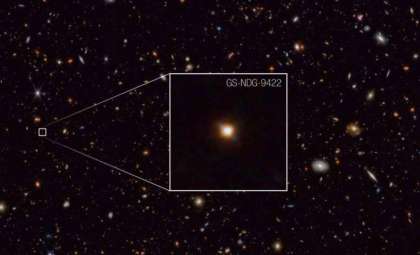
Utilizing JWST’s infrared observations, the University of Missouri research group uncovered 300 strikingly bright objects that emit more light than predicted for objects from such vast distances. These candidates for primordial galaxies exhibit luminosities that stand out significantly compared to expectations for galaxies from the universe’s earliest phase. Haojing Yan, co-author of the research, remarked, “These mysterious objects are candidate galaxies in the early universe, meaning they could be very early galaxies.” Should even a fraction of these turn out to be genuine early galaxies, this discovery would greatly impact current galaxy formation theories.

The main difficulty remains verifying whether these entities are indeed ancient galaxies or other cosmic phenomena with similar signatures. Nonetheless, the excitement among astronomers is palpable, as Yan stated, “even if only a few of these objects are confirmed to be in the early universe, they will force us to modify the existing theories of galaxy formation.” Such a discovery could extend the timeline and mechanisms attributed to galaxy development to much earlier than conventionally believed.
Redshift’s Central Role in Tracing Ancient Galaxies
Redshift is instrumental in this research, serving as a fundamental metric for gauging the distance and age of cosmic objects. As photons journey through expanding space, their wavelengths stretch, shifting from visible to infrared light. This process, known as redshift, enables astronomers to infer how remote these galaxies are and how far back in time we are observing them. Yan clarified, “As the light from these early galaxies travels through space, it stretches into longer wavelengths—shifting from visible light into infrared. This stretching is called redshift, and it helps us figure out how far away these galaxies are.”
The magnitude of redshift correlates directly with the object's distance and age, with higher values indicating more ancient origins. The identified objects’ high redshifts suggest they belong to a period when the cosmos was still very young. By accurately measuring redshift, scientists can better determine the timing and conditions under which these early galaxies formed.
Employing the Dropout Technique to Identify Distant Galaxies
The discovery of these 300 targets was achieved through the dropout method, an effective approach used to isolate high-redshift galaxies. This technique identifies objects exhibiting strong brightness in redder bands but diminished or absent signals in bluer wavelengths. Bangzheng “Tom” Sun, principal author, explained, “It detects high-redshift galaxies by looking for objects that appear in redder wavelengths but vanish in bluer ones—a sign that their light has traveled across vast distances and time.”
This phenomenon relates to the “Lyman Break,” which results from ultraviolet absorption by neutral hydrogen clouds. At greater redshifts, this break shifts into longer wavelengths, making distant galaxies more detectable through this method. The dropout technique is vital for singling out possible early galaxies by analyzing their specific light profiles.
Spectroscopic Analysis: Confirming Galaxy Candidates
While the dropout technique helps spot potential early galaxies, verifying their nature requires spectroscopy — a process that disperses light into its spectrum to identify unique signatures indicative of redshift and composition. Sun noted, “Ideally this would be done using spectroscopy, a technique that spreads light across different wavelengths to identify signatures that would allow an accurate redshift determination.”
Spectroscopy remains the definitive approach to confirm the true identity of these distant objects. The team has already spectroscopically confirmed one candidate as a genuine early galaxy, but further confirmations are necessary to draw robust conclusions. Sun added, “One of our objects is already confirmed by spectroscopy to be an early galaxy, but this object alone is not enough. We will need to make additional confirmations to say for certain whether current theories are being challenged.”
Transforming Our Understanding of Cosmic Origins
The emergence of these extraordinarily luminous distant objects stands to challenge prevailing galaxy formation models. Previously, cosmologists thought galaxy development spanned a more extended period, with the earliest galaxies forming significantly after the Big Bang. However, these new results imply that galactic structures could have started forming earlier than formerly assumed, calling for a reexamination of the universe’s evolutionary timeline.
Should these 300 bright sources be verified as early galaxies, it would suggest that galaxy formation began closer to the universe’s dawn than previously recognized. This revelation might substantially alter our comprehension of the early stages of star and galaxy formation as well as the assembly of large-scale cosmic structures.
- Categories:
- News


0 comments
Sign in to Comment