
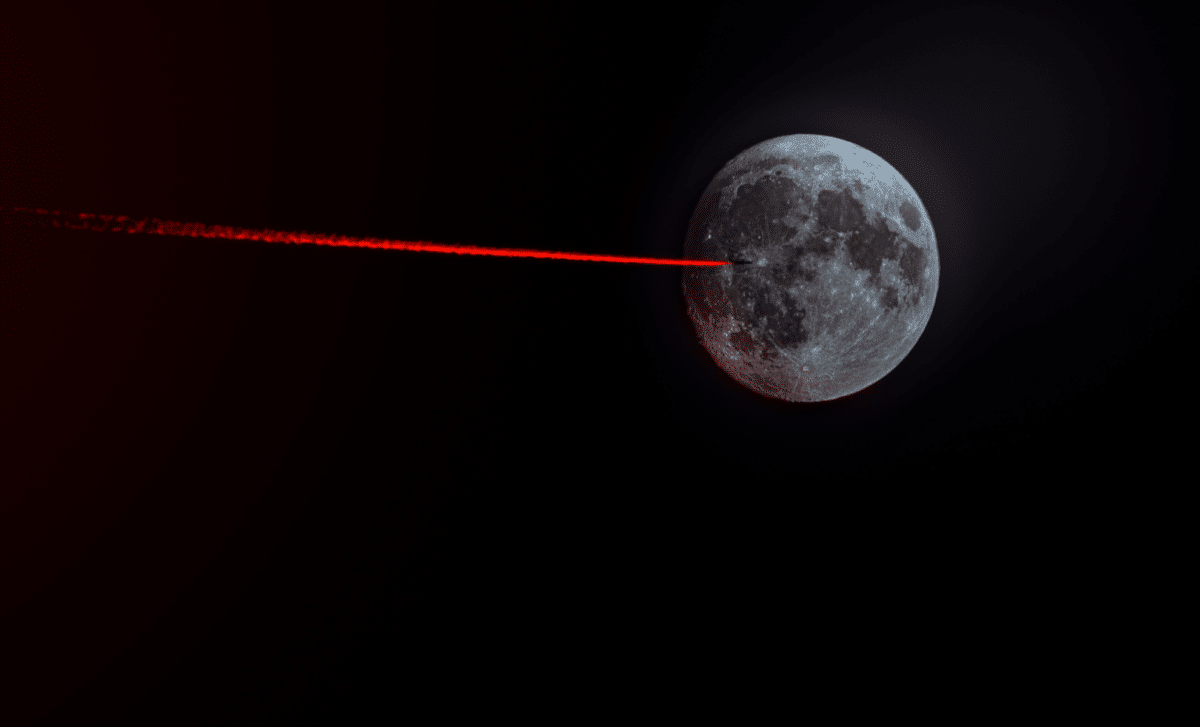
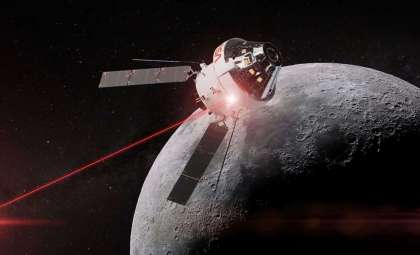
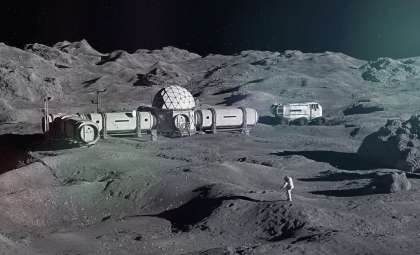
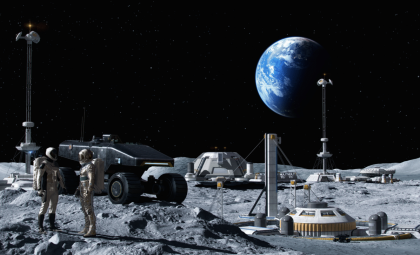
Researchers at the University of Florida are developing a laser-based technique to mold materials on the moon, utilizing local resources to fabricate structures. Their recent study, published in Lasers in Manufacturing and Materials Processing, reveals how focused laser energy can convert lunar soil glass into useful items, potentially cutting down the need for transporting bulky building materials from Earth.
An Innovative Approach to Space Fabrication
Conventional Earth manufacturing depends on large machines and molds, which are unsuitable for extraterrestrial environments. The method highlighted in this study, known as laser forming, employs controlled laser heat to bend materials without touching them. By fine-tuning laser intensity, speed, and repetitions, astronauts could create tailored parts to meet mission demands.
Victoria M. Miller, Ph.D., project lead, emphasizes its broader applications: “This technology also holds promise for terrestrial use, especially in flexible manufacturing for defense sectors.” Apart from space, it might revolutionize how custom components are produced in isolated or secure areas.

.@UFAstraeus researchers are exploring how lasers could help astronauts build structures on the moon using materials already available there. https://t.co/DtOnnvNfoI
— FLORIDA (@UF) June 4, 2026
Cutting Down Payload Weight and Boosting Mission Efficiency
Bringing construction resources into space involves significant expense and complex logistics. Miller points out the challenge: “Carrying multiple spares for every broken part is impractical. Being able to manufacture a replacement on site would be a major advantage.”
Laser forming presents a compact and efficient alternative. Unlike bulky terrestrial machinery, it demands minimal space and weight, making it exceptionally suitable for space travels where mass is limited.
“So when we build things on Earth, we have machinery,” Miller said. “And just massive amounts of machinery and weight and volume are not really constraints when we’re doing conventional manufacturing on Earth.”
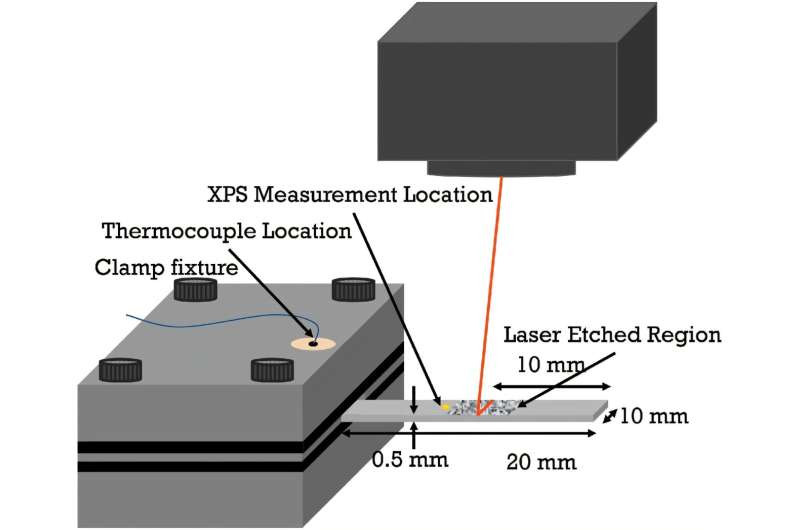
Tailoring Techniques for the Moon's Environment
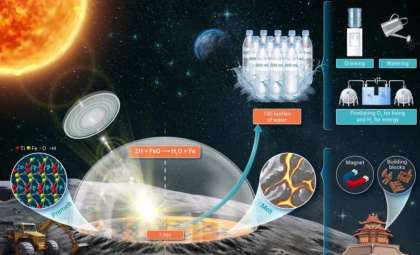
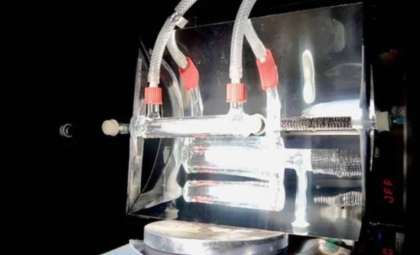
The UF team explored laser interactions under various atmospheric pressures, a vital factor for adapting this technology to the moon’s vacuum. Tests with lunar soil simulant demonstrated its conversion into glass and successful laser-induced bending.
“One of the experiments that we did, was having a collaborator make a piece of glass out of lunar soil simulant,” Miller said. “And then we used our laser bending technology to bend the lunar glass.”
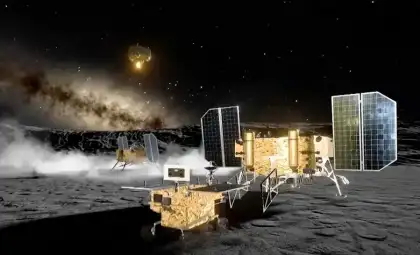
The published results indicate that astronauts could utilize this process to assemble structures, shelters, tools, and repair components on the moon, all sourced from in-situ materials. This strategy could greatly lessen launch mass and lower mission expenses.
- Categories:
- News



0 comments
Sign in to Comment