
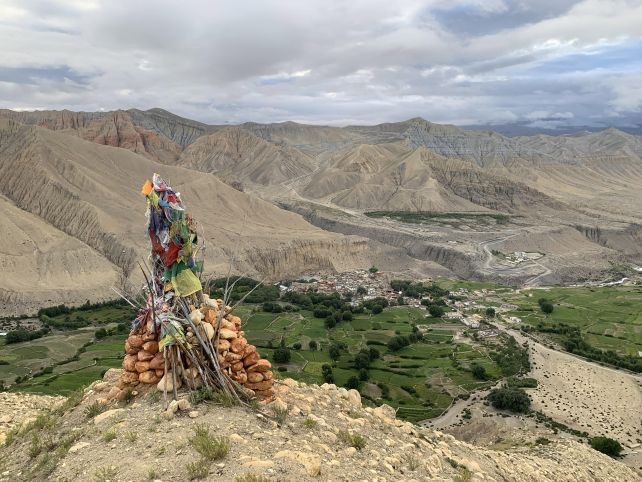
Situated in Nepal’s Upper Mustang region along the southern Tibetan Plateau lies one of the highest inhabited areas on Earth, where oxygen availability is roughly 60% of what most people experience at lower elevations. While many outsiders suffer from altitude sickness—including symptoms such as headaches, exhaustion, and nausea—local Tibetan women thrive and bear children in large numbers despite the challenging environment.
Cutting-edge research featured in the Proceedings of the National Academy of Sciences reveals these women possess inherited biological traits that optimize oxygen utilization, resulting in a notable boost in reproductive outcomes under prolonged oxygen deprivation. The findings extend beyond this remote population, shedding light on evolution as an active process today and offering clues for human adaptation to extreme conditions in the future.
"Studying how groups like these evolve grants us deeper understanding of human evolutionary dynamics," commented Cynthia Beall, Distinguished University Professor Emerita at Case Western Reserve University, in an EurekAlert press briefing. The study highlights impressive cardiopulmonary adaptations and serves as a rare demonstration of active natural selection influencing the human genome today.

Evolution Manifested in Physiology and Fertility
Researchers analyzed 417 ethnic Tibetan women between 46 and 86 years old, all lifelong residents of areas ranging between 3,600 to 4,200 meters (11,800–13,800 feet). They documented each woman's total live births, gathered physiological data (such as hemoglobin levels, oxygen saturation, and heart anatomy), and obtained genetic samples for detailed analysis.
A pivotal discovery was that women exhibiting moderate hemoglobin levels—not excessively high or low—along with elevated hemoglobin oxygen saturation, achieved the highest reproductive success, with birth counts spanning from 0 to 14. On average, these women gave birth to 5.2 children.
“We knew that higher oxygen saturation of hemoglobin was beneficial, now we understand that the higher the saturation the more beneficial,” said Beall in the ScienceAlert article. “The number of live births quantifies the benefits.”
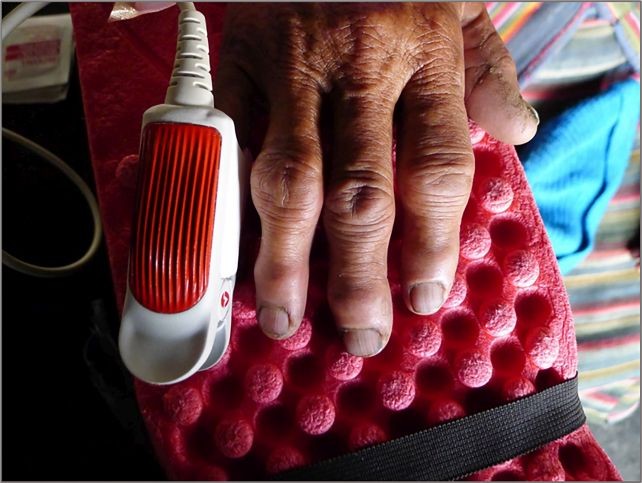
These women also showed increased pulmonary blood circulation and enlarged left heart ventricles—heart features that improve oxygen transfer without the adverse side effect of thicker blood, a common consequence of high hemoglobin concentration at altitude.
Ancient Genetic Legacy from Denisovans
At the genetic level, a key advantage identified is a variation in the EPAS1 gene, which plays a role in controlling red blood cell generation. This gene variant is largely unique to Tibetan populations and traces back to ancient interbreeding with Denisovans, a long-extinct human relative present in Central and East Asia over 50,000 years ago.
Earlier studies demonstrated that EPAS1 and EGLN1 genes are strongly favored by natural selection among Tibetans. These genes help maintain hemoglobin concentrations suited for chronic low-oxygen environments, giving these populations a significant evolutionary edge at high altitude.
The recent PNAS research confirmed that women harboring this gene variant consistently exhibited the oxygen-related traits linked to increased fertility. Crucially, these adaptive features enable efficient oxygen delivery without elevating hemoglobin to hazardous levels, preventing health issues like pulmonary hypertension or cardiac failure.
“Tibetan women have evolved in a way that balances the body’s oxygen needs without overworking the heart,” Beall stated in the EurekAlert release.
These physiological advantages are not merely beneficial—they are actively favored and perpetuated through natural selection in each generation living at extreme elevations.
Distinct Adaptations Among Highland Populations
Although Tibetan people have evolved distinct mechanisms for high-altitude survival, this is not the only group adapting to such environments. Indigenous peoples of the Andes in Peru and Bolivia also inhabit elevations above 3,000 meters, but their biological response primarily involves raising hemoglobin levels. While this boosts oxygen transport, it thickens the blood, placing more strain on the heart.
In contrast, Tibetans maintain normal or modestly reduced hemoglobin concentrations, paired with enhanced lung ventilation, increased pulmonary blood flow, and gene-based regulation of red blood cell production. Together, these adaptations allow Tibetans to sustain oxygen supply with fewer metabolic trade-offs seen in other mountain populations.
The divergence is particularly clear when comparing genetic signatures: EPAS1 experiences selection pressure in Tibetans but not in Andeans, underscoring separate evolutionary trajectories responding to similar oxygen challenges.
This contrast offers a compelling example of convergent evolution, where disparate communities facing the same environmental hardships achieve survival through different physiological adaptations.
- Categories:
- Science










0 comments
Sign in to Comment