
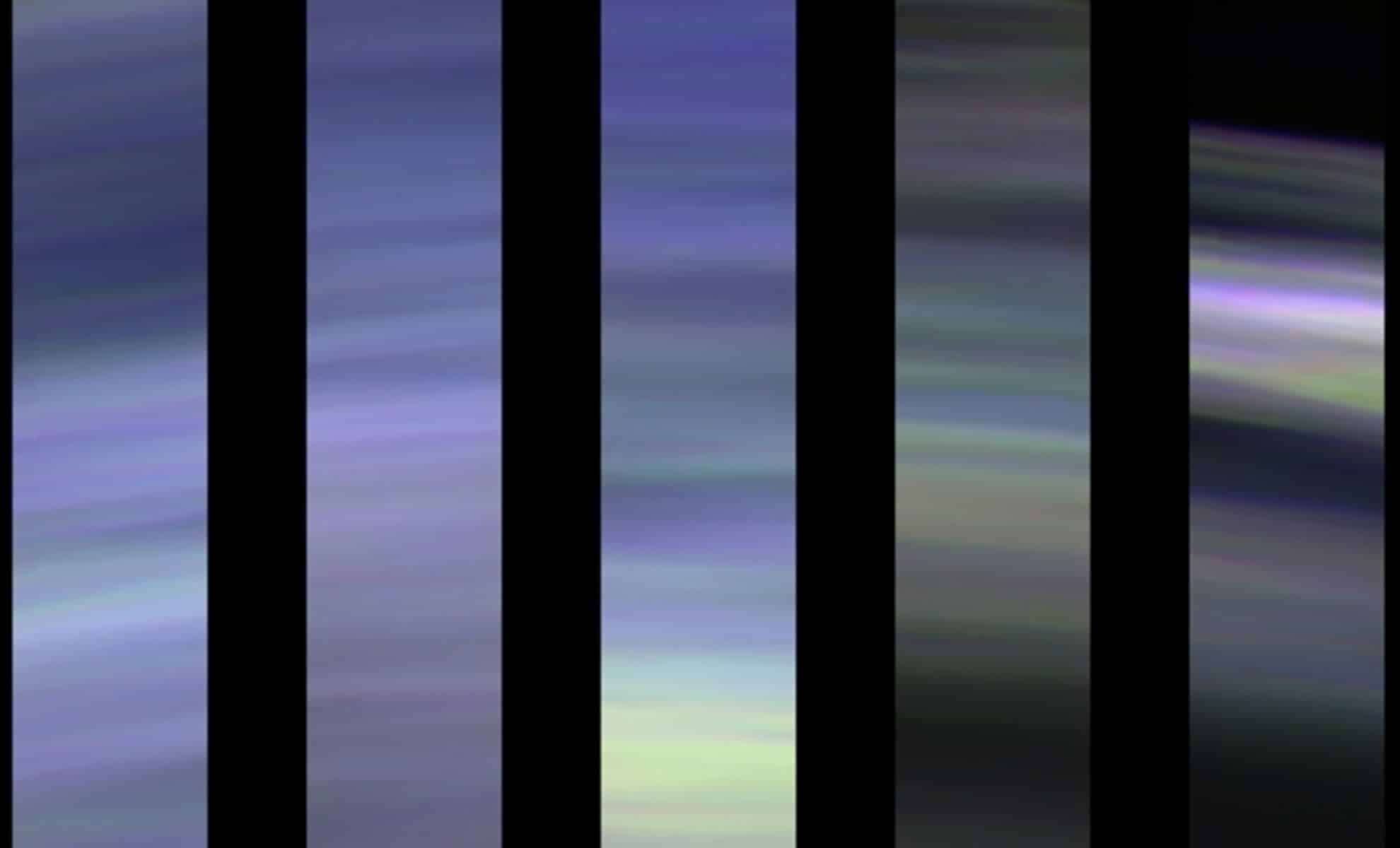
A European space mission has unveiled the most intricate images ever captured of Mars’s upper atmosphere, showcasing a delicate, stratified layer composed of dust and ice particles. Scientists have likened this pattern to a “mille-feuille”, reminiscent of the thin, stacked layers found in the iconic French dessert, granting unprecedented insight into Mars’s evolving climatic conditions. These results were published on September 19, 2025, in the journal Science Advances, shedding light on how the Red Planet’s atmospheric layers vary with altitude and seasonal changes.
A Delicate Layering Over Terra Cimmeria
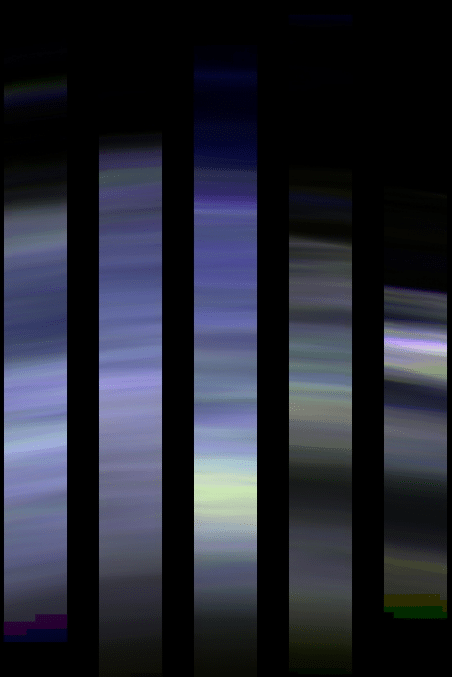
On January 21, 2024, the Trace Gas Orbiter (TGO) circled Mars approximately 400 kilometers above Terra Cimmeria, part of the rugged southern highlands. From this orbital vantage point, its Color and Stereo Surface Imaging System (CaSSIS) took five vertical cross-sectional images of Mars’s limb—the faint outline where the planet meets space. Captured during dusk with sunlight shining from behind, these images highlight subtle color and brightness nuances within the atmosphere.
Spanning 3.6 kilometers each and spaced 200 kilometers apart, these slices cover altitudes between 15 and 55 kilometers. Together, they assemble a radiant cross-section of Mars’s atmosphere revealing dozens of thin layers of dust and cloud. The clarity achieved—down to 18 meters per pixel—represents the highest resolution images of the Martian atmospheric limb ever obtained.

Color Reveals Mars’s Active Atmospheric Layers
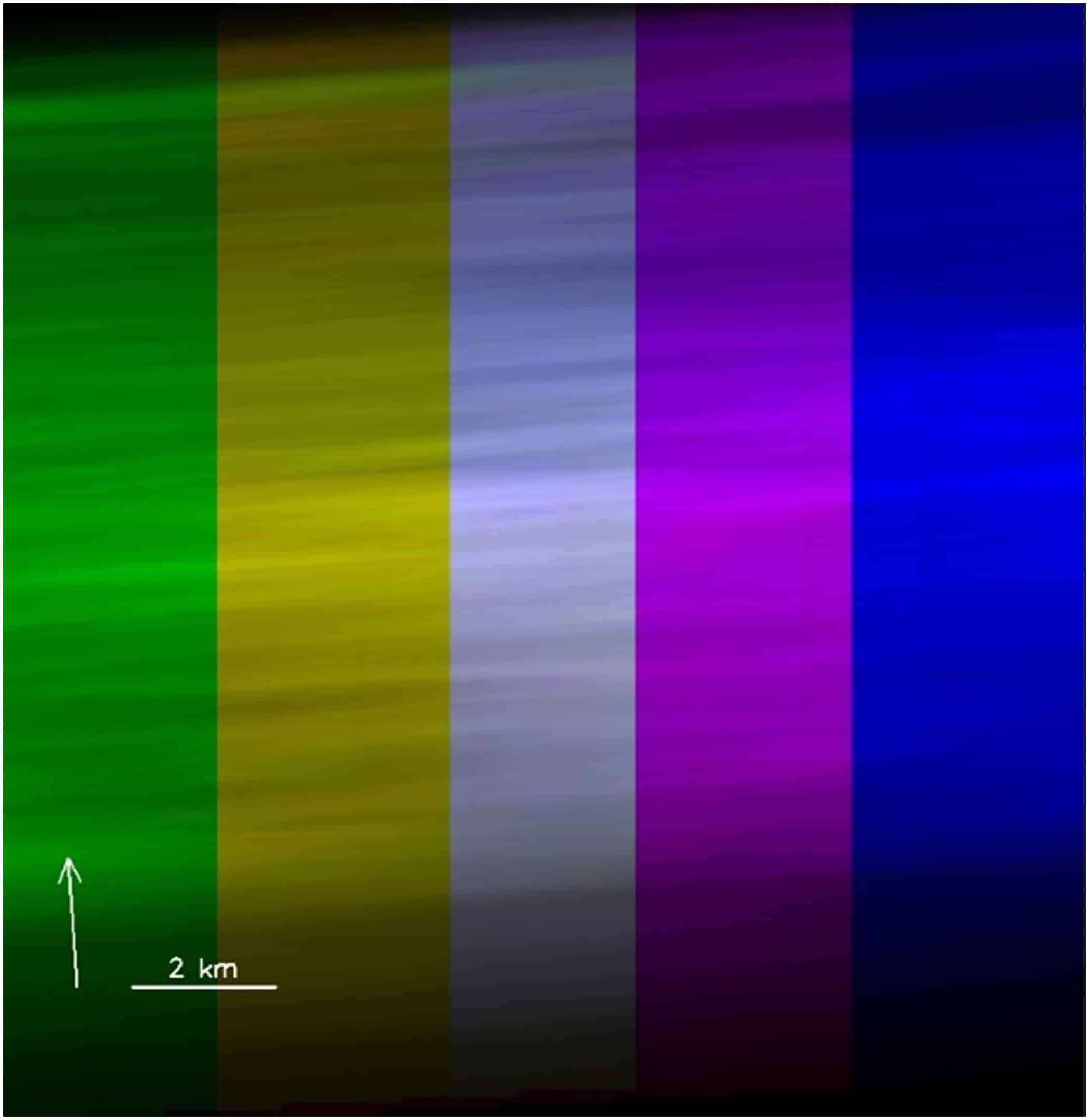
The intricate layering signals an energetic Martian atmosphere, shaped by sunlight and variable weather phenomena. Nicolas Thomas noted, “our observations, particularly the color differences, unlock valuable clues about the size of particles at various altitudes.” Decoding how these particles are vertically distributed—and understanding their properties such as size, shape, and makeup—remains a central challenge in grasping Mars’s contemporary climate.
At altitudes above 40 kilometers, the atmosphere harbors minute ice crystals, likely originating in colder regions. Closer to the Martian surface, most layers consist of dust stirred up by surface winds, influenced by seasonal shifts. These particles scatter sunlight and interact with radiation, creating the gentle, wavy bands evident in the images.
This layered pattern exemplifies a dynamic atmosphere driven by solar radiation and the planet’s own meteorological cycles. Thomas commented that a key ongoing question is how these particles form stacked configurations and what these mean for Mars’s atmospheric behavior today.
Mapping Mars’s Atmosphere Through Monthly Imaging
While Mars Express has previously imaged the planet’s limb, this marks the highest resolution survey to date. The precision of the CaSSIS instrument has encouraged the European team to plan monthly imaging sessions, aiming to build a comprehensive archive that monitors seasonal patterns, dust behavior, and long-term atmospheric trends.
These compelling snapshots come as part of the Trace Gas Orbiter’s broader exploration mission. The project also includes searching for trace gases in the atmosphere and mapping subsurface water reserves. Since its arrival in 2018, the orbiter has greatly improved our understanding of Mars’s surface and gaseous envelope.
Integrating these atmospheric insights contributes to a larger effort to decode the intricate layers of Mars’s atmospheric mille-feuille — the complex combination of dust, ice, and solar light shaping the planet’s skies. As Thomas summarized, “this rich dataset will fuel detailed scientific analysis moving forward.”
- Categories:
- News


0 comments
Sign in to Comment