
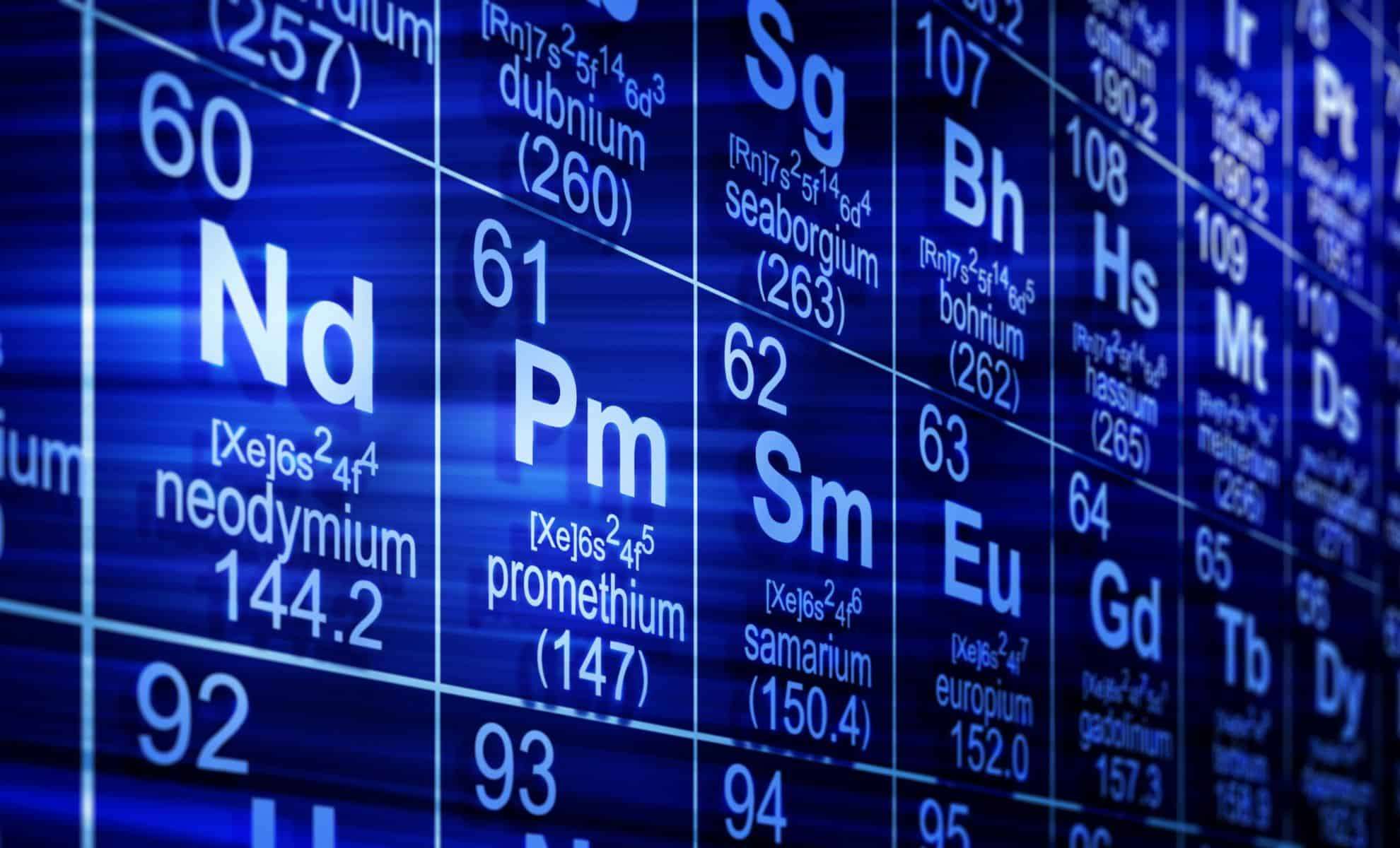
Scientists at MIT have introduced a groundbreaking framework that arranges artificial intelligence (AI) algorithms similarly to how the periodic table classifies chemical elements. This innovative “periodic table” groups algorithms by their shared properties and behaviors.
Revolutionizing AI Algorithm Classification
As reported by Popular Mechanics, the foundation of this AI periodic table is a mathematical concept called information contrastive learning (I-Con).
This approach enables researchers to cluster algorithms based on the characteristics they share and their effectiveness as evaluated by a loss function.

I-Con assesses the discrepancy between an algorithm’s predictions and actual outcomes, providing a standardized way to gauge its precision.
Utilizing I-Con, MIT’s team discovered that a broad spectrum of algorithms operate on similar fundamental principles.
Alshamarri explained, “I-Con reveals that many seemingly disparate methods including clustering, spectral graph theory, contrastive learning, dimensionality reduction, and supervised classification are all cases of the same underlying loss function.”
Understanding the Functionality of the AI Periodic Table
In the same way the periodic table organizes elements by atomic traits, this AI framework groups algorithms according to their mathematical attributes.
Algorithms with analogous features are placed together, making it simpler for specialists to select the most effective methods for particular challenges.
This organization aims to enhance the workflow of AI development, promoting improved collaboration and efficiency within the research community.
The classifications depend heavily on how each algorithm relates to the I-Con principle.
For instance, while clustering algorithms and contrastive learning once seemed unrelated, I-Con exposes their common foundational traits, deepening our understanding of their operation.
A Fortuitous Discovery Sparks a Major Advancement
Alshamarri, a graduate student at MIT, identified that his observations shared similarities with contrastive learning.
This insight prompted further investigation, eventually revealing a unifying mathematical framework linking multiple machine learning techniques.
In the published research, Alshamarri stated, “The results presented in this work represent just a fraction of the methods that are potentially unify-able with I-Con. We hope the community can use this viewpoint to improve collaboration and analysis across algorithms and machine learning disciplines.”
This unexpected finding has led to a transformative breakthrough in AI, potentially redefining how algorithms are interpreted and utilized.
Uncharted Territory and Prospects for Growth
Much like its counterpart for chemical elements, the AI periodic table contains unfilled sections where the relationships between certain algorithms and the I-Con structure remain unclear.
These unexplored areas suggest considerable potential for future discoveries, highlighting the evolving nature of AI research and the continual development of new algorithms.
The periodic table is expected to expand, reflecting emerging connections as studies advance.
This evolving framework is likely to remain an essential resource for AI practitioners, helping them keep pace with ongoing innovations.
By categorizing algorithms based on shared mathematical foundations, MIT’s framework offers a novel lens on AI that could significantly benefit both researchers and developers.
It provides an invaluable tool for unraveling machine learning complexities and creating more powerful AI technologies.
- Categories:
- Science












0 comments
Sign in to Comment