

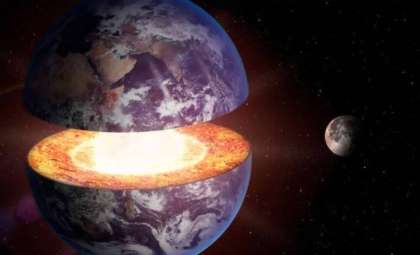
Contrary to the long-held belief that Earth's interior is a solid, unchanging mass, recent research has unveiled astonishing evidence that the planet's core is gradually seeping iron into the mantle. Published in a notable 2020 study in Nature Geoscience, this finding revolutionizes our perception of Earth's internal dynamics, highlighting a much more active and evolving inner system.
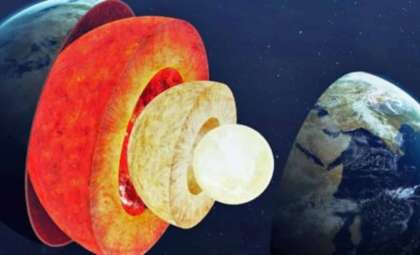
Far below the crust lies the Earth's core, a solid metallic center encased by a convecting ocean of liquid iron and nickel. However, cutting-edge analyses now indicate that these molten metals are not confined but may be migrating upwards into the surrounding rocky mantle. The investigation reveals shifts in iron isotopes within the deep Earth, suggesting an unexpected transport mechanism that could redefine how we understand planetary evolution over extensive geological periods.
Unveiling the Iron Transport Mechanism
Scientists uncovered this remarkable phenomenon through a combination of high-pressure laboratory experiments and sophisticated geodynamic simulations. Replicating the intense conditions found hundreds of kilometers beneath the surface—temperatures exceeding 2,000 °C (3,632 °F) and immense pressure—they traced iron’s behavior. These studies suggest that temperature differences drive heavier iron isotopes toward cooler zones, facilitating iron's gradual transfer from the core into the mantle.

According to Charles Lesher, lead author of the 2020 publication and professor emeritus at UC Davis, “If this holds true, it means iron has been leaking from Earth’s core into the mantle for billions of years.” This research provides some of the first tangible proof of ongoing material exchange between Earth’s layers, an idea long speculated but now supported by empirical data.

Earth's Interior: A Dynamic and Evolving Environment
For generations, Earth’s inner structure was seen as stable and constant—a solid foundation beneath our feet. Recent discoveries challenge that view, revealing a planet whose interior is constantly in flux. The movement of iron isotopes into the mantle, alongside discoveries of vast quantities of water locked deep within the Earth, point to an ever active and shifting planetary core.
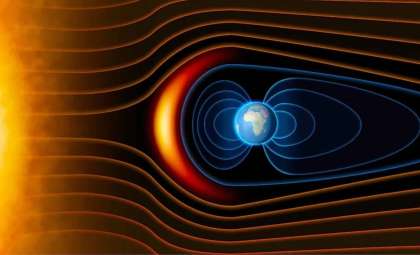
This emerging picture holds significant consequences for geoscience, influencing our understanding of processes like plate tectonics and Earth’s magnetic field. If metallic elements and other materials are circulating through the planet’s depths, then the mechanisms driving surface geology and internal behavior are far more dynamic than previously thought. Beneath our feet lies a constantly evolving, hotbed of geological activity.
As noted in the study, “The Earth beneath us is not the fixed and inert planet once envisioned; rather, it is an incredibly dynamic and vibrant system.” This discovery sparks new inquiries about the relationship between Earth’s deep interior and its surface, and how their interactions have shaped our planet across billions of years.
- Categories:
- Science










0 comments
Sign in to Comment