
Recent research has shed light on unusual amphibians from northwestern Western Australia that flourished soon after Earth’s most devastating mass extinction. Fossil evidence from the Kimberley region indicates these creatures diversified swiftly and expanded their range globally following the end-Permian extinction event.
Published in the Journal of Vertebrate Paleontology, this study revisits fossils originally uncovered in the 1960s within the Blina Shale at Noonkanbah Station, situated around 250 kilometers from the coastal town of Broome. These remains, dating back about 250 million years to the Early Triassic, suggest the area was once a brackish mudflat adjacent to a shallow bay, not the arid landscape seen today.
Rediscovery of Long-Lost Fossils
The amphibian species initially described from Noonkanbah Station was designated Erythrobatrachus noonkanbahensis in 1972 by paleontologists Cosgriff and Garbutt. According to the new research detailed in the Journal of Vertebrate Paleontology, this classification was based on a trio of fossilized skull fragments found during expeditions in the 1960s.

These fossil pieces were eventually housed in museums across Australia and the United States but became misplaced over the years. While a high-quality plaster replica of one skull fragment stayed at the Western Australian Museum, the original specimens were thought lost.
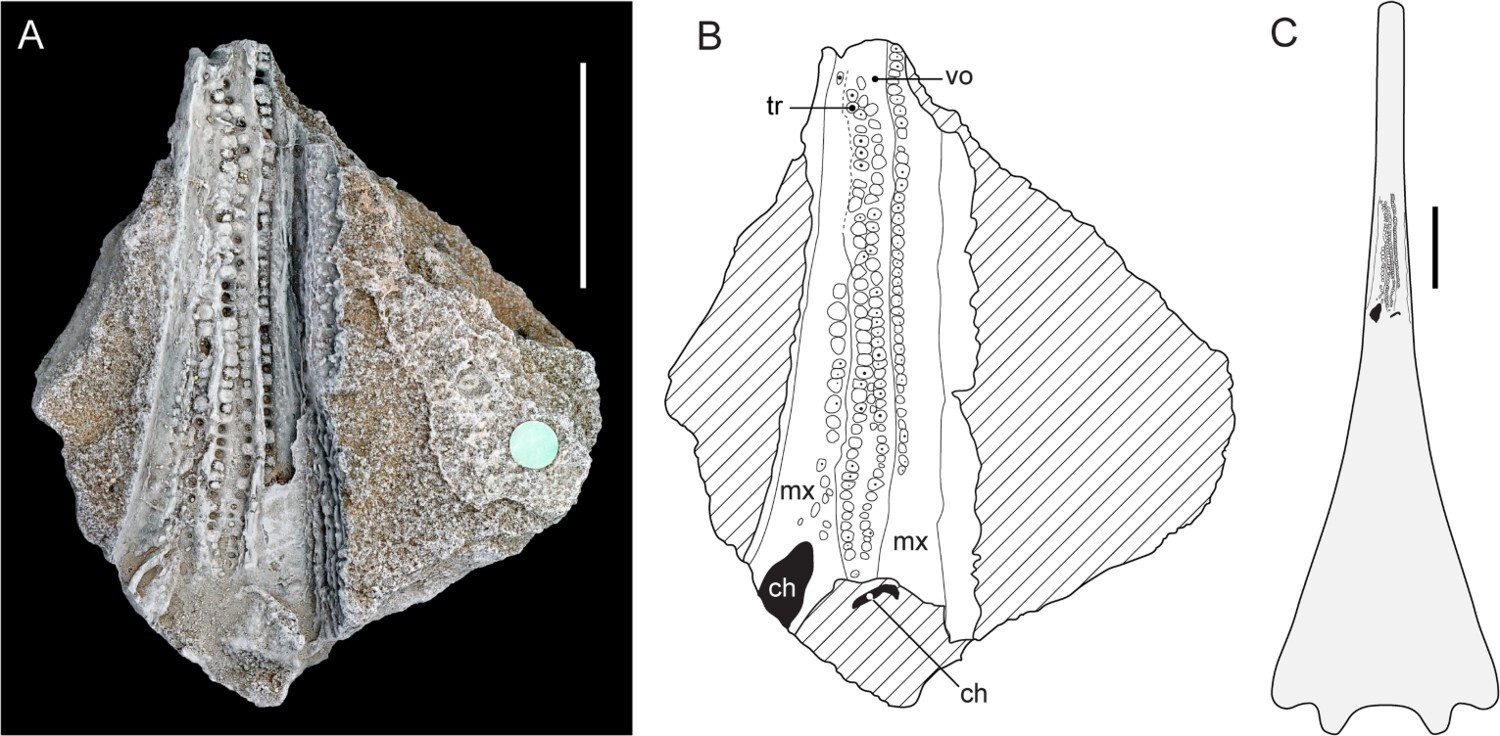
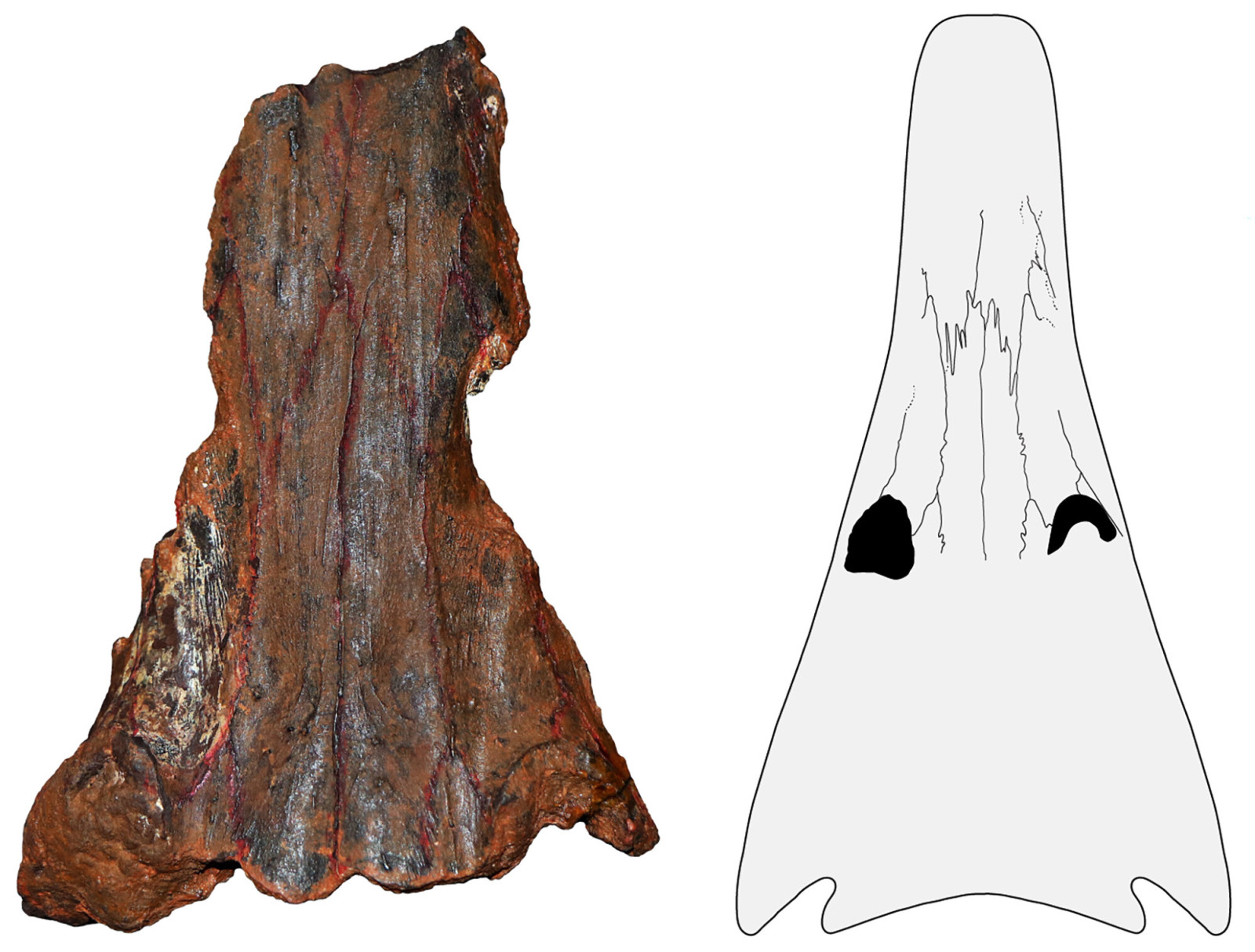
The turning point occurred when one of the missing skull components was rediscovered within a Berkeley museum collection in the United States. Access to two original fossil fragments enabled scientists to directly reexamine the material instead of relying only on casts.
Revealing Two Separate Species
Detailed study of the two skull fragments demonstrated they belonged to different species. As noted by the researchers, one specimen retained the original name Erythrobatrachus, while the other corresponded to the temnospondyl amphibian Aphaneramma, known from prior fossil records.
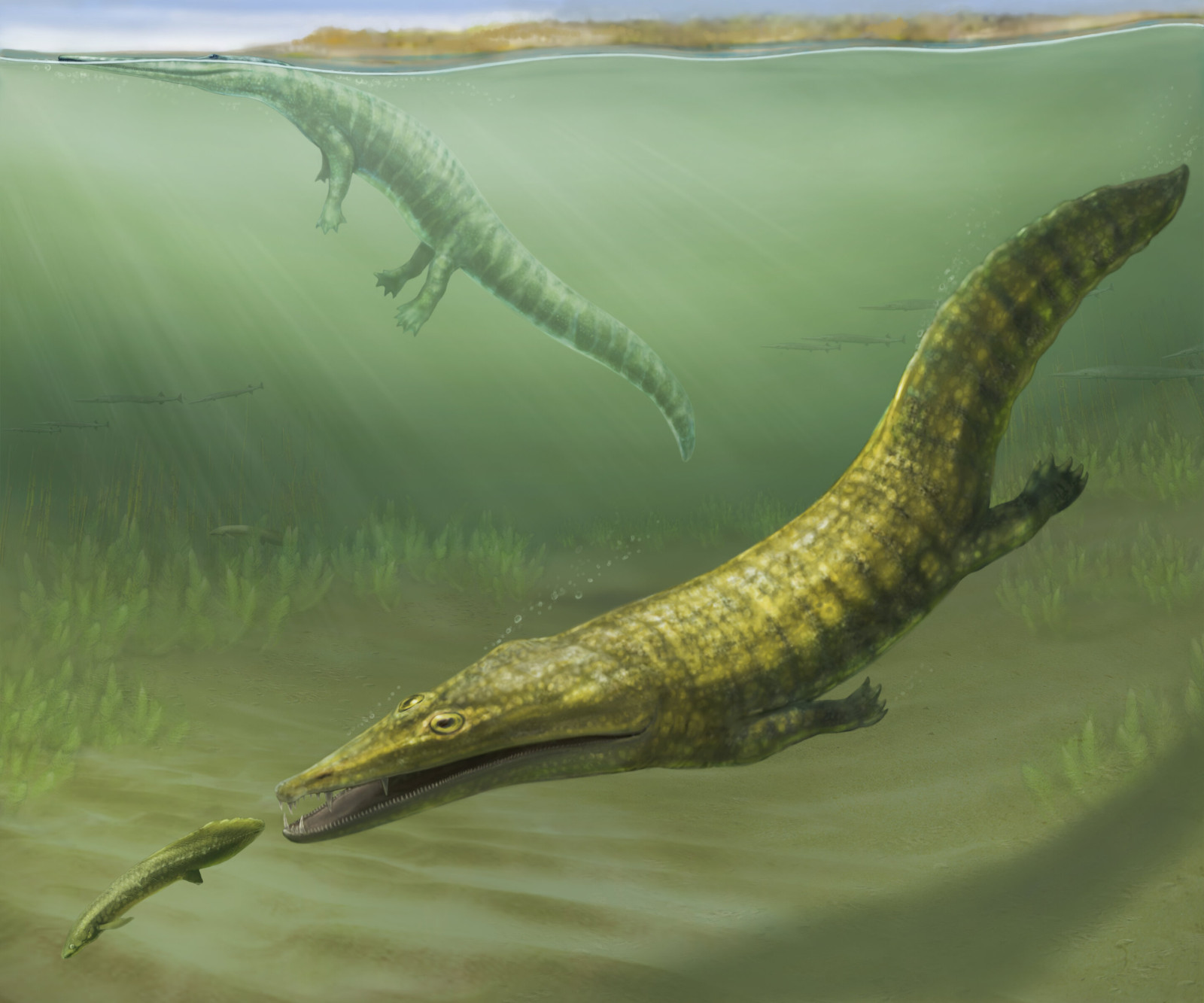
Both amphibians had skulls approximately 40 centimeters long. Their contrasting shapes suggest distinct ecological niches. Erythrobatrachus had a wider, sturdier skull, implying it served as an apex predator, whereas Aphaneramma featured a longer, narrower snout likely adapted to catching small fish.
These results demonstrate that both amphibians inhabited the same brackish environment but exploited different prey, allowing them to thrive without direct competition within their ecosystem.
Expansion of Life After Earth’s Major Extinction
Temnospondyls represent a remarkably enduring vertebrate lineage, spanning nearly 210 million years from the Carboniferous to the Cretaceous. They successfully weathered both the end-Permian and end-Triassic extinction events.
The Trematosauria family, encompassing both Erythrobatrachus and Aphaneramma, likely tolerated saline conditions. As the recent paper notes:
“Tetrapods emerged as dominant marine predators during the earliest Triassic, with trematosaurid temnospondyls representing one of the first groups to radiate globally after the cataclysmic end-Permian mass extinction. “
Fossils of Aphaneramma have been found in Svalbard, Russia, Pakistan, and Madagascar, dating to less than a million years following the Great Dying. This discovery in Australia confirms their broad dispersal during the dawn of the Mesozoic Era.
- Categories:
- Science




0 comments
Sign in to Comment