

A team of Japanese researchers has uncovered a new variant of ice named ice 0, marking a major advancement in our comprehension of ice crystallization.
This finding could transform how we approach ice formation theories and has potential applications across multiple scientific disciplines and technologies.
Introduction to Ice 0 and Its Distinct Characteristics
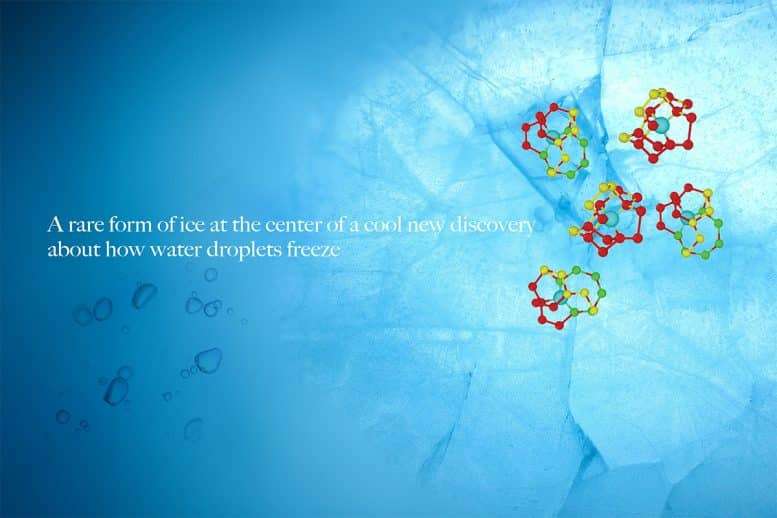
Researchers at the Institute of Industrial Science within The University of Tokyo have characterized a previously unknown ice structure, termed ice 0, which emerges near water surfaces. Differing from the typical hexagonal ice (ice I) commonly encountered, ice 0 is rarely observed in Earth's natural environment. While over twenty ice phases have been documented, each forming under specific environmental pressures and temperatures, ice 0 stands out because it serves as the initiating template for ice crystal growth in supercooled water.

This ice variant develops from minuscule crystalline precursors sharing the structural pattern of ice 0, acting as nuclei for ice growth at water’s interface. This discovery settles a long-standing uncertainty within the scientific community regarding whether ice nucleation starts on the surface or within the interior of water droplets. According to Gang Sun, the study’s lead researcher, “Modeling indicates that crystallization preferentially occurs close to the free surface of water droplets under uniform temperature conditions, answering the debate about surface versus internal nucleation.”
Ice Nucleation Mechanism and Surface-Focused Crystallization
Typically, ice nucleation occurs heterogeneously on solid substrates like vessel walls containing the water. This novel research reveals that nucleation can also initiate just beneath the water-air boundary, facilitated by precursors exhibiting ring structures akin to ice 0.
These ice 0 precursors spontaneously form as a result of negative pressure induced by water's surface tension, overturning previous assumptions and presenting new perspectives on ice formation both naturally and in engineered contexts.
Broader Scientific and Practical Impacts
The unveiling of ice 0 carries wide-reaching consequences for several disciplines. In atmospheric science, a finer grasp of ice crystallization at the microscopic scale can refine cloud and precipitation models, crucial for improving climate forecasts and understanding global warming effects. Structures similar to ice 0 influence ice nucleation in tiny cloud droplets, potentially altering cloud dynamics and atmospheric chemistry.
Within the food industry, insights into ice 0 can enhance freezing methods that preserve food integrity and quality. Furthermore, the unique traits of ice 0 could inspire innovative improvements in HVAC and refrigeration technologies, where controlled ice formation is fundamental.
Hajime Tanaka, senior author, remarked on the discovery’s significance: “Elucidating the mechanism behind surface crystallization of water is poised to impact fields like climate science and food technology, where the behavior of water during freezing is vital.” As investigations continue, ice 0's implications may extend into cryobiology, materials science, and more.
Prospects for Future Investigations
Identifying ice 0 lays the groundwork for future research probing the unique physical and chemical behaviors of this ice phase. Upcoming studies aim to determine the precise environmental parameters promoting ice 0 formation and understand its transformation into conventional ice phases like ice I. There is considerable interest in leveraging ice 0 for novel industrial and technological uses.
As the scientific community advances in decoding the complexities of ice crystallization, ice 0’s discovery exemplifies nature’s intricacy and opens possibilities for breakthroughs benefiting science and industry alike.
This pivotal revelation ushers in a new chapter in ice research, promising deeper insights and innovative applications. Continued exploration of the characteristics and potential roles of ice 0 is expected to yield fascinating developments that expand our knowledge of Earth's fundamental processes.







0 comments
Sign in to Comment