

In South Australia’s remote Nilpena Ediacara National Park, paleontologists have uncovered a groundbreaking fossil find.
The newly identified species, Quaestio simpsonorum, is considered among the earliest animals capable of movement. This exceptional fossil, estimated to be around 555 million years old, provides critical insight into the emergence of complex multicellular life during the Ediacaran Period, a pivotal time in Earth’s biological history.
A Glimpse into Early Animal Mobility and Structure
Leading the expedition was Scott Evans, an assistant geology professor at Florida State University, collaborating with experts from the University of California, Riverside and the South Australian Museum. The Nilpena site, famed for its Ediacaran fossil richness, has yielded fresh perspectives thanks to the discovery of Quaestio.

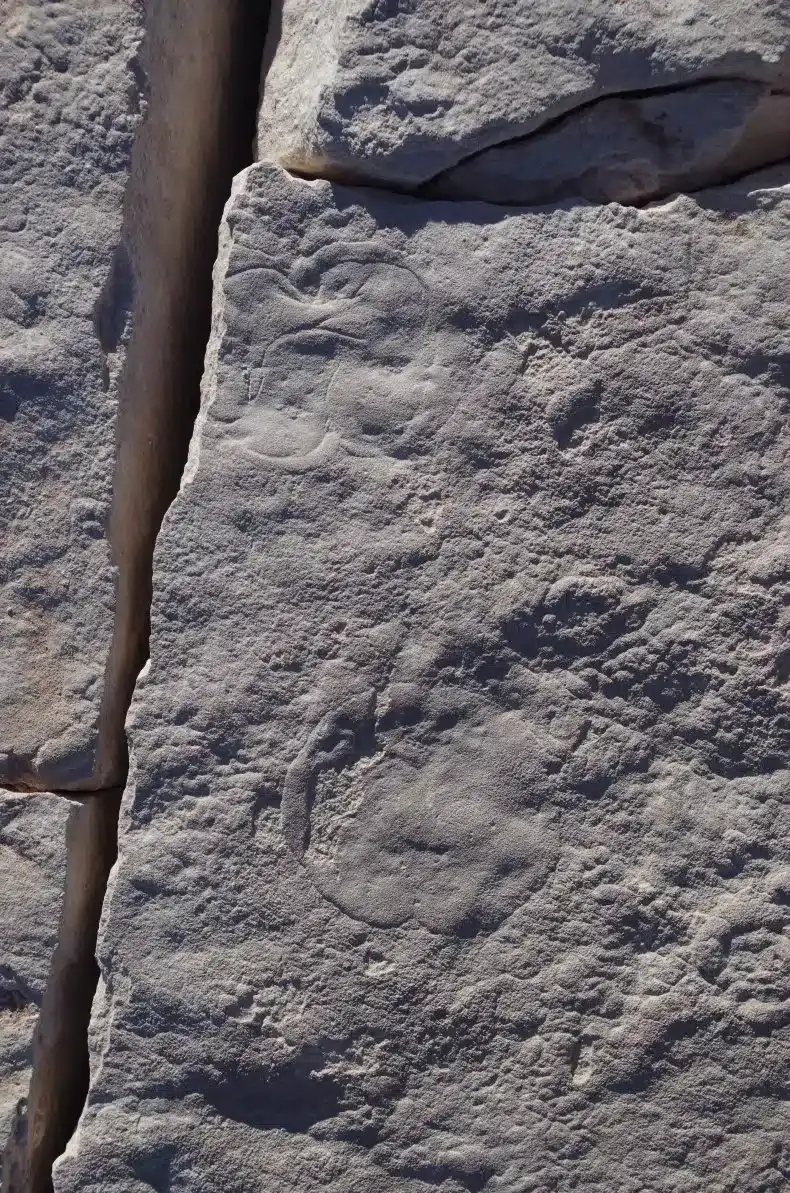
This species, roughly the size of a human palm, displays a unique question-mark shaped body with distinct left and right sides. This bilateral asymmetry signals a leap in evolutionary complexity that is rarely seen in fossils from this period. Evans remarked, “Fossils from this era rarely exhibit such clear organization. The presence of left-right asymmetry marks a crucial step in evolutionary development.”
Importantly, this suggests that the genetic blueprint for bilateral symmetry—common in modern animals—was already functional over half a billion years ago. According to Evans, “Animals today utilize similar genetic mechanisms to establish distinct body sides, which likely operated in Quaestio as well.”
Exploring Behavior: An Ancient Seafloor “Cleaner”
Quaestio simpsonorum is also remarkable because it could move independently, a rare characteristic at this point in evolution. Scientists compare its locomotion to a basic Roomba, as it slowly navigated the sea floor feeding on microbial mats composed of tiny algae, bacteria, and microorganisms. This grazing behavior was vital for survival in the nutrient-rich yet competitive oceans of the Ediacaran.
Nilpena’s fossil records include not just body fossils of Quaestio, but also trace fossils—preserved marks showing where the creature moved. Graduate researcher Ian Hughes from Harvard University described their excitement: “Discovering a trail behind a fossil confirmed this animal could move independently, an extraordinary find for this ancient era.” This rare pairing offers direct evidence of the creature’s behavior and environmental interaction.
These movement traces reveal that Quaestio likely fed by vacuuming nutrients from organic mats, much like a modern device cleaning a surface. This indicates that early animals had already developed survival strategies to seek out resources critical for growth and reproduction.
The Broader Implications for Early Animal Evolution
The identification of Quaestio simpsonorum extends beyond one organism, illuminating key evolutionary developments. Its clear bilateral asymmetry and autonomous movement represent a vital advance in the complexity of early animal life. As Mary Droser, geology professor at UC Riverside and project leader, noted: “This discovery offers profound insights into how animal life unfolded on Earth. Given we have yet to find life elsewhere, understanding Earth’s earliest life provides clues for searching life beyond our planet.”
Studying such ancient species allows scientists to unravel how early genetic and environmental pressures guided the rise of complex organisms, eventually leading to humans. Droser emphasized, “Analyzing gene expression that shapes these early forms opens new avenues for comprehending the origins of complex life on Earth.”
Ongoing Investigations and Expectations for New Finds
Despite the excitement around Quaestio simpsonorum, the research at Nilpena Ediacara National Park continues. For decades, paleontologists have uncovered a myriad of fossils revealing early animal ecosystems. Spanning nearly 150,000 acres, the park remains a rich source of ancient discoveries.
As Ian Hughes commented, “Every excavation reveals new species, highlighting the surprising diversity present at the dawn of animal life.” This ongoing work enriches understanding of how organisms adapted as the environment changed during the Ediacaran.
Scientists and volunteers alike plan to keep excavating Nilpena, aiming to shed more light on the complex ecosystems from over 550 million years ago. Each unearthing adds crucial knowledge, helping decode the evolutionary journey that shaped life on our planet.








0 comments
Sign in to Comment