
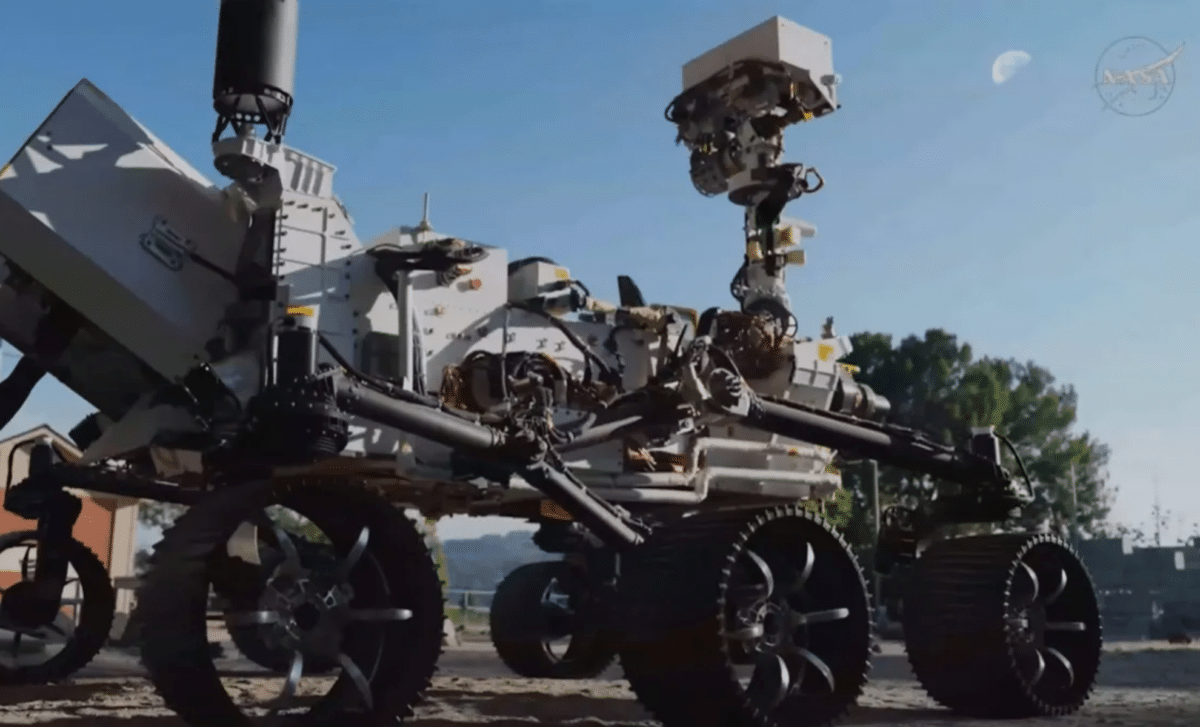
NASA is exploring the idea of repurposing one of its well-known rover designs for a lunar mission. In a recent Artemis program update, the agency disclosed plans to potentially send PROMISE, an engineering model based on the Mars rovers Perseverance and Curiosity, to the Moon’s south pole. This initiative could convert a terrestrial test rover into an operational lunar vehicle, showcasing an efficient reuse of established technology to support upcoming Artemis goals. The effort, backed by NASA’s Jet Propulsion Laboratory (JPL), aims to hasten lunar exploration by utilizing hardware that is already constructed.
Rationale for Sending a Mars Rover to the Lunar Environment
The focus is on PROMISE—standing for Polar Rover for Observation, Mapping, and In-Situ Exploration—a test rover created to verify software, driving routines, and engineering techniques prior to their implementation on Mars rovers like Curiosity and Perseverance. For many years, this rover has remained Earth-bound, serving as a safe platform for engineers to test complex operations far away from the costly missions on Mars.
Now, NASA envisions transforming this rover from a simulation tool into an actual scientific instrument on the Moon. Sharing numerous systems with the Mars rovers, PROMISE could be adapted for exploratory tasks in the lunar setting. Unlike many planned solar-powered lunar robots, PROMISE is fueled by a radioisotope thermoelectric generator (RTG), enabling continuous operation through the Moon’s long, dark nights—an especially valuable feature near the south pole where sunlight is inconsistent.

NASA head Jared Isaacman explained the motivation behind the plan: “We’ve gained extensive experience operating the two Mars rovers, and this hardware represents a significant investment from taxpayers. So the question arose, ‘What if we send it to the moon?’” This approach reflects NASA’s increasing preference for leveraging existing technologies rather than designing entirely new systems when feasible.
From Test Model to Lunar Expedition Vehicle
NASA’s Jet Propulsion Laboratory (JPL) highlights that PROMISE has been integral in validating commands before sending them millions of miles to Mars rovers, ensuring its hardware operates under a proven track record.
JPL’s role includes more than engineering. “They weren’t going to mess anything up out here,” Jia-Rui Cook told Space.com. Cook manages JPL media relations and the remark points to the meticulous testing culture within rover development, where every component is rigorously verified before flight eligibility is granted.
The design philosophy behind PROMISE derives from decades of robotic mission experience. “Landing on Mars is hard,” Cook noted. The challenge of safely delivering heavy robotic explorers to another planet has driven NASA to refine technologies over numerous missions. These lessons learned are now influencing plans for lunar surface exploration.
Cook also stressed NASA’s strategy to build upon existing successes instead of starting anew: “If we’ve done it successfully already, then we’ll build on that.” This mindset fits within NASA’s wider Artemis framework, integrating proven hardware with new commercial collaborators to achieve ongoing human and robotic lunar presence.
The Lunar South Pole Emerges as a Prime Focus
PROMISE is expected to arrive alongside other missions. NASA announced recent commercial lunar landing agreements with Astrobotic, Firefly Aerospace, and Intuitive Machines, each tasked with delivering scientific instruments through the Commercial Lunar Payload Services (CLPS) program.
These robotic explorers will assess lunar terrain, radiation, landing safety, and local resources in preparation for future crewed visits. Instruments on upcoming landers will examine rocket plume effects on lunar dust, enhance navigation through laser reflectors, and monitor radiation across moon regions.
Attention on the Moon’s south pole is growing because it likely contains substantial water ice deposits locked in permanently shadowed craters. Such water could be critical for sustaining astronauts by providing drinking water, breathable air, and fuel production. However, this area’s difficult terrain and fluctuating sunlight pose challenges. A rover independent of solar power would be especially advantageous for scientific work there.
JPL’s Spirit of Exploration Inspires Innovation
The PROMISE initiative reflects JPL’s unique engineering culture, which embraces tackling challenging missions once deemed impossible. Creativity flourishes alongside strict scientific rigor.
This approach reaches beyond technology. “We collect the data and we hand it over,” Craig said. “Everything we do is released to the world.” This underlines NASA’s dedication to openly sharing scientific findings, enriching the worldwide research community and public knowledge.
The enthusiasm within JPL’s teams is palpable. “We fly our nerd flags extremely high here at JPL,” McClure said. “So high we have had four marriage proposals at the center of the universe.” This comment highlights the deep commitment and passion of those behind some of humanity’s most groundbreaking robotic explorers.
While PROMISE has not yet received final mission approval, it exemplifies NASA’s ongoing pursuit of innovative solutions that leverage existing assets as humanity prepares for the next chapter of lunar exploration. Should this concept proceed, a rover initially designed for Mars could soon embark on a historic journey to another celestial body, demonstrating that even backup equipment can achieve monumental feats.
- Categories:
- News












0 comments
Sign in to Comment