
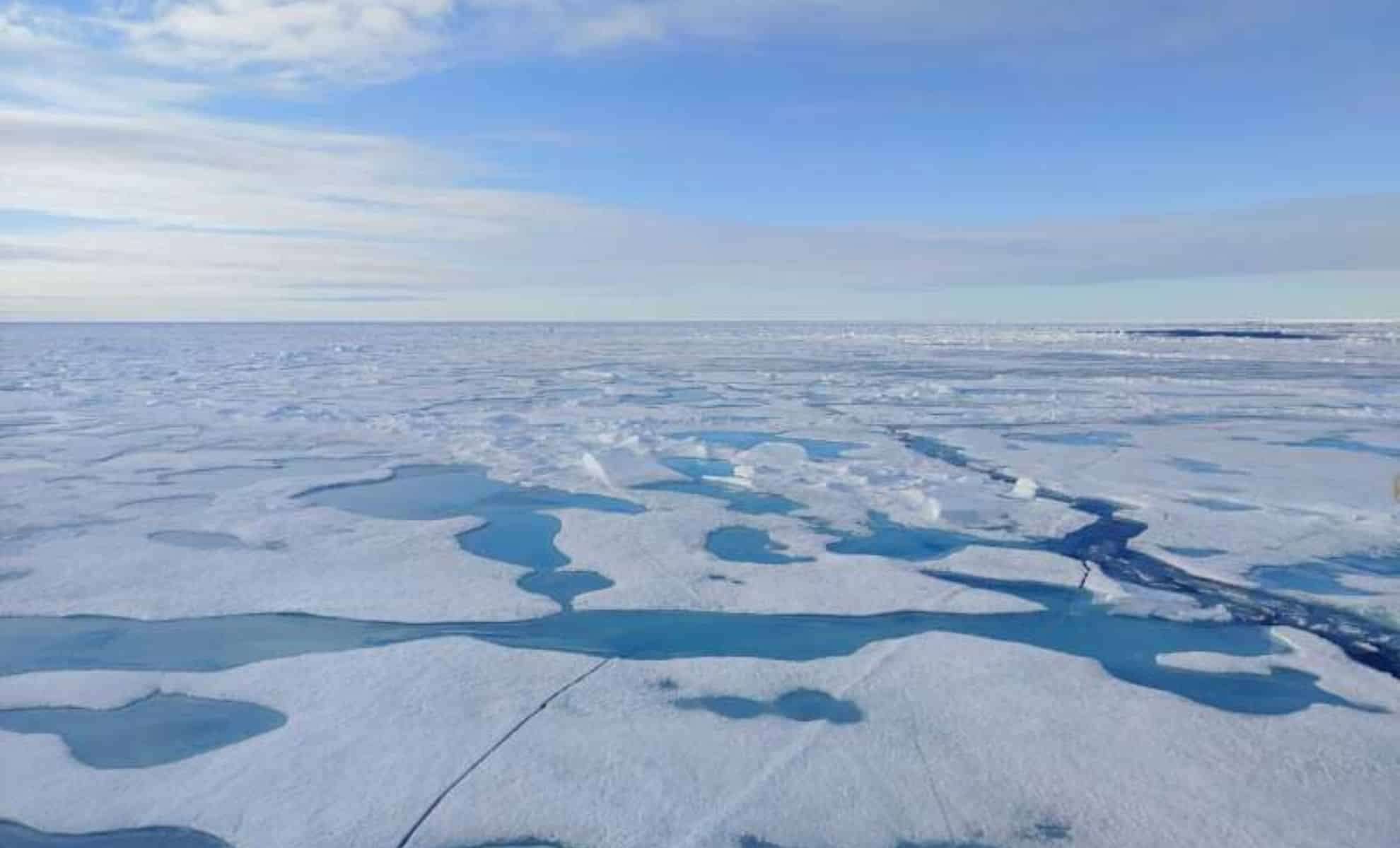
The Arctic is experiencing warming at an unprecedented pace, prompting researchers to predict a pivotal moment: the Arctic Ocean could become ice-free for the first time as early as 2027. Although one ice-free day may seem minor, it signals a major shift in the planet’s climate system and highlights the escalating consequences of global warming. This milestone could redefine our understanding of a region once permanently blanketed by sea ice and snow, with far-reaching effects on worldwide weather patterns for years to come.
Urgency of an Ice-Free Arctic Scenario
The Arctic has long been a critical indicator in climate studies. According to recent findings led by climatologists from the University of Colorado and the University of Gothenburg, the area is rapidly approaching a transformation that may soon be irreversible. Through sophisticated climate modeling, scientists estimate that the Arctic could witness its initial ice-free summer day sometime around 2027, with rapid declines in sea ice expected even earlier.
Central to this melting trend is Arctic amplification, a process causing this region to warm approximately three times faster than the global average. As human-induced greenhouse gases trap more heat in the atmosphere, the Arctic’s protective ice is increasingly threatened by rising temperatures. The ongoing loss of sea ice, shrinking at a rate exceeding 12% per decade, not only signals climate change visually but also intensifies feedback mechanisms that accelerate warming worldwide.

Alexandra Jahn, a University of Colorado climatologist and co-author of the report, explains that while the inaugural ice-free day may not dramatically alter global conditions right away, it represents a fundamental ecological shift. “The first ice-free day in the Arctic won’t change things dramatically,” Jahn said. “But it will show that we’ve fundamentally altered one of the defining characteristics of the natural environment in the Arctic Ocean, which is that it is covered by sea ice and snow year-round, through greenhouse gas emissions.” This underlines the profound impact of human activity on the Arctic’s once-stable ice coverage.
Rapid Decline Towards a Tipping Point
In their investigation, Jahn and lead author Céline Heuzé from the University of Gothenburg examine scenarios predicting when the Arctic Ocean will experience its first ice-free day. Utilizing advanced climate simulations, they focus on the timing of this milestone in addition to seasonal and extreme environmental influences that might accelerate this shift. Unlike prior studies which analyzed entirely ice-free months, this work highlights the significance of a single ice-free day.
With the current fast-paced warming, this event may arrive earlier than many expect. “Because the first ice-free day is likely to happen earlier than the first ice-free month, we want to be prepared,” Heuzé said. “It’s also important to know what events could lead to the melting of all sea ice in the Arctic Ocean.” Their findings suggest that this initial ice-free day will serve as a warning sign for increasingly severe ice loss summers to follow.
The models consider variables such as fluctuating sea ice thickness and seasonal shifts, both of which impact the timing. Extreme weather events, like the unprecedented 50°F above-average temperatures seen in the fall of 2022, play a critical role in expediting ice melt. As these unusual warm spells become more common due to climate change, the timeline for losing Arctic ice shortens accordingly.
Repercussions of a Sea Ice-Free Arctic
A permanently ice-free Arctic carries consequences that extend well beyond the polar region. The Arctic ice plays a central role in moderating global temperatures by reflecting sunlight back into space. Without this reflective surface, the ocean absorbs additional heat, further intensifying warming in a dangerous feedback cycle. This escalation affects global climate, contributing to extreme heatwaves, hurricanes, and storms. Additionally, ecosystems dependent on sea ice face severe disruption, threatening species such as polar bears, seals, and walruses that rely on ice for hunting and breeding.
Moreover, the melting of Arctic ice influences global sea levels. Although sea ice itself does not contribute significantly to rising seas, the loss of ice from land-based glaciers, particularly those in Greenland, will raise ocean levels and endanger millions in coastal areas worldwide.
One of the most concerning outcomes of an ice-free Arctic is the potential disruption of global weather systems. As the Arctic loses its ice cover and temperatures climb faster, the jet stream weakens, causing weather extremes across different regions. This may bring longer, harsher heatwaves, floods, and storms, along with more unpredictable temperature swings globally.
Strategies to Delay Arctic Ice Loss
Although this timeline appears daunting, scientists maintain that future outcomes depend on human action. Swift and substantial efforts to cut greenhouse gas emissions could slow sea ice decline and postpone the Arctic’s transition to ice-free conditions. While the first ice-free day seems likely, prompt mitigation can help reduce the severity of resulting climate consequences.
Jahn and Heuzé stress that emission reductions remain critical. “Any reductions in emissions would help preserve sea ice,” Jahn remarks. By curbing global temperature increases, it may be possible to limit feedback loops that intensify Arctic warming. Although an entirely ice-free Arctic is becoming increasingly probable, decisive global initiatives could alleviate some of the worst impacts on sea level rise and extreme weather.
- Categories:
- News ,
- Climate change









0 comments
Sign in to Comment