
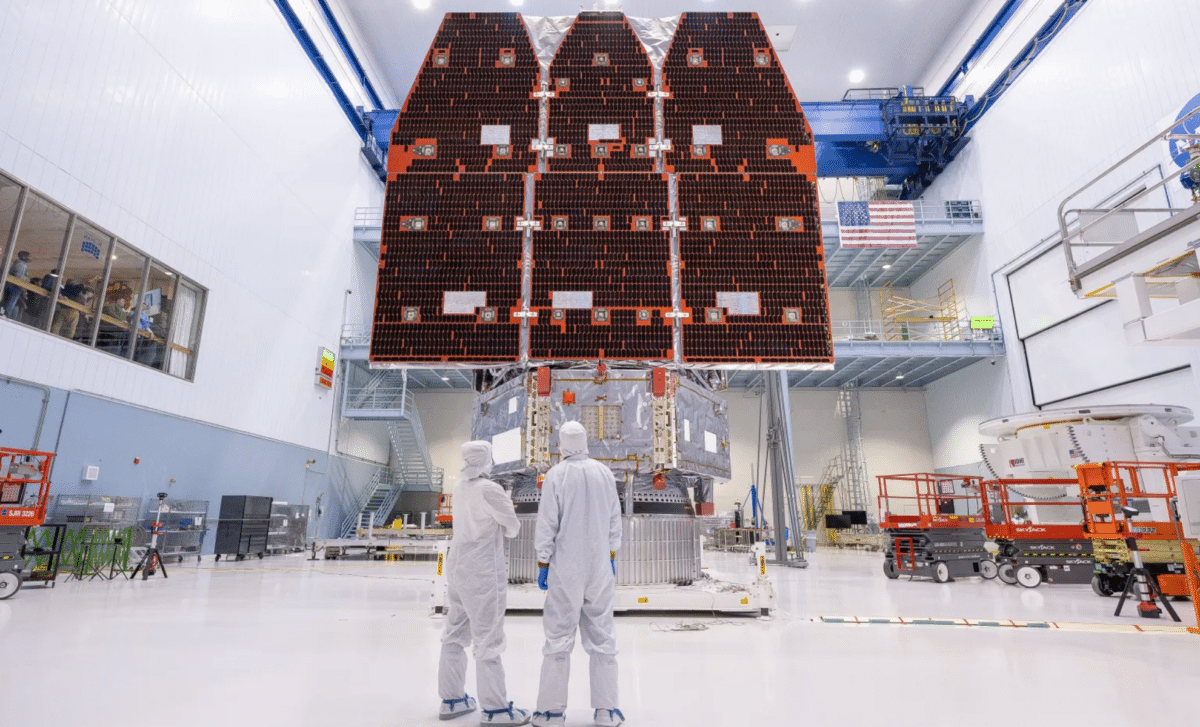
NASA has achieved a significant milestone by finalizing the assembly of the Nancy Grace Roman Space Telescope, an advanced observatory poised to revolutionize our cosmic knowledge. This crucial phase of integration signals a new chapter in space science, with the telescope expected to unlock transformative discoveries about the cosmos. Targeting a launch in 2027, the Roman telescope will examine distant planets, stars, galaxies, and the enigmatic dark energy, delivering unprecedented cosmic insights.
NASA Marks a Breakthrough in Space Science
“Bringing the Roman telescope to completion represents a landmark achievement for our program,” stated NASA Associate Administrator Amit Kshatriya. “Groundbreaking science is built upon precise engineering, and our team has meticulously crafted an observatory that will broaden our cosmic understanding. As Roman advances into final testing stages following its assembly, we are dedicated to flawless execution and readiness for its upcoming launch, benefiting scientists worldwide.”
With construction concluded, the Roman Space Telescope now moves into rigorous final testing before transportation to NASA’s Kennedy Space Center in Florida for launch preparations. Its first five years in space are expected to yield remarkable discoveries, uncovering more than 100,000 exoplanets, millions of stars, and billions of galaxies, dramatically expanding our view of the universe.

Exploring the Universe’s Deepest Secrets
“The completion of Roman’s build positions us at the threshold of extraordinary scientific breakthroughs,” remarked Julie McEnery, Roman’s senior project scientist at NASA Goddard. Equipped with state-of-the-art technology and infrared imaging, the telescope will enable astronomers to probe dark matter, dark energy, and gain clearer perspectives on distant exoplanets and black holes.
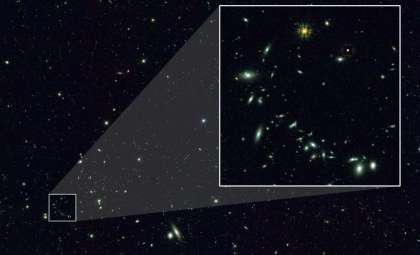
Roman’s observational capabilities are powered by two main instruments: the Wide Field Instrument and a Coronagraph Instrument technology demonstrator. The Wide Field Instrument features a 288-megapixel camera that will capture expansive swaths of the sky, producing images larger than the full Moon’s surface, allowing detailed studies of vast cosmic regions.
A Glimpse into Alien Worlds and Exoplanet Research
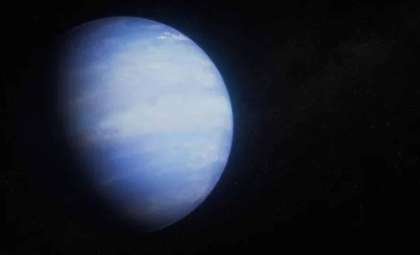
A standout feature of Roman is its coronagraph, which suppresses dazzling starlight to directly photograph planets orbiting distant stars. This tool will aid in tackling the timeless question: “Is there life beyond Earth?” The coronagraph targets older, colder exoplanets orbiting closer to their stars than those detected before, enabling deeper exploration of nearby planetary systems.
Feng Zhao, manager of the Coronagraph Instrument at NASA’s Jet Propulsion Laboratory, shared his enthusiasm for the project, stating,
“The Roman Coronagraph is going to bring us one step closer to that goal. It’s incredible that we have the opportunity to test this hardware in space on such a powerful observatory as Roman.”
Examining Dark Matter, Dark Energy, and Cosmic History
The telescope’s mission centers around three primary surveys comprising 75% of its five-year timeline. These studies will enhance understanding of the universe’s formation and transformation. Roman’s High-Latitude Wide-Area Survey will investigate dark matter, the invisible substance influencing visible matter through gravity.
Through the High-Latitude Time-Domain Survey, Roman will monitor celestial changes over timeframes ranging from days to years, providing vital information on how dark energy drives the universe’s accelerating expansion.
- Categories:
- Space






0 comments
Sign in to Comment