
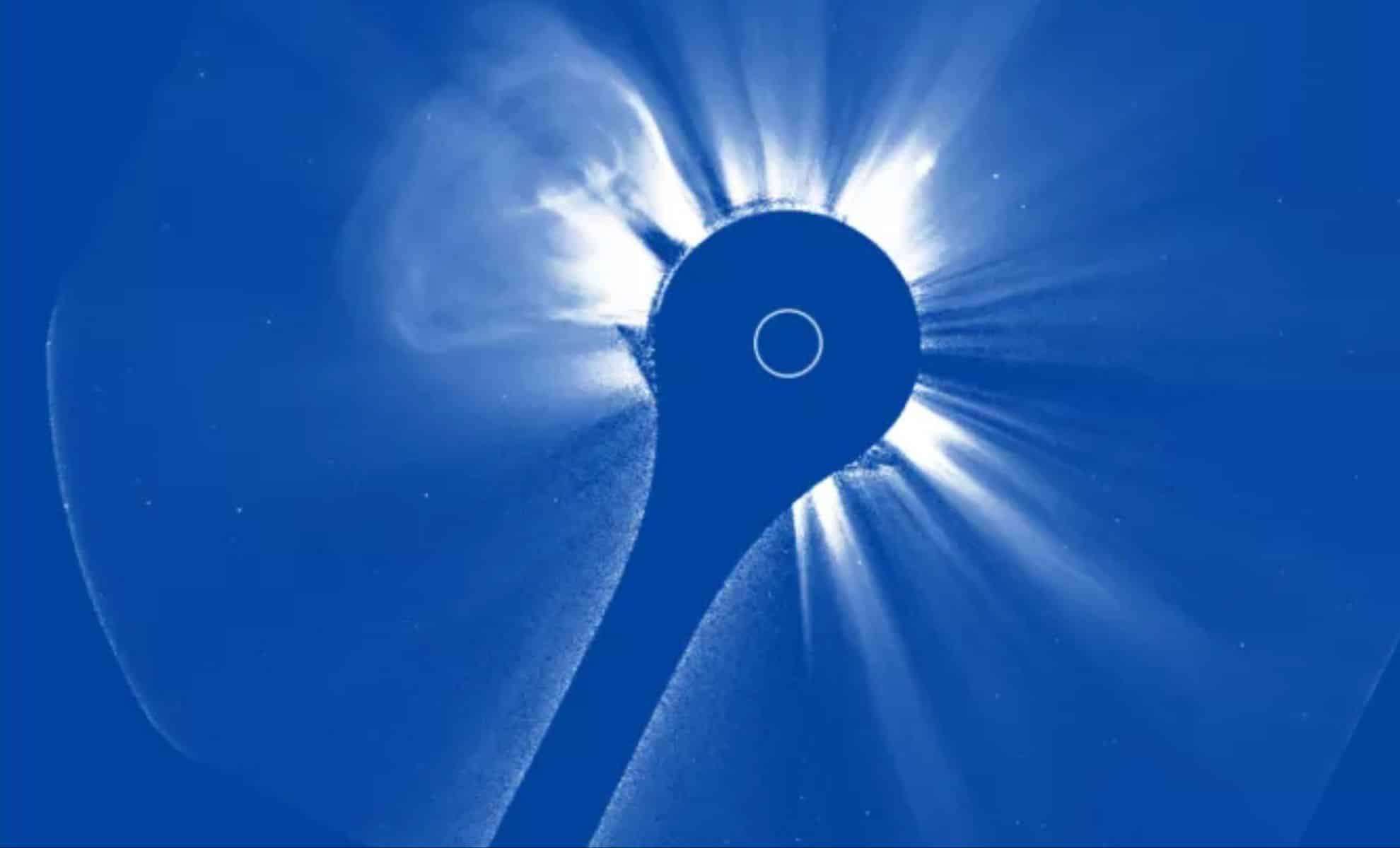
The National Oceanic and Atmospheric Administration (NOAA) has released the maiden images from its trailblazing Compact Coronagraph (CCOR-1), the first-ever operational coronagraph launched into space.
Installed on the recently deployed GOES-19 satellite, CCOR-1 started its observational mission on September 19, 2024, delivering uninterrupted views of the sun’s outer corona. This device marks a significant leap forward in space weather surveillance, supplying real-time data to enhance forecasts of coronal mass ejections (CMEs), massive solar eruptions that can profoundly affect Earth’s technological systems.
CCOR-1: Advancing the Study of Solar Phenomena
NOAA’s CCOR-1 sets a new standard in tracking solar events. This instrument employs coronagraphy, a method that masks the sun’s bright surface with an occulting disk, enabling detailed imaging of the dimmer corona where CMEs originate. These powerful blasts of plasma and magnetic fields are crucial to monitor, as they can trigger geomagnetic storms that disturb satellites, navigation systems, and power infrastructure on Earth.

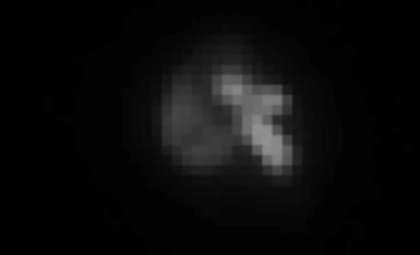
The initial photos from CCOR-1 revealed a coronal mass ejection launching from the sun’s surface. NOAA’s chief space weather scientist, James Spann, described it as “The smoky cloud coming off the left-hand side of the center in the image is a coronal mass ejection… an explosion on the surface of the sun that literally expels part of its atmosphere outwards.” These CMEs consist of plasma, an intensely hot mix of electrons and protons, and can race through space at speeds ranging from hundreds to thousands of miles per second.

A standout feature of CCOR-1 is its capability to capture images every 15 minutes, nearly real-time solar observation. This rapid update rate is a considerable enhancement compared to earlier tools, which had lengthy delays between captures. Spann emphasized the value of this continuous monitoring for early solar storm detection: “The aurora is kind of like the icing on the cake, the most visible manifestation of space weather, but there are other impacts that are not so obvious.” These effects include disruptions to communications, GPS signals, and potential hazards for astronauts.
Enhancing Space Weather Prediction in Real Time
The live data stream from CCOR-1 will be essential to advance space weather predictions. Space weather involves solar wind activity and CMEs influencing Earth’s magnetosphere and ionosphere. When a CME targets Earth, it can trigger geomagnetic storms with extensive effects. For instance, these storms can induce damaging electric currents in power grids, disrupting transformers and causing blackouts. They can also interfere with satellite operations and communication networks vital to aviation, maritime travel, and GPS-dependent industries.
By scanning solar conditions every quarter-hour, NOAA’s CCOR-1 can detect CMEs in the moment and forecast their potential arrival and impact on Earth. Spann noted that although auroras are the storm’s most spectacular consequence, “Satellites and communication networks can be interrupted when a CME heads our way and can even pose a risk to astronauts on space stations.” In our technologically connected world, this early warning ability is crucial.
Prospects for Advanced Solar Observation
NOAA’s launch of CCOR-1 is just the initial phase of an expansive effort to better forecast space weather. The GOES-19 satellite, currently completing post-launch checks, will begin full operation as the GOES East satellite by 2025, maintaining steady solar observation from a geostationary orbit. Information from CCOR-1 will feed into NOAA’s Space Weather Prediction Center, where experts analyze data to anticipate space weather events and issue precautionary alerts to safeguard vital Earth infrastructure.
Plans are also underway to broaden solar monitoring by deploying more coronagraph instruments through the Space Weather Follow-On and Space Weather Next programs. These efforts aim to station devices both along the sun-Earth line and orbiting the sun, creating an integrated solar observation network capable of detecting CMEs from multiple viewpoints. This approach is expected to yield sharper, faster space weather forecasting and reduce the risks posed by these events.
Spann underlined the significance of these new tools, noting that past coronagraphs sometimes left crucial observation gaps lasting several hours. The continuous monitoring enabled by CCOR-1 and forthcoming units will close these observational voids and deepen our grasp of space weather phenomena.
The Essential Need for Monitoring Space Weather
As dependence on space-based technology surges and human activity beyond Earth expands, the demand for accurate space weather forecasting intensifies. Solar eruptions, especially CMEs, threaten satellites, power grids, and communications systems worldwide. With society growing ever more reliant on GPS navigation, satellite links, and digital networks, the consequences of a major geomagnetic storm could be dire.
NOAA’s introduction of CCOR-1 marks a vital progression in Earth's defense against solar threats. Offering uninterrupted, real-time solar observation, this instrument empowers researchers to provide early alerts, helping to reduce the damage caused by solar storms. The planned expansion of coronagraph deployments promises to further strengthen monitoring capabilities, keeping space weather preparedness at the cutting edge.
- Categories:
- Astronomy ,
- News ,
- Space



0 comments
Sign in to Comment