
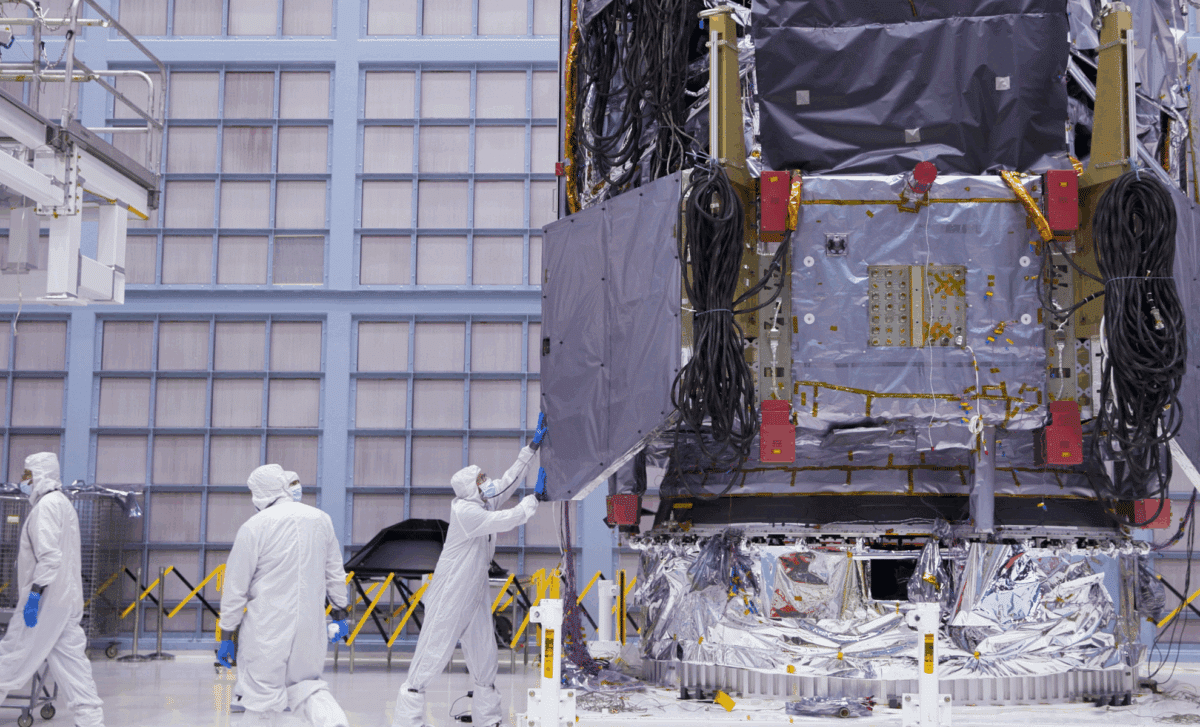
With its launch approaching, NASA’s Roman Space Telescope is being outfitted to endure the extreme environment of space. A vital component in its design is a state-of-the-art sunshield engineered to protect its highly sensitive instruments. Slated for deployment by 2027, the Roman telescope aims to investigate dark energy, exoplanets, and other cosmic phenomena, starting with robust thermal defense to maintain optimal functionality. Recently, NASA experts have integrated two advanced sunshields to guarantee peak operational reliability.
Sunshield: The Essential Thermal Barrier
Before the Roman Space Telescope embarks on its cosmic quest, it must shield its delicate instrumentation from intense solar heat. Operating in the cold vacuum of deep space where temperatures vary widely, the telescope’s infrared detectors require effective heat management to prevent interference with measurements. To address this challenge, NASA engineers have devised a specialized sunshield system. According to NASA scientists Matthew Stephens and Conrad Mason, this shield acts like a high-performance sunblock, shielding the observatory from the Sun’s powerful heat and light.
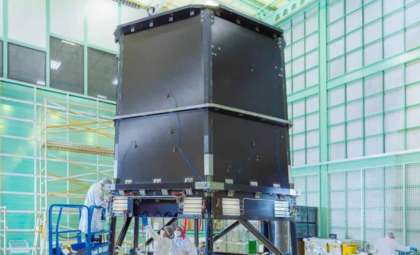
The sunshield comprises thin yet resilient panels engineered to endure the unforgiving conditions of space. These panels resemble large “aluminum sandwiches,” crafted from layers of metal sheets as fine as a credit card, supported by a honeycomb core that provides strength and insulation. This innovative layering preserves the telescope’s thermal balance, safeguarding its instruments from overheating. Each approximately 7-by-7-foot panel plays a critical role in maintaining a stable internal temperature to support precise astronomical observations.

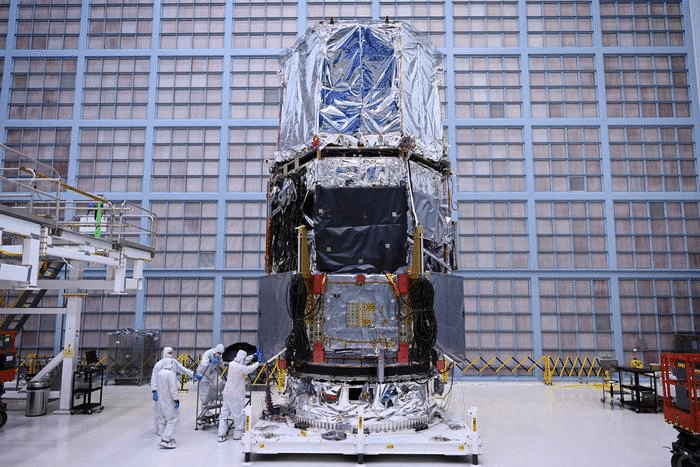
Engineering for Extreme Temperature Control
The Roman telescope’s sunshield excels at regulating heat in the vacuum of space, where heat transfer must be entirely managed by radiation. Stephens highlights the significance of the thermal gradient—the temperature difference across the shield’s surfaces—in its design. The side facing the Sun can become as hot as 216 degrees Fahrenheit, while the shaded side remains comparatively cool. This disparity enables the shield to effectively reflect and dissipate heat away from the telescope’s instruments.
Each sunshield contains multiple reflective coatings that slow heat transmission. With 17 layers facing the Sun and a single reflective layer on the shaded side, this configuration ensures robust thermal insulation. To validate performance under conditions mimicking deep space, the shields will face a stringent 70-day thermal vacuum test after assembly. This process confirms their durability and effectiveness in preserving the telescope’s scientific precision.
Precision Deployment in Orbit
After launch, the sunshield must unfold carefully to protect the telescope’s sensors. Deployment requires meticulous control, with each segment taking around two minutes to position correctly. NASA's design incorporates dampers—mechanisms that moderate movement and absorb shocks to avoid damage during deployment. These dampers are crucial for maintaining the sunshield’s structure and preventing mechanical stress.
Accuracy in deployment is critical, as even small misalignments could jeopardize the telescope’s observational capabilities. NASA engineers have crafted the deployment procedure to meet the challenges of zero gravity, ensuring that the sunshield opens flawlessly. This accomplishment underscores the mission’s sophisticated engineering and advances the telescope’s ability to explore the universe.
Unlocking Cosmic Mysteries with the Roman Telescope
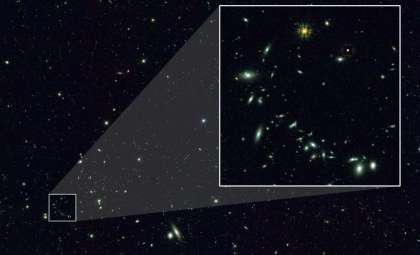
With its sunshield in place and instruments operational, the Roman Space Telescope will embark on a groundbreaking scientific journey. It is designed to address fundamental cosmic questions, including the nature of dark energy and the existence of exoplanets. Utilizing powerful infrared sensors, it will detect faint signals emitted by distant celestial bodies, enhancing our understanding of the universe’s accelerated expansion and uncovering hidden planets.
Beyond dark energy research, Roman will probe exoplanets using innovative methods such as microlensing and will employ a coronagraph to block starlight and reveal orbiting planets. Its wide field of view enables comprehensive sky surveys, offering unparalleled mapping of cosmic structures. This telescope’s ability to study planetary systems at varying distances paves the way for discoveries of potentially habitable worlds beyond our solar system.
- Categories:
- Space






0 comments
Sign in to Comment