
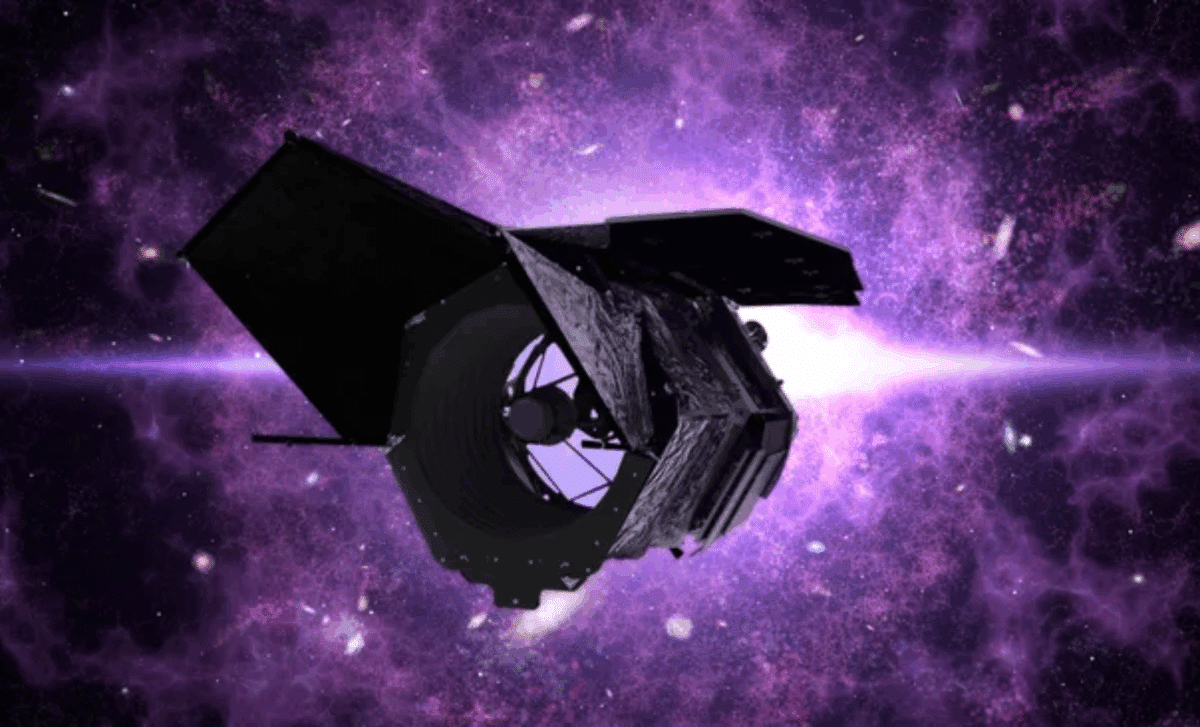
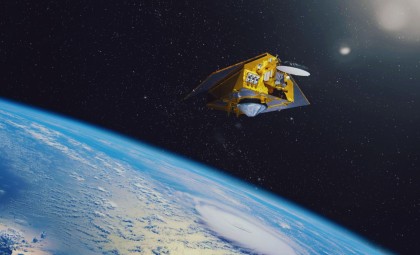
The upcoming Nancy Grace Roman Space Telescope, planned for launch around 2026 to 2027, is already generating excitement among astronomers due to its innovative capabilities. While originally designed to probe dark matter and dark energy, Roman promises to deliver surprising revelations about the stars that host exoplanets. Newly published research in The Astrophysical Journal highlights how Roman's cutting-edge asteroseismology features may transform our understanding of star lifecycles and their planetary companions.
A Breakthrough in Probing Stellar Interiors
The Roman Space Telescope stands out as a pioneering platform for stellar seismology—the study of wave patterns that vibrate across star surfaces. With a massive field of view that’s 100 times wider than Hubble’s, Roman will monitor hundreds of thousands of stars in exquisite detail. This technique, known as asteroseismology, is essential for revealing the internal structure of stars. Remarkably, Roman is expected to detect oscillations on over 300,000 red giant stars, furnishing astrophysicists with an unprecedented dataset. Trevor Weiss, lead researcher at California State University, Long Beach, emphasizes, “Asteroseismic observations will unlock extensive information about stars hosting exoplanets, which in turn will deepen our knowledge of those planets themselves.”
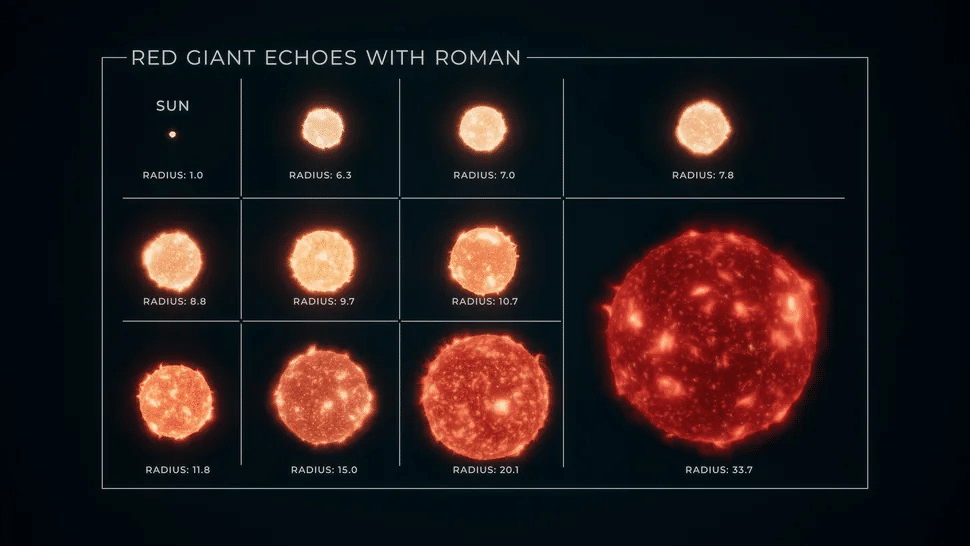
By capturing these stellar vibrations, Roman will help determine critical characteristics such as stellar mass, radius, and age. These insights are pivotal for assessing the habitability of orbiting exoplanets and predicting the lifespan of their host systems. The study published in The Astrophysical Journal confirms that Roman will amass the largest ever collection of asteroseismic data, advancing both stellar and exoplanetary science significantly.

Uncovering Exoplanets via Gravitational Microlensing
A key initiative for Roman is the Galactic Bulge Time-Domain Survey, focusing on the densely packed star fields at the center of our Milky Way. This survey will utilize gravitational microlensing—a method where the gravity of a massive object, such as a planet, bends and magnifies the light from a distant star, revealing the presence of otherwise hidden planets. This technique permits the discovery of exoplanets regardless of their distance from host stars.
Designed specifically with exoplanet detection in mind, Roman will gather extensive data on a wide variety of planetary systems. Ohio State University’s Marc Pinsonneault comments,
“Asteroseismology with Roman is possible because we don’t need to ask the telescope to do anything it wasn’t already planning to do. The strength of the Roman mission is remarkable: it’s designed in part to advance exoplanet science, but we’ll also get really rich data for other scientific areas that extend beyond its main focus.”
This multifaceted approach will greatly improve our capability to find planets located within the potentially habitable zones around their stars.
Shedding Light on the Galactic Past
Roman’s impact extends well past exoplanet hunts. By surveying stars in the Milky Way’s dense bulge region—home to the supermassive black hole known as Sagittarius A*—Roman will offer new perspectives on the Galaxy’s evolution. The bulge contains some of the oldest stars, many now evolved into red giants. Investigating these ancient stars will help astronomers trace the history of star formation in our galaxy and understand the environment that birthed our solar system.
The telescope’s precise measurements of stellar ages and characteristics will reveal how red giants evolve and what that means for the future trajectories of planetary systems. Because many bulge stars originate from more massive, shorter-lived stars, their oscillation patterns provide clues about the Milky Way’s developmental timeline.
- Categories:
- Space








0 comments
Sign in to Comment