
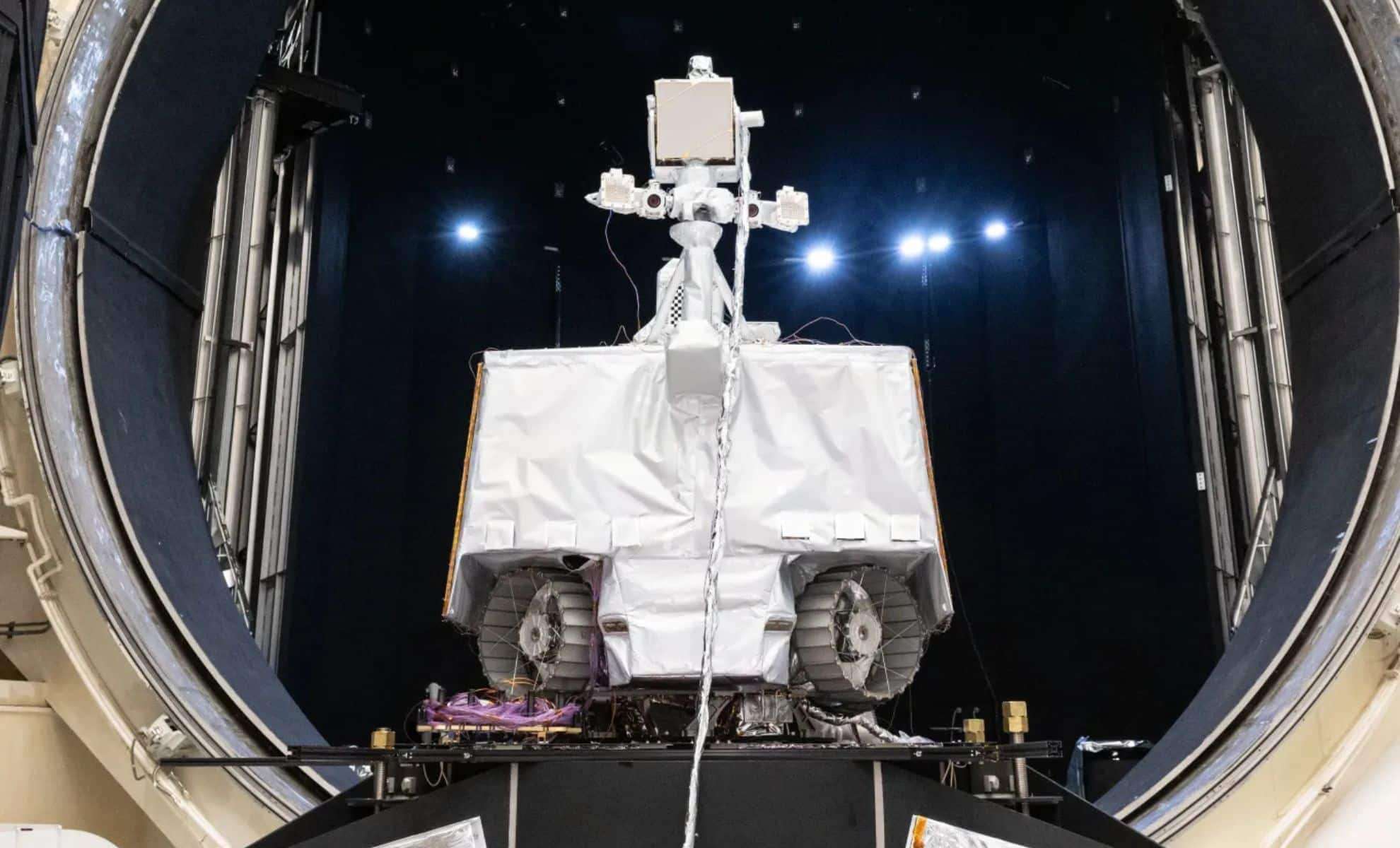
NASA’s VIPER (Volatiles Investigating Polar Exploration Rover), which was originally designed to explore the moon’s south pole for essential water ice, encountered a major obstacle when budget cuts led to its cancellation in July 2024. Intended to support NASA’s Artemis initiative by uncovering resources vital for establishing lunar habitats, VIPER was to conduct pioneering research on moon ice deposits. Now, in a renewed effort to keep the mission alive, NASA is inviting collaboration with U.S. private companies to facilitate its lunar deployment, signaling a fresh opportunity for the rover to fulfill its intended goals.
This approach highlights NASA’s increasing emphasis on leveraging private sector partnerships to push lunar and space exploration forward. By joining forces with commercial enterprises, NASA aims not only to continue investigating critical lunar resources but also to enhance the capabilities of the burgeoning space industry. The revived VIPER mission could spearhead a new wave of lunar expeditions driven by combined public and private efforts. So, what does this renewed partnership look like, and how can private industry help deliver VIPER to the moon’s surface?
VIPER’s Objective: Uncovering Lunar Ice Deposits
The VIPER rover was tasked with assessing the presence of water ice at the moon’s south pole, an area believed to harbor significant reserves. Access to this ice is vital for supporting astronauts’ survival by providing water, oxygen, and even rocket propellant hydrogen. As plans progress to establish a sustained human presence on the lunar surface under the Artemis program, pinpointing the feasibility of using local resources is crucial for mission success.

VIPER was set to explore previously unexamined zones, with the potential to transform lunar exploration by decreasing reliance on costly and challenging supply missions from Earth. The rover’s mission included traversing the lunar south pole to map ice concentrations and measure the distribution of volatiles — including water and carbon compounds — across the terrain.
Although initially planned for launch in 2024, the project’s suspension highlighted broader funding challenges affecting NASA’s lunar ambitions. Instead of abandoning VIPER, NASA is now turning to commercial collaborators who can assist in reviving the rover’s mission and enable continued research. This shift aligns with NASA’s broader movement toward public-private partnerships in space exploration.
Reviving VIPER Through Industry Collaboration
Reopening the VIPER mission by involving the private sector offers U.S. aerospace companies a significant role in advancing lunar science. NASA has invited proposals from firms capable of managing VIPER’s lunar landing, supporting its scientific objectives, and operating the rover during its mission. These companies must ensure the successful completion of tasks like ice analysis and the transmission of data back to Earth.
“Moving forward with a VIPER partnership offers NASA a unique opportunity to engage with the private sector,” said Nicky Fox, NASA’s associate administrator for the Science Mission Directorate. “Such a partnership provides the opportunity for NASA to collect VIPER science that could tell us more about water on the moon, while advancing commercial lunar landing capabilities and resource prospecting possibilities.”
By collaborating with private entities, NASA taps into innovative technologies and infrastructure often beyond the reach of government-only missions. This strategy promises to boost the efficiency and pace of space exploration while laying the groundwork for future joint ventures.
VIPER’s Role Within the Artemis Program
VIPER’s core objective is to chart water ice in the permanently shadowed regions near the lunar south pole. These dark craters, shielded from sunlight, may contain the most accessible ice deposits. The rover’s data on the quantity, location, and ease of access to this ice will be critical to enabling sustained lunar operations.
Within the scope of Artemis, gathering in-depth knowledge about accessible water sources is pivotal for establishing long-lasting human outposts. Water harvested by VIPER could support life support systems and fuel production, reducing the dependency on Earth-supplied resources. Additionally, VIPER’s insights could kickstart lunar mining initiatives, an essential step toward a continuous human foothold on the moon. Extracting water for fuel would also expand crewed missions deeper into space.
Beyond the moon, VIPER’s mission will serve as a technological and scientific prototype for resource extraction techniques applicable to future ventures, including Mars colonization. Success here would mark a significant stride toward a sustainable off-world human presence.
Looking Ahead: The Future of VIPER
NASA’s recent invitation for proposals shifts the responsibility of VIPER’s revival to the U.S. commercial space sector. The agency plans to select a business partner by summer 2025, granting that company the responsibility of safely delivering VIPER to the lunar surface, ensuring mission success, and relaying valuable scientific data.
The deadline for submissions is February 20, 2025, with prominent companies such as SpaceX, Blue Origin, and Astrobotic poised as likely candidates. The winning entity stands to gain significant expertise and prominence in lunar technologies, an industry segment experiencing rapid growth.
This collaboration initiative marks a transformative moment in NASA’s approach to space exploration, harnessing private innovation to overcome challenges inherent in ambitious lunar missions. The success of VIPER may pave the way for enduring partnerships, propelling humanity closer to sustained exploration beyond Earth.
As VIPER’s next chapter unfolds, the blend of NASA’s vision and private industry’s ingenuity will be crucial in unlocking the moon’s secrets. If revived, VIPER could provide invaluable data on lunar water and set the technological groundwork required for humanity’s return to the moon and future expeditions deeper into space.












0 comments
Sign in to Comment