

The Polaris Dawn mission by SpaceX concluded with a safe ocean splashdown, bringing to a close a groundbreaking five-day expedition that pushed private space exploration to new heights and laid groundwork for future missions beyond Earth.
Helmed by entrepreneur Jared Isaacman, the crew achieved historic milestones including the planet’s inaugural commercial spacewalk and reached altitudes not seen by humans in over half a century. This mission advances Elon Musk’s ambitions for Mars colonization by testing vital technologies and mission protocols crucial for deep-space journeys.
Executing a Flawless and Challenging Polaris Dawn Splashdown
The return sequence represented one of the riskiest yet carefully orchestrated segments of the Polaris Dawn expedition. At 3:37 a.m. ET Sunday, the Crew Dragon capsule carrying all four crew members touched down in the Gulf of Mexico near Florida’s Dry Tortugas. This re-entry demanded exacting control as the spacecraft undertook maneuvering procedures to ensure the astronauts’ safe passage back through Earth’s atmosphere.

Initially, the spacecraft performed a precise de-orbit burn — an engine firing designed to reduce velocity and redirect the capsule toward the atmosphere. This step was essential to ensure the proper re-entry angle, preventing the capsule from bouncing back into space or descending too steeply and incurring catastrophic failure. Upon atmospheric entry, traveling close to 17,000 mph (27,000 km/h), the crew faced extreme heat reaching roughly 3,500°F (1,900°C). The reliable protection of the Crew Dragon’s heat shield shielded the astronauts throughout this perilous phase.
The capsule’s descent then slowed through the staged deployment of parachutes that reduced its speed sufficiently for a safe splashdown. After settling on the ocean surface, the spacecraft was swiftly recovered by a SpaceX retrieval vessel known as the “Dragon’s nest.” Recovery personnel promptly secured the capsule onboard and conducted safety checks enabling the astronauts to exit without any issues.
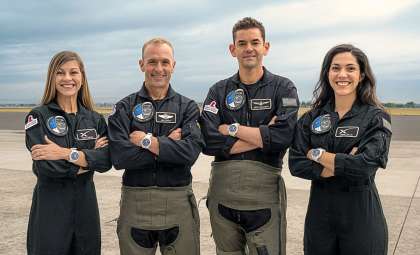
The team — comprising Isaacman, Scott “Kidd” Poteet, Anna Menon, and Sarah Gillis — emerged unharmed, demonstrating SpaceX’s sophisticated spacecraft control and recovery systems, reinforcing the company’s dominance in commercial spaceflight.
Dragon and the Polaris Dawn crew splash down off the coast of Florida, completing the @PolarisProgram‘s first human spaceflight mission pic.twitter.com/Sobt66zxnL
— SpaceX (@SpaceX) September 15, 2024
Setting New Altitude Records in Low Earth Orbit
As a key part of SpaceX’s ambitious Polaris Program, the Polaris Dawn mission sought to expand the horizons of private space ventures. Over five days, the crew orbited the Earth at a staggering 870 miles (1,400 kilometers) altitude, outpacing the 1966 record held by NASA’s Gemini 11 mission. This feat marked the highest human spaceflight altitude since the Apollo era and placed astronauts Anna Menon and Sarah Gillis as the first women in history to journey so far from Earth.
In addition to reaching unprecedented heights, the mission carried out close to 40 scientific experiments focused on areas such as space adaptation syndrome — the microgravity-related motion sickness — and the physiological effects of prolonged space stay. These insights will directly benefit organizations prepping for future lunar and Martian expeditions.
Commercial Spacewalk: A Historic Breakthrough
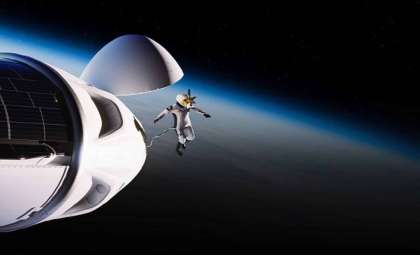
One standout highlight was the world’s first-ever commercial spacewalk (extravehicular activity, EVA). After depressurizing the Crew Dragon capsule, two crew members, Jared Isaacman and Sarah Gillis, exited into space for roughly 10 minutes, conducting mobility and spacesuit functionality assessments using SpaceX’s new EVA suits.
This successful spacewalk sets a precedent for private space mission capabilities. The tests validate the durability and practicality of these next-gen spacesuits, designed for lengthy missions like those to Mars. Though these suits will see further refinement before interplanetary use, this milestone advances essential tools for astronauts to perform maintenance and critical tasks on distant missions without Earth-based aid — vital for establishing self-reliant settlements on Mars.
Advancing Preparations for Human Exploration of Mars
The far-reaching goals of the Polaris Dawn mission intersect with Elon Musk’s vision of human habitation on Mars. Major hurdles for Mars-bound travelers include exposure to intense cosmic and solar radiation over extended durations. To study this, the Crew Dragon passed through the Van Allen radiation belts, Earth’s protective yet highly radioactive zones, collecting valuable radiation exposure data for short-term human health assessments applicable to longer deep-space missions.
Complementing this, medical experiments were conducted focusing on the crew’s eyes, vascular system, and airways to understand bodily adaptations to prolonged microgravity and space environments. Overcoming these physiological challenges remains critical to the future of human space travel beyond Earth’s orbit.
Enhancing Deep-Space Communication Using Starlink
A vital mission component involved testing SpaceX’s Starlink laser communication technology, which underpins its global satellite internet system. This test explored Starlink’s potential for maintaining high-bandwidth deep-space communication, enabling data, images, and audio transmissions between astronauts and mission control.
During the mission, live updates and visual content streamed back to Earth through this network, demonstrating the practicality of laser-based communication over vast distances. Reliable, high-speed data exchange will prove essential for lunar and Martian missions, where current radio communications fall short in bandwidth and responsiveness.
Looking Toward Upcoming Polaris Missions and Mars Exploration
Following the success of Polaris Dawn, Jared Isaacman and SpaceX are gearing up for further missions in the Polaris series. The third mission will notably mark the debut of Starship, SpaceX’s next-level spacecraft engineered for interplanetary transport. Designed to ferry crews and cargo to Mars, Starship is central to realizing Musk’s dream of establishing a sustainable human presence on the Red Planet.
Future Polaris flights will continue testing key technologies for extended human spaceflight, spanning radiation mitigation, communications, and EVA systems. These efforts will guide the refinement of operational protocols and spacecraft like Starship, poised to become the cornerstone vehicle for missions beyond Earth orbit.
Each successful mission draws humanity closer to becoming a multiplanetary civilization, showcasing rapid advances in commercial spaceflight and the exciting potential for permanent settlements on the Moon and Mars in coming decades.







0 comments
Sign in to Comment