
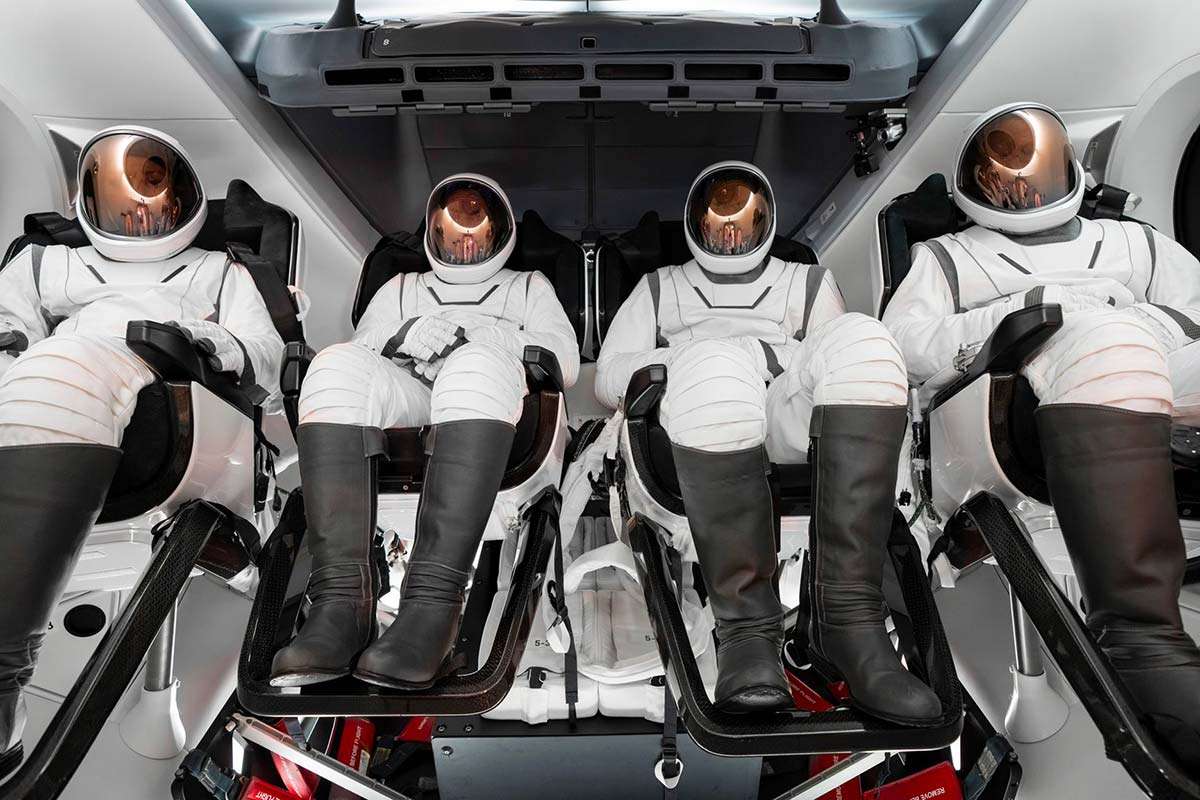
In a groundbreaking partnership with the Polaris program, SpaceX has created innovative space suits engineered for both interior spacecraft activities and spacewalks during what will be the first-ever private extravehicular activity (EVA). These suits aim to offer stunning views from high altitudes while setting a foundation for future space missions.
Collaboration and goals driving the suit development
Billionaire Jared Isaacman, who has heavily invested in space initiatives over recent years, launched the Polaris project alongside SpaceX after the success of Inspiration4. That pioneering mission, the first space tourism flight aboard SpaceX’s Crew Dragon and featured in a Netflix series, raised considerable charitable funds. With Polaris, Isaacman intends to surpass previous milestones by attempting an EVA, a function for which the Crew Dragon was not originally designed.
Innovations and suit specifications
Crafted in close collaboration with Isaacman, who will be among the suit wearers, these spacesuits showcase important design advancements. SpaceX enhanced mobility with semi-rigid joints at the hands, wrists, and shoulders. Additionally, the suits are engineered to withstand drastic temperature fluctuations—extreme heat exposed to the sun and freezing conditions in shadow—utilizing multi-layer insulation adapted from Falcon 9 rocket technology and from materials lining the Crew Dragon cabin.

Addressing challenges with practical designs
Initially, the absence of EVA-ready suits posed a major hurdle, as existing SpaceX suits only supported emergency cabin depressurization and the Crew Dragon was not EVA-certified. These new suits, although simpler than NASA’s longstanding EMU suits, still require oxygen supplied via umbilicals connected to the spacecraft, lacking full autonomy. They are not suited for extended spacewalks but mark a vital stepping stone toward more capable suits for Moon and Mars exploration.
Setting the stage for historic space exploration
This summer, Isaacman and his crew plan to make history by conducting a private EVA from an orbit roughly 700 kilometers above Earth. This ambitious endeavor promises to enrich the story of human spaceflight and lays the groundwork for future ventures targeting the lunar surface and Martian environment.








0 comments
Sign in to Comment