

Recent measurements reveal disturbing trends in global heat levels, with June 2023 becoming the warmest June ever recorded and continuous global warming surpassing the 1.5C threshold throughout the past year.
June 2023 Marks Unprecedented Global Heat
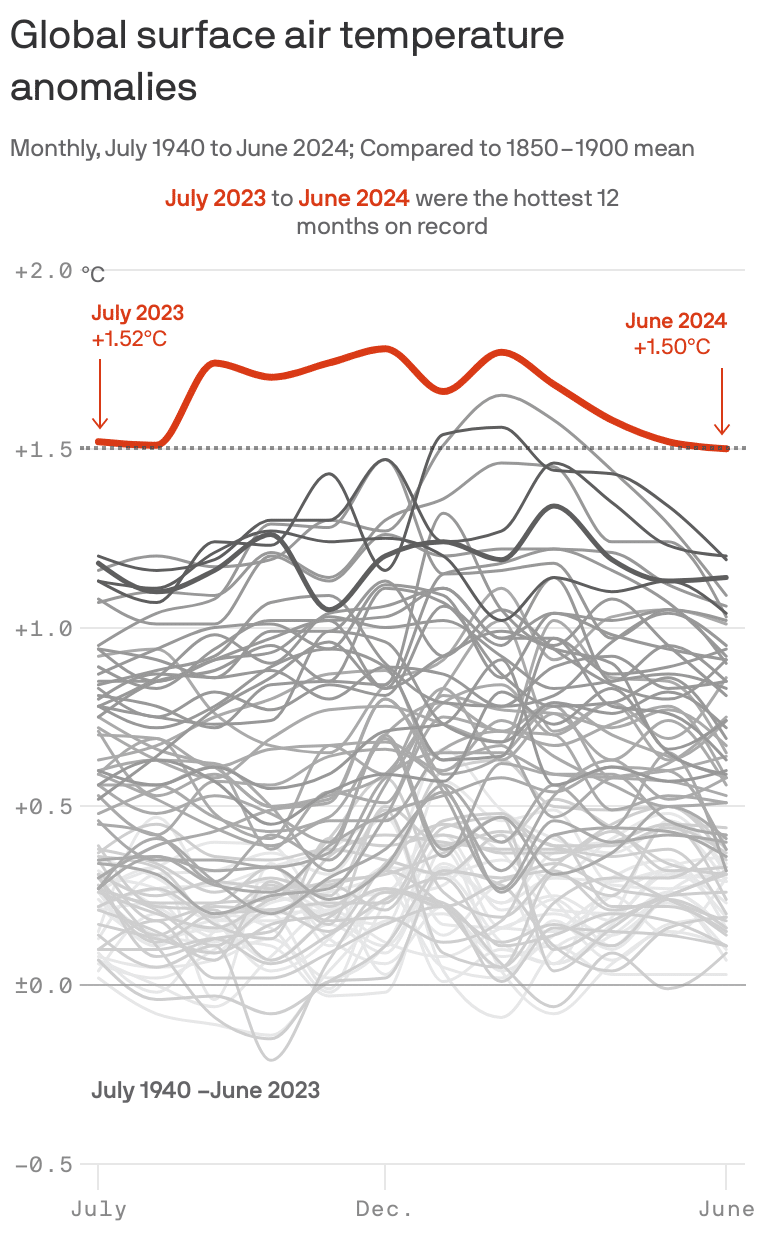
The Copernicus Climate Change Service of the European Union confirms that June 2023 was the hottest June since climate records began. This continues a streak of 13 unbroken months of exceptional global temperatures.
These persistent spikes in temperature highlight the rapid acceleration of climate change, with data from Copernicus revealing that the global average for June significantly exceeded prior years. This rise is largely attributed to human-driven environmental changes.

Carlo Buontempo, director of Copernicus, remarked, “This is more than a statistical oddity, and it highlights a large and continuing shift in our climate.” His comment underscores a fundamental and ongoing transformation in Earth's climate system, far beyond isolated incidents.
Persistent Breach of the 1.5C Global Warming Limit
From July 2023 onwards, for an entire year, the planet's average temperature has remained elevated by 1.5C (2.7F) above pre-industrial records. According to Copernicus figures, this level surpasses the Paris Agreement’s goal of limiting warming. The annual mean was actually 1.64C above pre-industrial values and 0.76C above the 1991-2020 baseline, a stark deviation from historical norms.
Restricting global warming to a maximum of 1.5C is critical to avoiding the gravest consequences of climate change. However, the latest Copernicus data shows a sustained excess of this threshold, raising urgent questions about the effectiveness of current emissions reduction strategies and the necessity for stronger climate action.
Consequences of Escalating Temperatures
The impacts of this warming trend are becoming increasingly severe. Heatwaves have resulted in fatalities across India, Saudi Arabia, Gaza, and the U.S., while wildfires in Greece have forced mass tourist evacuations. Record-breaking heatwaves affected roughly 130 million Americans in June. Elevated temperatures were also recorded across Mexico, eastern Canada, the western U.S., Brazil, northern Siberia, the Middle East, northern Africa, and western Antarctica.
Climate scientist Dr. Friederike Otto of Imperial College London's Grantham Institute stressed the importance of tackling the fundamental drivers of climate change, stating, “El Niño is a naturally occurring phenomenon that will always come and go. We can’t stop El Niño, but we can stop burning oil, gas, and coal.” This highlights the critical need to curb fossil fuel consumption to slow global warming.
Anticipating Future Climate Challenges
While these trends are concerning, current data does not definitively confirm a permanent breach of the 1.5C limit. Natural phenomena like the El Niño contribute to transient temperature surges.
Nonetheless, climate authorities warn that unless greenhouse gas outputs are drastically cut, such elevated temperatures will become the new normal. Carlo Buontempo remarked on the "continuing changes to the planet’s climate," signaling a profound shift in global climate dynamics.
Maintaining such high temperature levels poses a formidable obstacle to climate mitigation efforts worldwide. The increasing frequency of extreme weather — heatwaves, wildfires, intense rainfall — threatens millions worldwide. Copernicus’ findings highlight the pressing need for united international efforts and bold policies aimed at slashing greenhouse gas emissions to halt further warming.
- Categories:
- News ,
- Climate change












0 comments
Sign in to Comment