

A groundbreaking investigation led by NASA has uncovered an unexpected relationship between Earth's magnetic field and the atmospheric oxygen critical for life. The study demonstrates that variations in Earth's magnetic field intensity over the last 540 million years closely mirror changes in the amount of oxygen in the atmosphere, implying that processes deep within our planet may directly affect surface life-supporting conditions.
Linking Magnetic Field Variability to Oxygen Concentrations
Generated by the movement of molten iron within Earth’s core, our planet’s magnetic field functions like a giant electromagnetic shield. However, this dynamic field undergoes periodic changes over geological timescales. Scientists have long suspected its role in shielding Earth's atmosphere from solar radiation. The recent study published in Science Advances investigates whether shifts in the magnetic field correspond to fluctuations in atmospheric oxygen levels.
By meticulously comparing ancestral magnetic data with oxygen measurements preserved in geological records, researchers detected a remarkable parallel in their fluctuations spanning nearly half a billion years. This suggests an intrinsic connection between these two factors once considered independent.

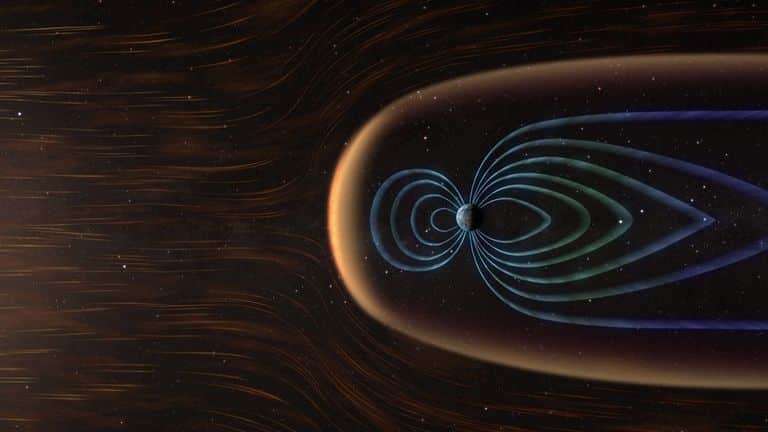
Decoding Earth’s Magnetic and Oxygen Archives
Earth’s magnetic past is recorded in magnetized minerals formed as molten rock cools at plate boundaries. These minerals lock in the magnetic field’s state at the time, allowing scientists to reconstruct Earth's magnetic intensity through ages. Simultaneously, the analysis of ancient mineral deposits offers vital estimates of historic atmospheric oxygen levels.
Weijia Kuang, a geophysicist at NASA’s Goddard Space Flight Center and co-author of the research, explained, “These datasets show striking similarities.” This alignment indicates that magnetic activity and atmospheric oxygen have shifted together for much of Earth’s history. The findings imply that inner Earth events, potentially linked to tectonic plate motions, could be controlling both magnetic field changes and air composition crucial for life.
Insights from the Cambrian Period's Explosion of Life
This observed alignment traces back to the Cambrian explosion roughly 540 million years ago, a pivotal era when complex life rapidly diversified on Earth. The scientists propose that a unified mechanism — possibly the shifting of continental plates — might be driving parallel variations in both magnetic intensity and atmospheric oxygen content.
Benjamin Mills, a biogeochemist from the University of Leeds and co-author, notes that “the magnetic field strength and atmospheric oxygen appear to be responding to a single fundamental driver.” This new theory opens fresh avenues for exploring how deep planetary activities influence the environment sustaining life on the surface.
Future Directions for Research
Moving forward, the research team aims to analyze older geologic records to determine if this linked behavior existed earlier in Earth’s timeline. As researcher Ravi Kopparapu mentioned, “There’s still much to uncover.”
Additionally, they intend to study fluctuations in other vital atmospheric components, including nitrogen, to explore if similar coupling exists. While the full mechanism connecting Earth's underground processes to surface life conditions remains elusive, these findings lay important groundwork for future discovery.
- Categories:
- News









0 comments
Sign in to Comment