

Even if global efforts succeed in limiting warming to the best-case scenarios, the threat of rising sea levels will intensify throughout this century and beyond, drastically altering shorelines and jeopardizing hundreds of millions around the world. A recent study featured in Communications Earth & Environment highlights that holding warming to under 1.5°C—the ideal target outlined in the 2015 Paris Agreement—won’t stop substantial and accelerating ocean level increases. Utilizing satellite observations, ancient climate records, and refined future projections, the study presents worrying evidence: even slight warming can activate feedback mechanisms within the planet’s ice sheets, pushing sea level rise beyond what societies can easily handle.
Sea Levels Climbing Twice as Fast with No Signs of Easing
In the last 30 years, the rate of sea level increase has doubled, and predictions suggest it will double once more by 2100. Should warming continue unabated, coastal waters could rise at roughly one centimeter annually within a few decades. “Restricting global temperature increase to 1.5°C remains a critical target” to mitigate many severe climate threats,” explained Chris Stokes, lead author and professor at Durham University, UK. However, he cautioned, “Even achieving this goal means sea levels will likely accelerate to speeds challenging to adapt to.” With over 230 million people living less than a meter above current sea levels and over a billion residing within ten meters, even minor increases could trigger devastating floods, displacements, and economic losses amounting to trillions by mid-century.
Polar Ice Sheets on the Brink: Greenland and Antarctica Approaching Critical Thresholds
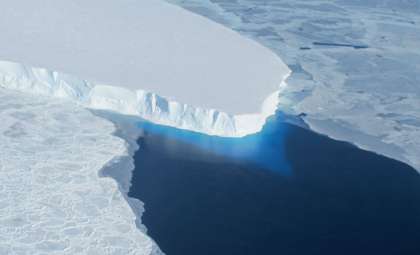
A major concern raised by this research is the high sensitivity of Arctic and Antarctic ice masses to mild temperature rises. Satellites reveal that the Greenland and West Antarctic ice sheets—which contain enough ice to elevate sea levels by about 65 meters—are melting or breaking off at an alarming rate nearing 400 billion tonnes annually. This melting is not a steady process. “It’s likely we will experience the upper estimates or even beyond,” stated Stokes. He also discussed a shift in the scientific consensus: “Previously, it was believed Greenland wouldn’t react until a 3°C global rise,” he noted. “Now tipping points for Greenland and West Antarctica are thought to be around 1.5°C.” This dramatically lowers the level of warming needed to trigger irreversible ice sheet collapse, committing the planet to centuries of relentless sea level rise even if emissions are curtailed immediately.

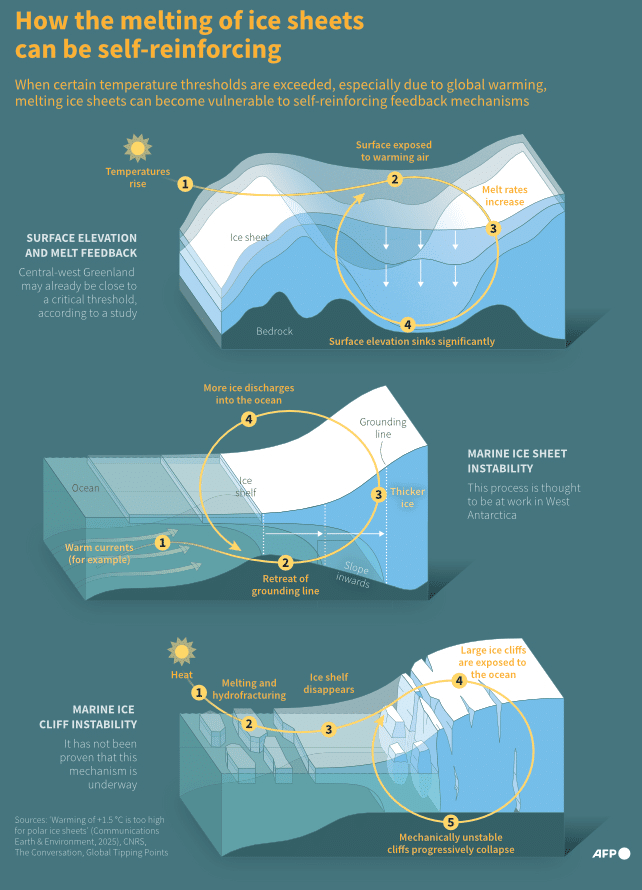
Insights From Ancient Climates Reveal Sobering Futures
Scientists examined Earth’s past warm periods to better understand future sea level scenarios. During the last interglacial period approximately 125,000 years ago, sea levels were between 2 to 9 meters higher than today, despite slightly cooler temperatures and lower atmospheric CO2. Going even further back, about three million years ago, when carbon dioxide levels matched today’s 424 ppm, sea levels were 10 to 20 meters higher. These historical parallels strongly indicate that contemporary warming has already set the stage for extensive long-term sea level rise, well beyond what is currently apparent. This slow yet relentless momentum highlights the climate system’s inertia: what seems manageable at present could escalate into a major crisis in centuries to come, even with swift emissions reductions.
Preparing for a Challenging Future Requires More Than Current Targets
The study’s findings present a stark warning. Without significant global investment in coastal infrastructure, major cities worldwide face growing threats of flooding, independent of whether the 1.5°C limit is achieved. Long-term adaptation will be especially difficult when the primary factors driving sea level rise—such as ice sheet destabilization—are locked in for the foreseeable future. As Stokes emphasized, “To bring sea level rise from ice sheets under control, we’d need to aim for a temperature increase close to +1°C, or even less.” This suggests humanity may be on a trajectory that no current policy can reverse, with meaningful solutions requiring fundamental shifts in global energy policies, potential geoengineering approaches, or large-scale population relocations.
- Categories:
- News








0 comments
Sign in to Comment