
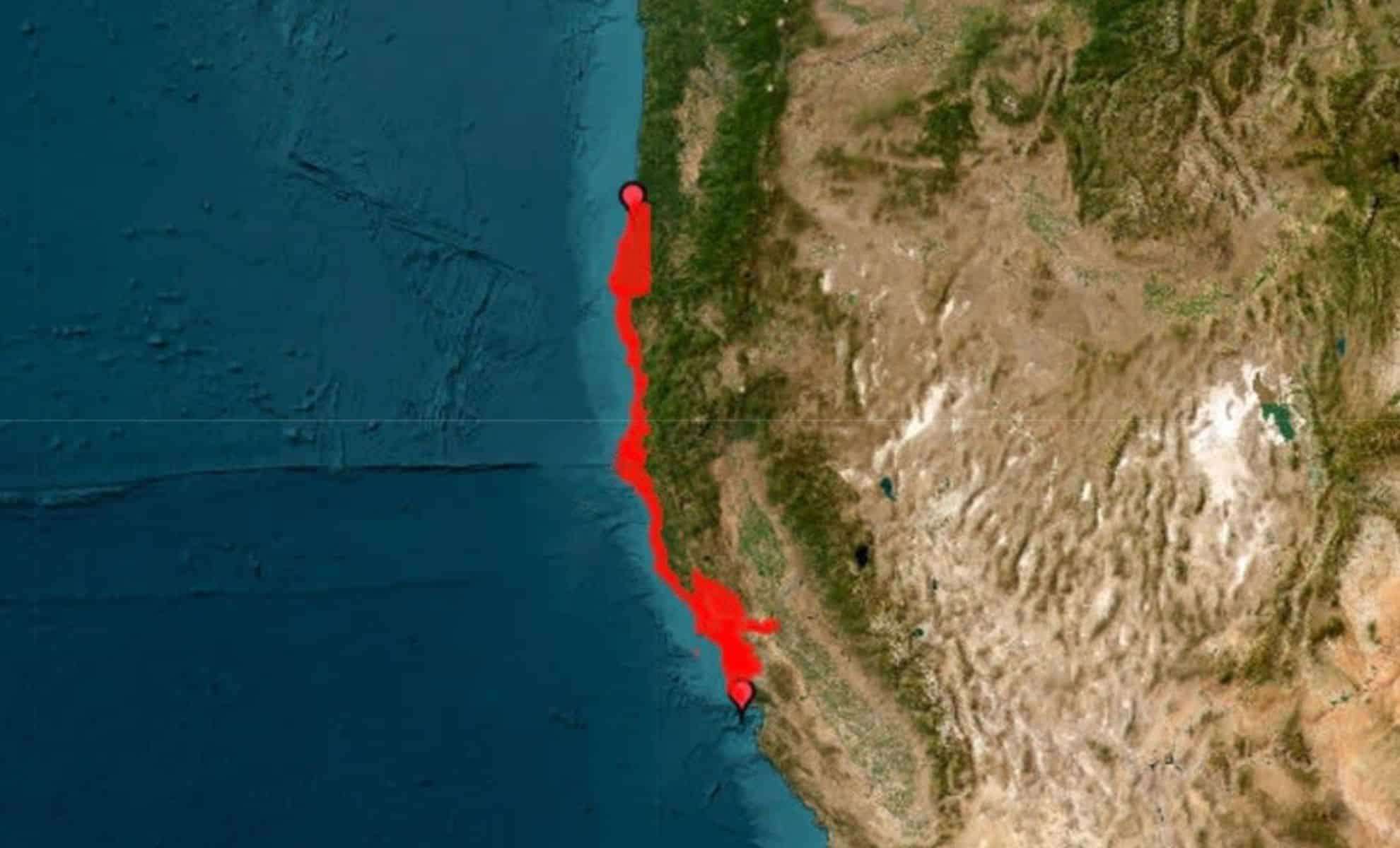
An immense earthquake originating along the Cascadia Subduction Zone has the potential to dramatically transform the Pacific Northwest's landscape by causing extensive land sinking and swiftly increasing sea levels, researchers report. Often dubbed “the big one,” this seismic event could unleash widespread effects throughout the region spanning northern California to Washington state. The findings, published in Proceedings of the National Academy of Sciences, predict not only tsunami generation but also enduring impacts on coastal communities and ecosystems.
While the hazard posed by Cascadia earthquakes has been recognized for years, the current study sheds light on how a catastrophic quake might reshape floodplains by causing land subsidence of up to six feet in some zones. When combined with the ongoing rise in sea levels due to climate change, this could considerably expand flood-prone areas and elevate risks for residents and wildlife along the coast.
The Cascadia Subduction Zone: Looming Danger
The research estimates a 15% probability of an earthquake stronger than magnitude 8.0 on the Cascadia fault within the next half-century, rising to 29% by 2100. Such an event would have devastating effects, especially for coastal cities. Land near the fault might drop more than six feet, intensifying flooding risks across southern Washington, northern Oregon, and northern California's populated zones.

Tina Dura, the study’s lead author and geosciences assistant professor at Virginia Tech, stated:
“The expansion of the coastal floodplain following a Cascadia subduction zone earthquake has not been previously quantified, and the impacts to land use could significantly increase the timeline to recovery.”
Economic and Human Toll: A Magnitude 9.0 Earthquake Scenario
Aside from the immediate destruction caused by a major seismic event, longer-term repercussions could be equally grave. The study warns that a magnitude 9.0 earthquake could claim over 30,000 lives and demolish upwards of 170,000 buildings along the coastline. The estimated financial damage might exceed $81 billion, intensifying regional vulnerabilities.
If such an earthquake strikes soon, certain coastal regions might face permanent uninhabitability due to combined land sinking and accelerating sea level rise. This persistent flooding threat underscores the vital need for enhanced disaster preparedness and urban planning to tackle both earthquakes and climate challenges.
The research team emphasized:
“Preparing for these compound hazards can minimize long-term damage, ensure resilient communities, and protect critical coastal ecosystems from permanent degradation.”
Lessons from History: The 1700 Cascadia Earthquake
The report references the devastating 1700 earthquake, which caused sea levels to rise by over six feet in mere moments and triggered giant tsunamis that reached Japan. This historical catastrophe highlights the region’s seismic vulnerability. Predictions for a forthcoming earthquake larger than magnitude 8.0 suggest tsunami waves could soar above 200 feet.
The 1700 event showcased the immense and unpredictable force of the Cascadia fault. This latest study reinforces the critical importance of strengthening infrastructure and evacuation methods to prepare for a comparable future earthquake in today’s context.
- Categories:
- News











0 comments
Sign in to Comment