
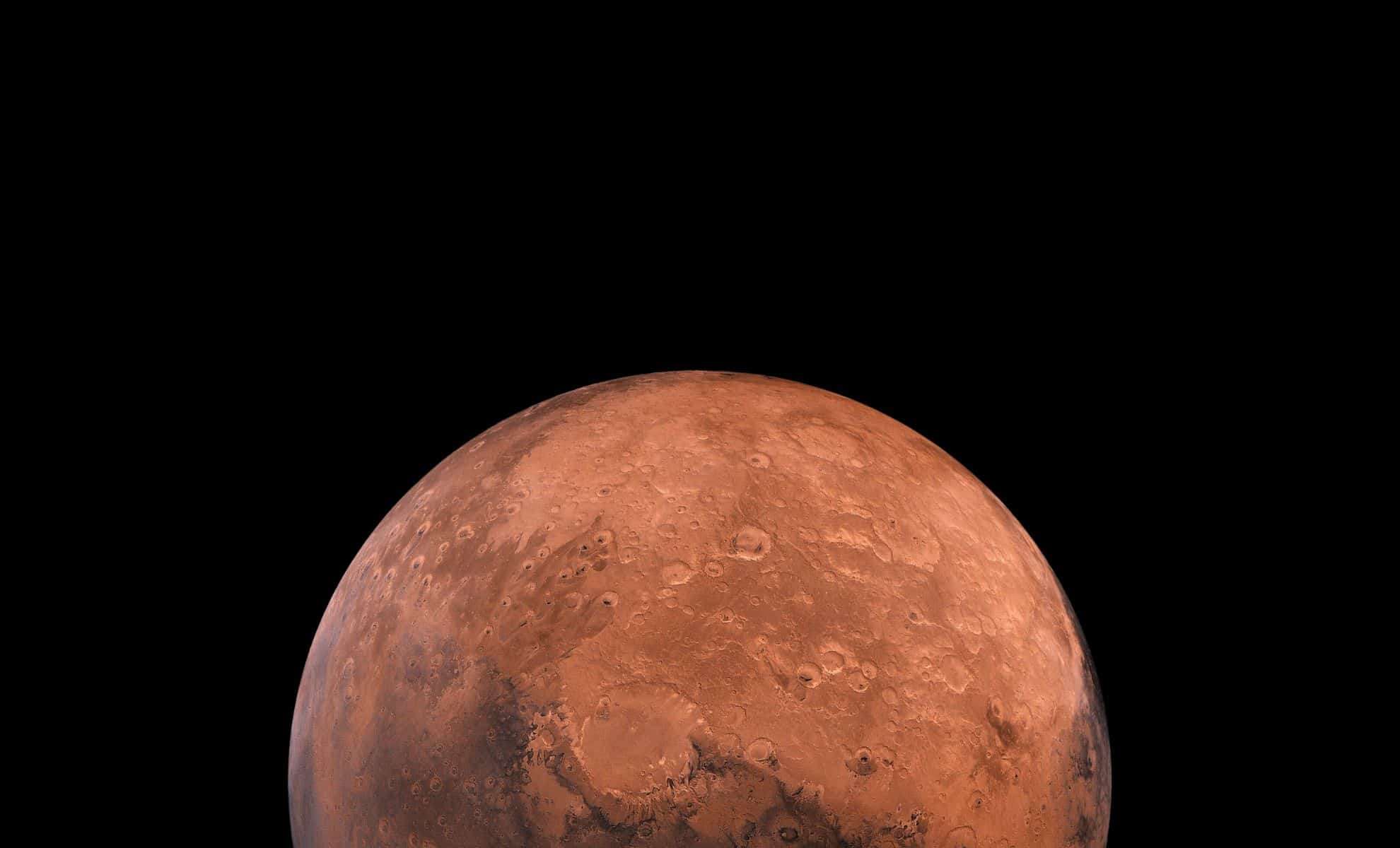
After ten years in orbit, NASA’s MAVEN mission has unlocked a vital clue about the gradual disappearance of Mars’ atmosphere. For the first time, researchers have directly detected atmospheric sputtering, a process where charged particles from the Sun erode the Martian atmosphere, potentially driving the planet’s gradual drying and atmospheric loss.
Revealing the Fate of Ancient Martian Water
Billions of years ago, Mars likely had abundant liquid water, as evidenced by its surface geology. Yet the mystery of where this water vanished has persisted. The MAVEN mission brings us closer to solving that puzzle.
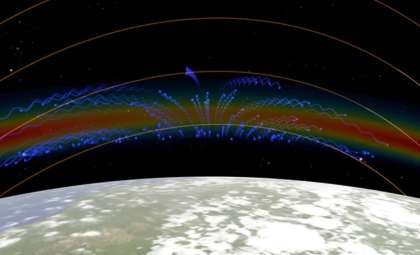
At the core of this discovery is atmospheric sputtering: when high-speed charged particles, particularly heavy ions within the solar wind, slam into Mars’ upper atmosphere and eject neutral atoms and molecules into space.

“Think of it like a cannonball hitting a pool,” said Shannon Curry, lead investigator for MAVEN at the University of Colorado Boulder’s Laboratory for Atmospheric and Space Physics. “The ions act as the cannonball, striking the atmosphere and splashing out neutral particles.”
Although prior isotope analyses—especially examining the light-to-heavy argon isotope ratios—hinted at sputtering, this mission marks the first time the phenomenon has been directly observed operating.
Real-Time Detection of Atmospheric Sputtering
Detecting sputtering required the MAVEN team to synchronize data from three key instruments: the Solar Wind Ion Analyzer, the Magnetometer, and the Neutral Gas and Ion Mass Spectrometer. This coordination captured measurements on both the sun-exposed and shaded sides of Mars at low altitudes—an effort spanning several years.
The combined data enabled scientists to chart the distribution of argon particles expelled by sputtering throughout various atmospheric layers. The maps revealed specific zones where energetic solar particles collide with and eject neutral atoms from the atmosphere.
Surprisingly, sputtering is occurring at rates four times greater than earlier estimates and intensifies sharply during solar storm events. These findings suggest that when the young Sun was more active, sputtering was a dominant factor in Mars’ atmospheric decline.
Advancing Our Understanding of Mars’ Past Habitability
Confirming atmospheric sputtering’s impact advances more than just technical knowledge—it solidifies its role as a key driver of atmospheric erosion following the loss of Mars’ protective magnetic field. Without this shield, Mars’ atmosphere became vulnerable to erosion by the solar wind, erasing conditions necessary for water stability on its surface.
“Our findings verify that sputtering significantly contributed to Mars’ atmospheric loss and influenced the planet’s water history,” noted Curry, whose research was published in Science Advances. This discovery informs the broader question of whether Mars could have once harbored life and why it transformed into the barren world we see today.
- Categories:
- Space



0 comments
Sign in to Comment