
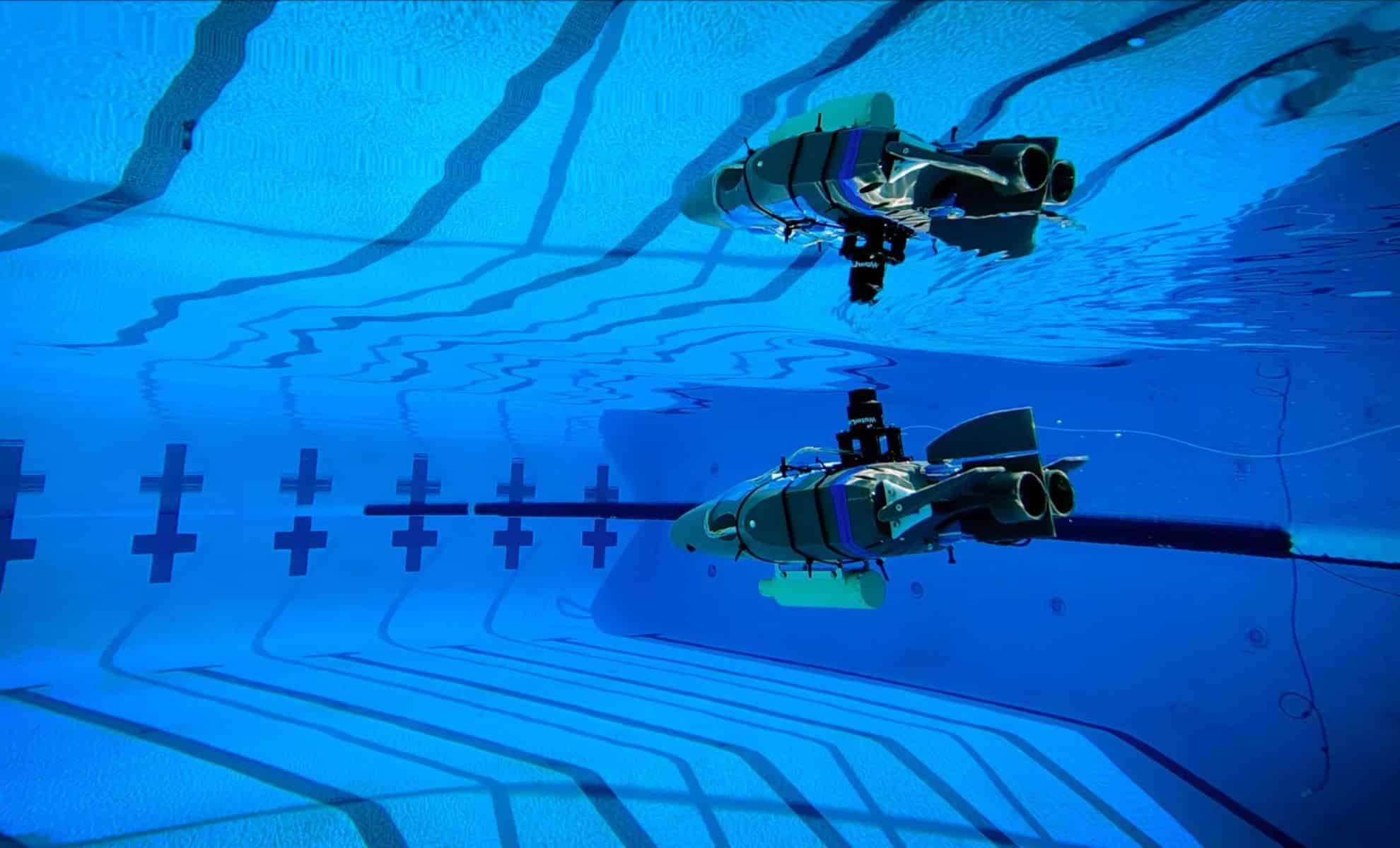
NASA is making significant progress in creating self-guided aquatic robots intended to explore the concealed oceans beneath the icy shells of moons such as Europa and Enceladus. These innovative devices are part of the Sensing With Independent Micro-swimmers (SWIM) initiative, which pioneers a new frontier in astrobiological research. By traversing these alien waters independently, the robots aim to identify biosignatures—distinct chemical, physical, or biological indicators hinting at potential life.
Designed to operate autonomously over immense distances from Earth, these compact yet advanced robots represent a vital step towards one of NASA’s most daring objectives: uncovering signs of life outside our planet. Initial testing is underway at locations like Caltech’s swimming pool in Pasadena, California, where engineers are evaluating the robots' capability to endure conditions similar to those they would face on extraterrestrial missions.
Mechanics Behind NASA’s SWIM Robots
NASA’s SWIM robotic explorers are engineered to independently navigate challenging and remote underwater settings. Approximately the size of a smartphone, each robot is fitted with sophisticated propellers and steering systems that allow for accurate underwater maneuvering. These swimmers are expected to be deployed into Europa’s subsurface ocean by a cryobot, a specialized probe designed to penetrate the thick ice layer before releasing the robots into the liquid environment beneath.

Equipped with sensors that assess temperature, salinity, pressure, pH, and chemical content, the SWIM robots are ideally suited to detect biosignatures indicating life. “Our aim is to develop robots capable of exploring these environments autonomously, even when they are hundreds of millions of miles from Earth,” explained Ethan Schaler, SWIM’s principal investigator at NASA’s Jet Propulsion Laboratory.
Recent experiments at Caltech have confirmed that the robots can swim in coordinated groups, navigate around obstacles, and gather simulated environmental data accurately.
Navigation and Independence in Action
Operating without direct control is essential for the SWIM robots due to the communication delays of deep space. Tests carried out in Caltech’s swimming pool demonstrated the robots’ ability to execute complex navigation sequences, such as a “lawnmower” pattern designed to systematically survey large underwater regions.
These sessions also highlighted the robots' capacity for teamwork, with multiple units communicating and synchronizing their movement to optimize data gathering. In a memorable demonstration, a prototype robot traced the letters “J-P-L” beneath the surface, showcasing precise navigation skills. Such trials are crucial to understand operational challenges, including constraints like limited battery life and power supply. Schaler remarked: “This is just the initial prototype stage among many needed before a real ocean world mission. However, it proves we can build the robots with the required functions and begin to anticipate the hurdles they’d encounter beneath an icy moon.”
NASA’s models suggest a group of these robots could collectively scan around 3 million cubic feet of water during their two-hour battery life. This extensive coverage is vital for exploring vast oceanic expanses on Europa and enhancing the chances of detecting life’s chemical footprints.
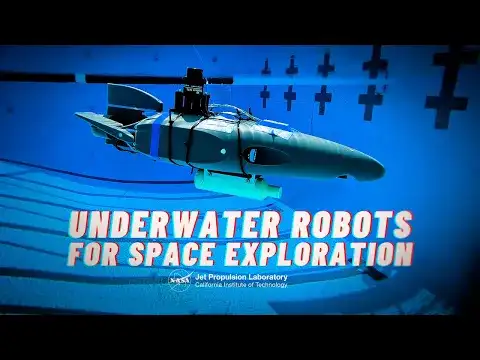
Cutting-Edge Biosignature Sensors
These robotic swimmers pack state-of-the-art sensors, developed in partnership with Georgia Tech researchers, enabling them to detect subtle life indicators. The sensors monitor temperature, salinity, acidity, pressure, and chemical signals, all miniaturized to fit within the small robotic framework.
Detecting temperature anomalies or chemical markers like methane and amino acids is essential for pinpointing microbial life. The SWIM robots’ ability to gather and analyze such data provides critical insights into Europa’s ocean conditions and possible habitability.
NASA emphasizes that these sensors balance power efficiency with performance, allowing each robot to function independently in extreme settings. The modular design ensures that the technology can adapt for missions to Europa, Enceladus, or other solar system bodies harboring subsurface oceans.
Charting the Path Forward
Currently in prototype stages, the SWIM project is a key element of NASA’s broader efforts to explore Europa. The forthcoming Europa Clipper mission, scheduled to arrive in 2030, will gather vital data on the moon’s ice shell and ocean, informing future deployments of the SWIM robots.
The team pioneering these autonomous underwater explorers understands the myriad challenges posed by exploring alien seas—from extreme pressure and icy temperatures to the complexities of remote autonomous operation.
Additionally, this technology promises to transform terrestrial science by supporting research in inaccessible aquatic environments on Earth, such as polar ice-covered waters and deep-sea hydrothermal systems, highlighting its significance beyond space exploration.
- Categories:
- News







0 comments
Sign in to Comment