
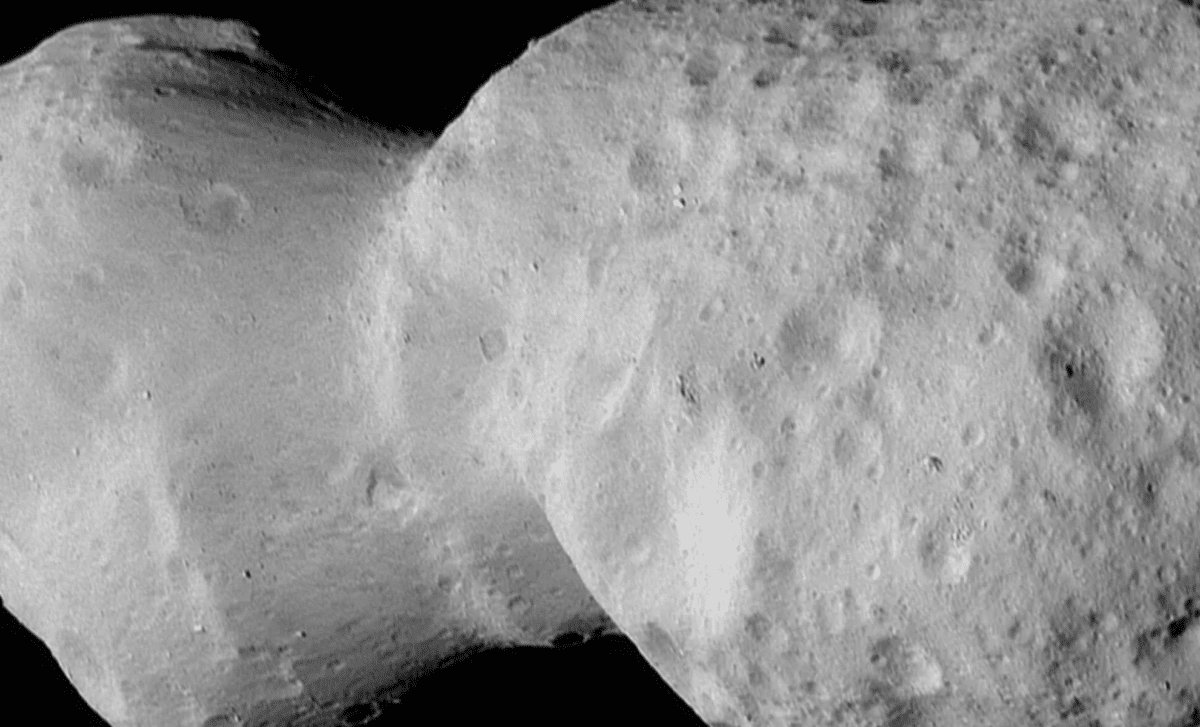
NASA's Lucy spacecraft recently encountered a small asteroid in the main belt, revealing it as a shattered remnant from the solar system's infancy. This discovery challenges previous notions of gentle asteroid formation, showing instead evidence of violent collisions that helped shape today’s asteroid landscape, as detailed in a recent Science publication. The asteroid, named Donaldjohanson, displays signs of intense disruption, preserving a rare window into early solar system chaos.
Intimate Study of a Broken Asteroid
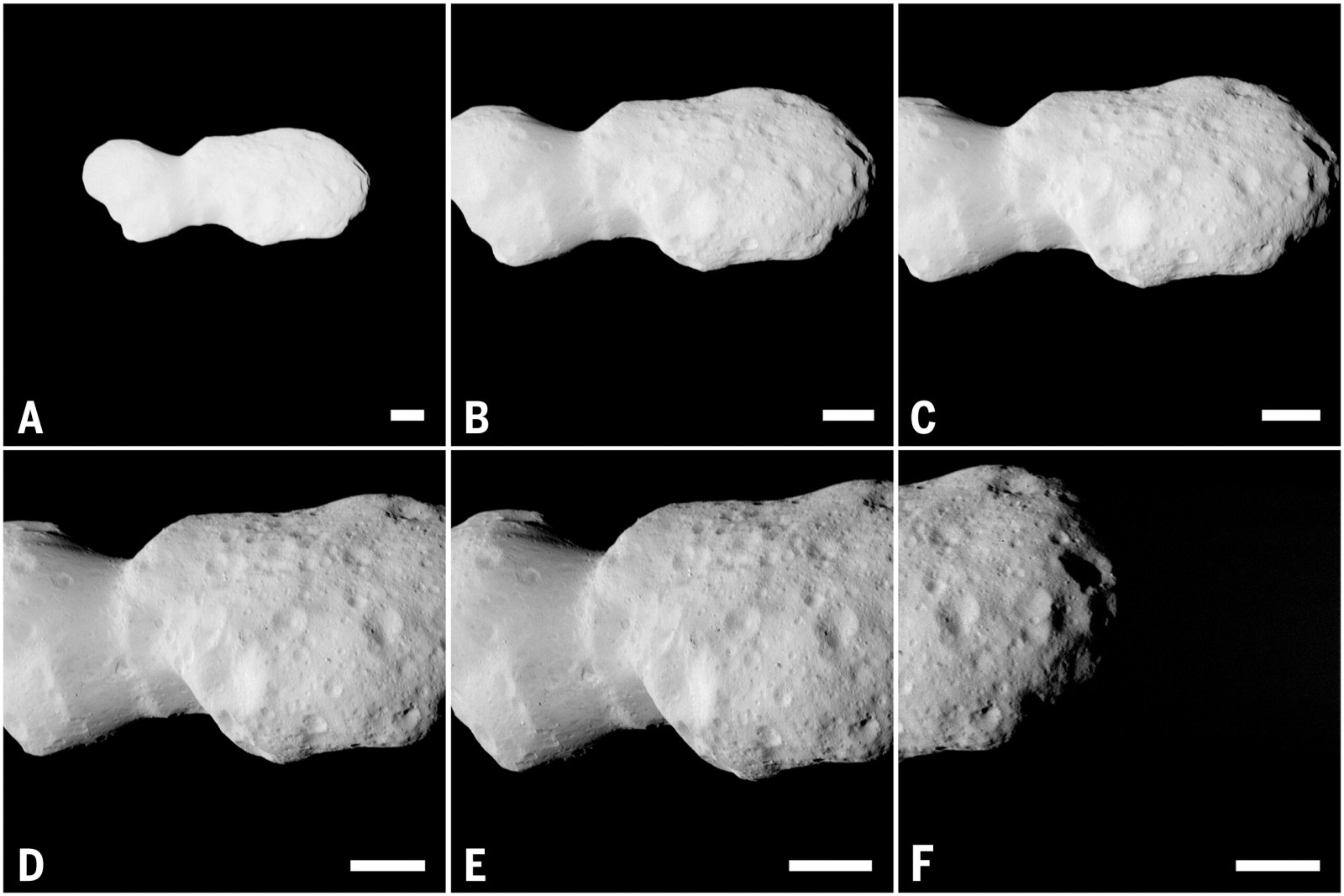
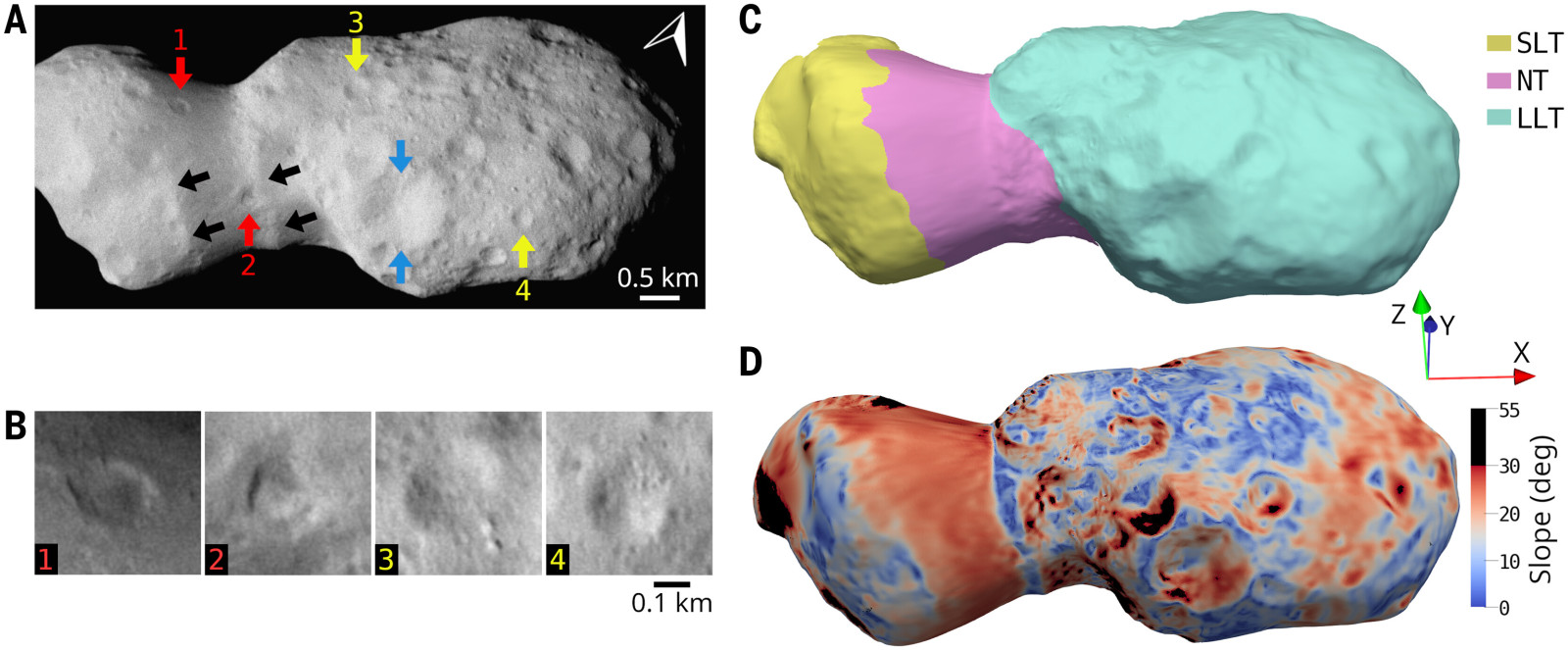
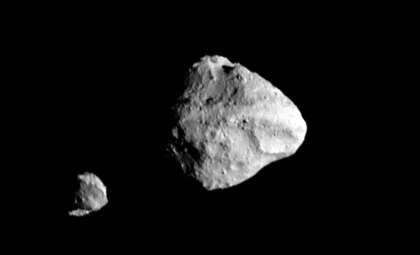
On April 20, 2025, Lucy passed close to Donaldjohanson, capturing high-resolution images of the oddly shaped, heavily scarred body. Approaching to within around 600 miles, Lucy’s instruments could observe surface details that Earth-based telescopes only hinted at before. The space rock spans approximately 5 miles long and 2 miles wide, distinguished by its peanut-shaped, dual-lobed form connected by a narrow midsection—an arrangement pointing to a history of fragmentation and gradual gravitational reassembly after a destructive impact early in solar system development.
Located in the asteroid belt between Mars and Jupiter, Donaldjohanson is part of a collection of leftover building blocks from planet formation that never fully merged. While Lucy’s journey primarily targets the Jupiter Trojans, its traverse through the main belt provided crucial calibration opportunities alongside revealing the asteroid’s dense cratering pattern, indicative of an ancient surface shaped by continual bombardment and minimal resurfacing.

Insights from Lucy’s Observations and Research
Data gathered during the flyby were studied by scientists at the Southwest Research Institute and integrated into a scientific paper published in Science. Their analysis connects Donaldjohanson with the Erigone asteroid family—a group of roughly 1,800 fragments from a colossal breakup event about 155 million years ago.
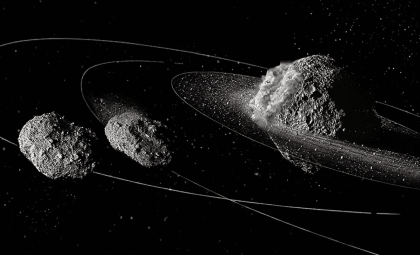
The researchers suggest that a parent asteroid, about 50 miles in diameter, was shattered by a 12-mile-wide impactor, setting off a cascade of collisions. Donaldjohanson and other smaller bodies formed through gravitational pull and further impacts, preserving a mix of ancient structural features and the violent forces responsible for their creation.
“This is just one of many surprising things learned since NASA’s Lucy spacecraft flew by Donaldjohanson on April 20, 2025,” said SwRI’s Dr. Simone Marchi, deputy principal investigator of the Lucy mission and the study’s lead author. “Lucy images confirmed its elongated shape, initially suggested by Earth-based telescope observations. The flyby revealed that the small asteroid, half a mile in diameter, resembles a peanut, with a two-lobed structure connected by a narrower neck.”
The study underscores how small asteroids can offer complex geological tales spanning hundreds of millions of years. Crater density on Donaldjohanson matches the Erigone family’s timeline, while areas of eroded smaller craters suggest seismic reshaping caused by more recent impacts. These findings highlight an active environment where even seemingly inert asteroid surfaces continue to evolve over eons.
Broader Impacts on Solar System Studies and Exploration Plans
Donaldjohanson’s distinctive shape and composition offer direct evidence of the early solar system’s intense collision history. Detected iron-rich phyllosilicates suggest the presence of water-altered minerals, hinting that its original parent body held water-bearing materials. This finding supports the theory that volatile substances were more prevalent in the primitive asteroid belt than formerly believed.
Besides scientific objectives, Lucy’s encounter provided vital instrument testing ahead of its primary mission to explore Jupiter’s Trojan asteroids—ancient solar system relics sharing Jupiter’s orbit. These bodies promise further revelations about outer solar system formation and evolution.
“This encounter gave us an opportunity to test our instruments and our procedures to make sure we are ready when we get to Jupiter’s Trojans,” Marchi said. “Once we start learning more about the Trojans, a completely different population of space rocks with very different histories, our understanding of solar system formation is likely to be challenged.”
Continuing its journey, Lucy’s successive flybys are piecing together a broader narrative of planetary beginnings, linking fragments like Donaldjohanson to the vast, violent processes that shaped the solar system’s architecture.
- Categories:
- Astronomy




0 comments
Sign in to Comment