
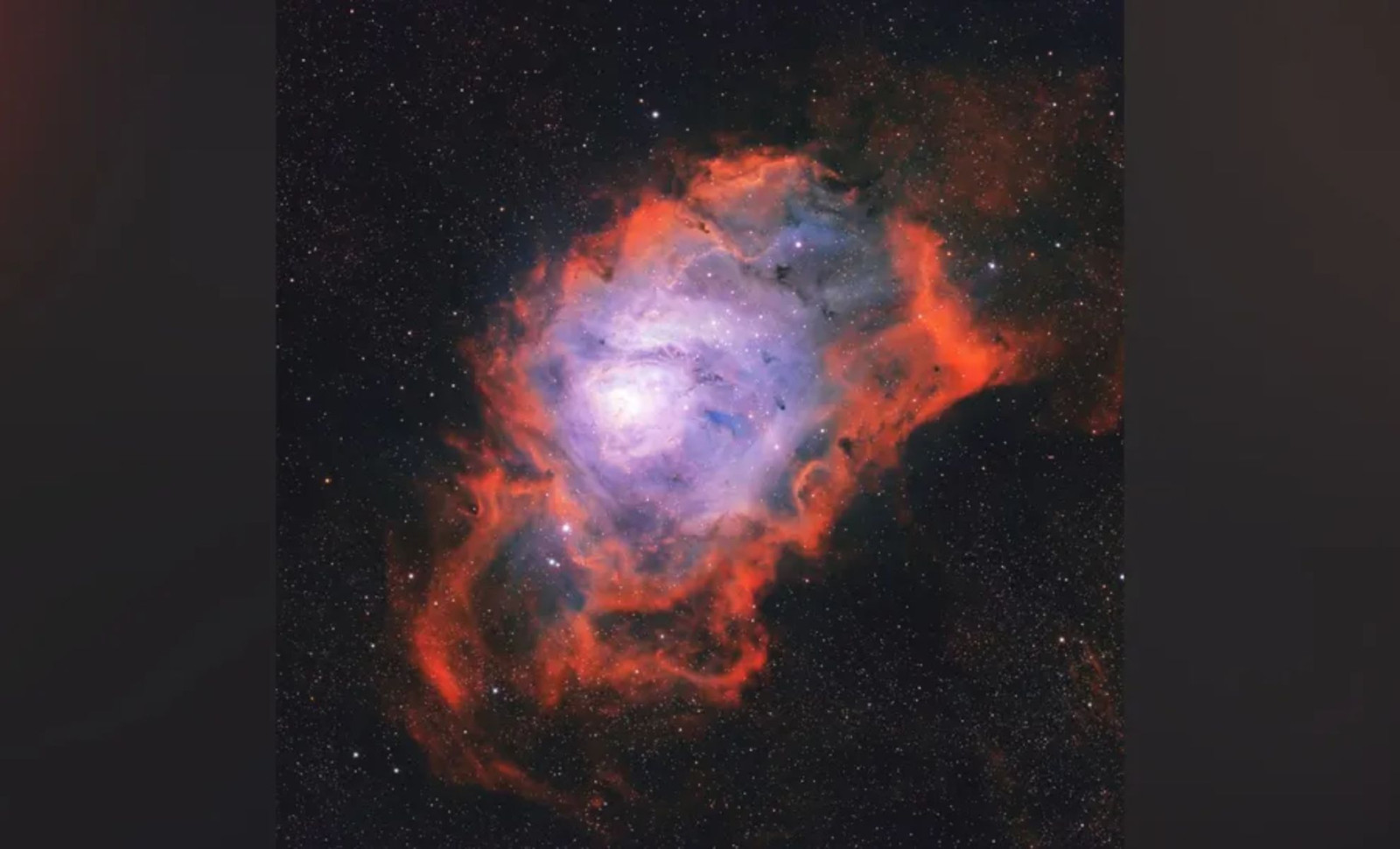
Amateur astronomer Noah Gyles has captured a strikingly detailed photo of the Lagoon Nebula, a colossal gas and dust cloud situated approximately 5,200 light-years from our planet. Taken from Rockwell, Texas, the image reveals the nebula’s glow with remarkable intricacy shaped by its youthful stars.
Details reported by Space.com highlight that the image was achieved through long-exposure photography combined with specialized narrowband filters, bringing out faint emissions typically unseen by the naked eye.
Located in the Sagittarius constellation, the Lagoon Nebula is part of an extensive star-forming region within the Milky Way’s plane. Under clear, dark skies, it presents as a subtle, hazy spot visible even without optical gear, becoming clearer when viewed with binoculars or small telescopes.

Renowned for its star creation activity, the nebula serves as both a scientific interest and a familiar sight enjoyed by many astronomy enthusiasts.
Capturing the Image Over Consecutive Moonless Nights
As detailed by Space.com, Noah Gyles took the photos on July 18 and 19, 2025, employing an Askar FRA500 telescope alongside a ZWO astronomy camera. The final composition combined 60 five-minute exposures, totaling over six hours of observation. Each shot contributed subtle details that became visible after stacking and processing.
Gyles expressed amazement at the early clarity of details.
“The first five-minute exposure already showed more detail than I was expecting,” he said. “After stacking all 60 frames, I was amazed by the amount of structure and faint detail in the nebula.”
Encouraged by these results, he continued capturing images amid ideal moonless and clear sky conditions over two nights.
Residing near Dallas–Fort Worth, Gyles often journeys outside the urban glow to capture clearer night skies.
“I often drive about an hour outside the city to escape the light pollution,” Gyles explained. It is a routine shaped by necessity rather than preference, since faint nebular light is easily overwhelmed by urban brightness.
He used narrowband filters to focus on specific light wavelengths emitted by ionized hydrogen gas in the nebula.
Stellar Formation Mapped by Radiant Gas Clouds
The Lagoon Nebula is a dynamic stellar nursery where hydrogen gas clouds are sculpted by the intense radiation of young, hot stars. This radiation excites the gas, causing it to emit a glowing light that defines the nebula’s intricate appearance. According to NASA, these nebulae are regions of ongoing star birth from dense interstellar material.
In Gyles’s photograph, the nebula displays intertwined filaments and bright emission areas interspersed with darker dust lanes. This contrast highlights the interaction between stellar winds and gas clouds, shaping the nebula over time.
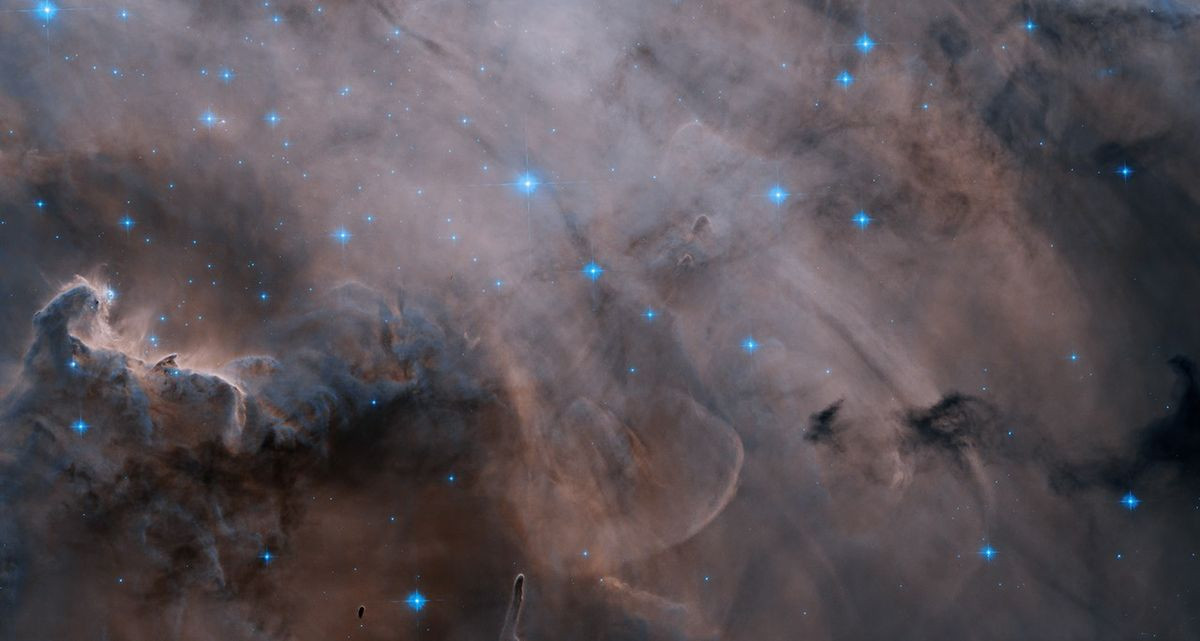
Thanks to its brightness, the Lagoon Nebula ranks as one of the more approachable deep-sky objects, occasionally visible without aid when skies are very dark. When observed through small telescopes, its complex glowing gas formations become clearly defined within the dense star fields of the Milky Way.
How to Spot the Lagoon Nebula This Summer
To find the Lagoon Nebula, start by locating the Sagittarius constellation, recognizable by the familiar Teapot shape. As reported in the source, observers can extend a line through the stars of the Teapot’s spout—Kaus Australis, Alnasl, and Kaus Media—to approximate the nebula’s position.
Another way is to use the stars Ascella and the binary star Sabik as reference points within the same region of the Milky Way. The nebula lies roughly between these markers in a star-dense area that often appears almost uniform to the naked eye.
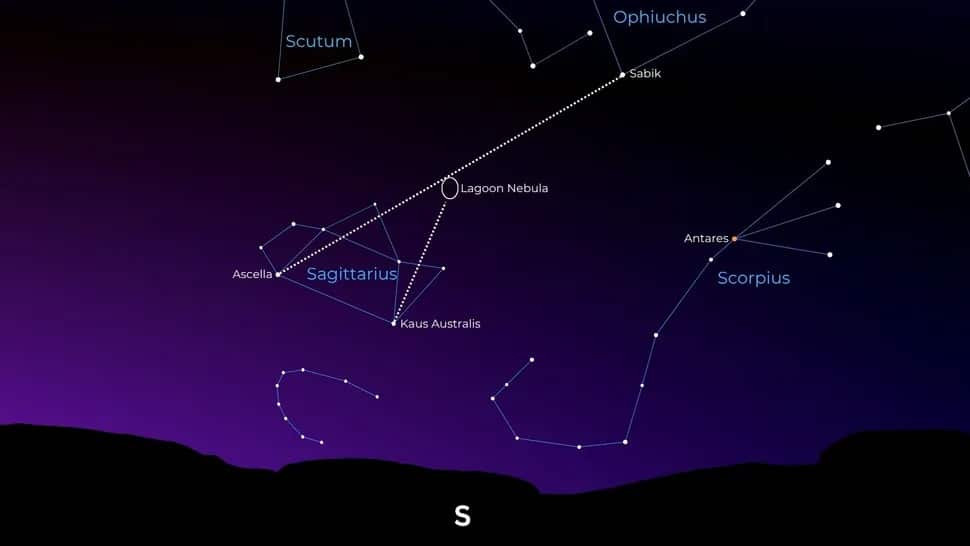
The ideal viewing time is around August, when Sagittarius is prominent in the southern sky of the Northern Hemisphere.
- Categories:
- Space


0 comments
Sign in to Comment