
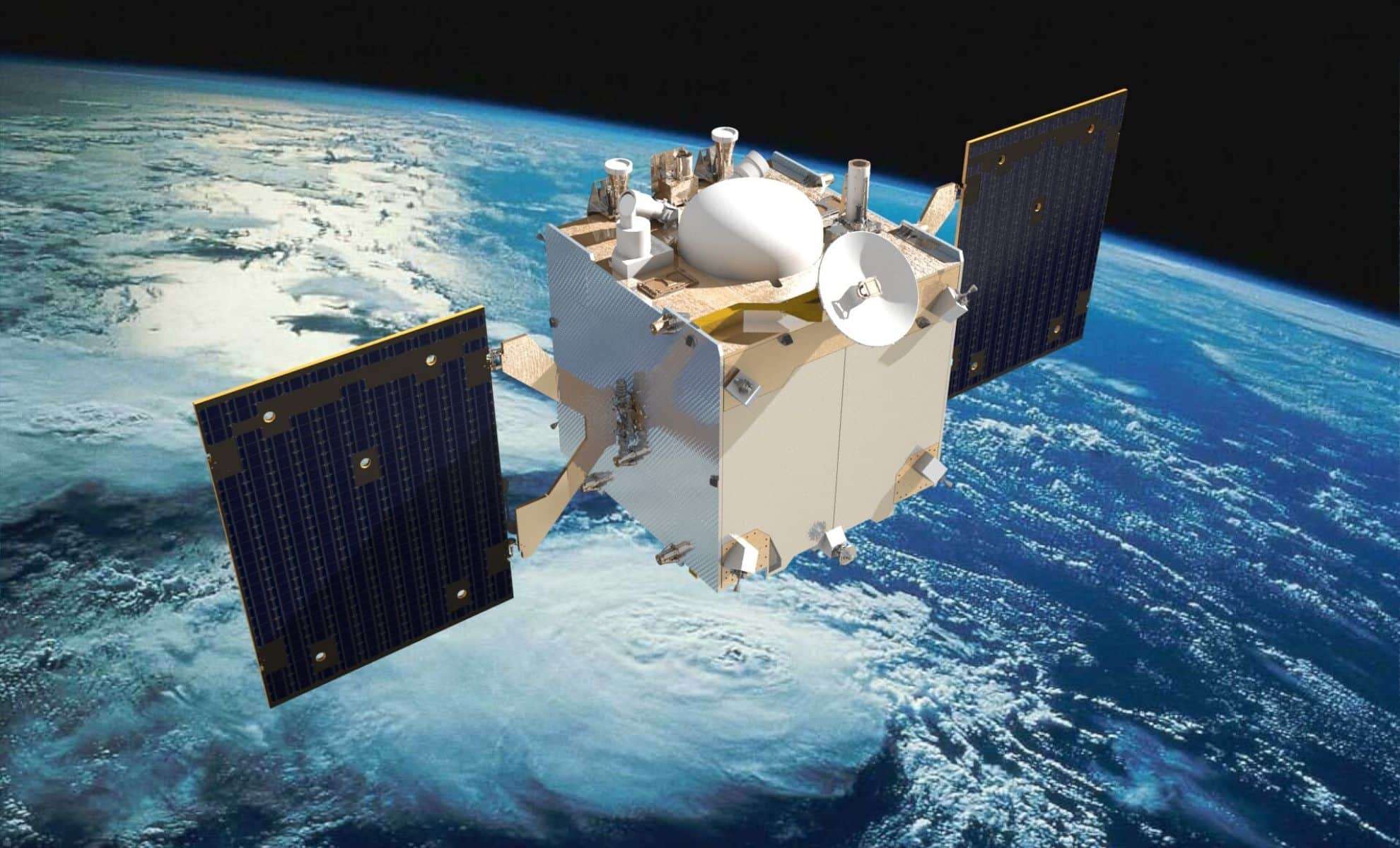
Europe's space agency is moving forward with plans to intercept asteroid Apophis ahead of its remarkable close pass by Earth in 2029.
ESA has formalized a €63 million contract with OHB Italia to initiate development work on the Ramses spacecraft, a mission designed to analyze Apophis as it approaches our planet. Scheduled for launch in early 2028, Ramses aims to rendezvous with Apophis roughly two months before its notable April 2029 encounter. The mission is set to yield valuable data on asteroid properties and behavior, vital for planetary defense research.
Apophis: A Near-Earth Visitor of Great Interest
The roughly 375-meter asteroid Apophis has drawn significant attention due to its unusual proximity to Earth. On April 13, 2029, it will swing by at a distance within the geostationary orbit zone, closer than many satellites. This rare event offers an unparalleled chance for detailed study, enhancing our knowledge of near-Earth objects and improving defense strategies.

The Ramses mission, named for its quick-response objectives, will focus on examining the asteroid’s makeup, internal structure, and dynamic reactions during its Earth flyby. Special attention will be given to how tidal forces from Earth’s gravity influence Apophis’ stability, providing insights that could transform our understanding of how asteroids respond to gravitational stresses.
“Waiting for the Ministerial Council was not an option,” explained Paolo Martino, ESA Ramses project manager, highlighting the urgency. “Being ready on schedule is critical; a delay of even a week means losing the encounter.”
Meeting a Challenging Timeline
Time is the most pressing hurdle for the Ramses team. The mission’s launch must occur by early 2028 to enable the spacecraft to intercept Apophis ahead of its Earth swingby. Any postponement could forfeit this unique research opportunity. “Managing risks differently is key,” said Roberto Aceti, OHB Italia’s managing director. “The main concern is timing; missing the window by mere days could mean the asteroid slips away.”
OHB Italia, already the lead contractor on the Hera and Ramses projects, will begin acquiring critical components and refining the spacecraft design. Ramses will be based on ESA’s sleek Hera mission platform, which recently launched to assess NASA’s DART impact results. This streamlined design helps control costs and tightens the schedule.
Though the project has secured initial funding, completion of the €363 million budget awaits a final decision at the 2025 Ministerial Council. In the meantime, efforts will concentrate on vital tasks to keep Ramses mission-ready for swift progression if approved.
Global Partnerships and Planetary Security
The Ramses mission marks a crucial advance for planetary defense initiatives. It aligns with ESA’s strategy to offer at least a three-week warning for asteroids larger than 30 meters and develop capabilities to divert bodies up to 500 meters wide. “Besides its scientific value, Ramses represents a milestone in our defense preparedness,” emphasized Holger Krag, head of ESA’s Space Safety Program.
ESA is coordinating closely with international space agencies to maximize observational coverage of Apophis. For example, NASA’s OSIRIS-REx, returning from asteroid Bennu, will extend its mission as OSIRIS-APEX, targeting Apophis shortly after its Earth passage. This cooperation builds on successful partnerships like NASA’s DART and ESA’s Hera missions, fostering global collaboration.
“We invite participation from international agencies, researchers, and educational institutions,” stated Li Guoping, chief engineer of China’s CNSA, highlighting the importance of shared efforts in planetary defense and asteroid science.
- Categories:
- Astronomy ,
- Science ,
- Space










0 comments
Sign in to Comment