
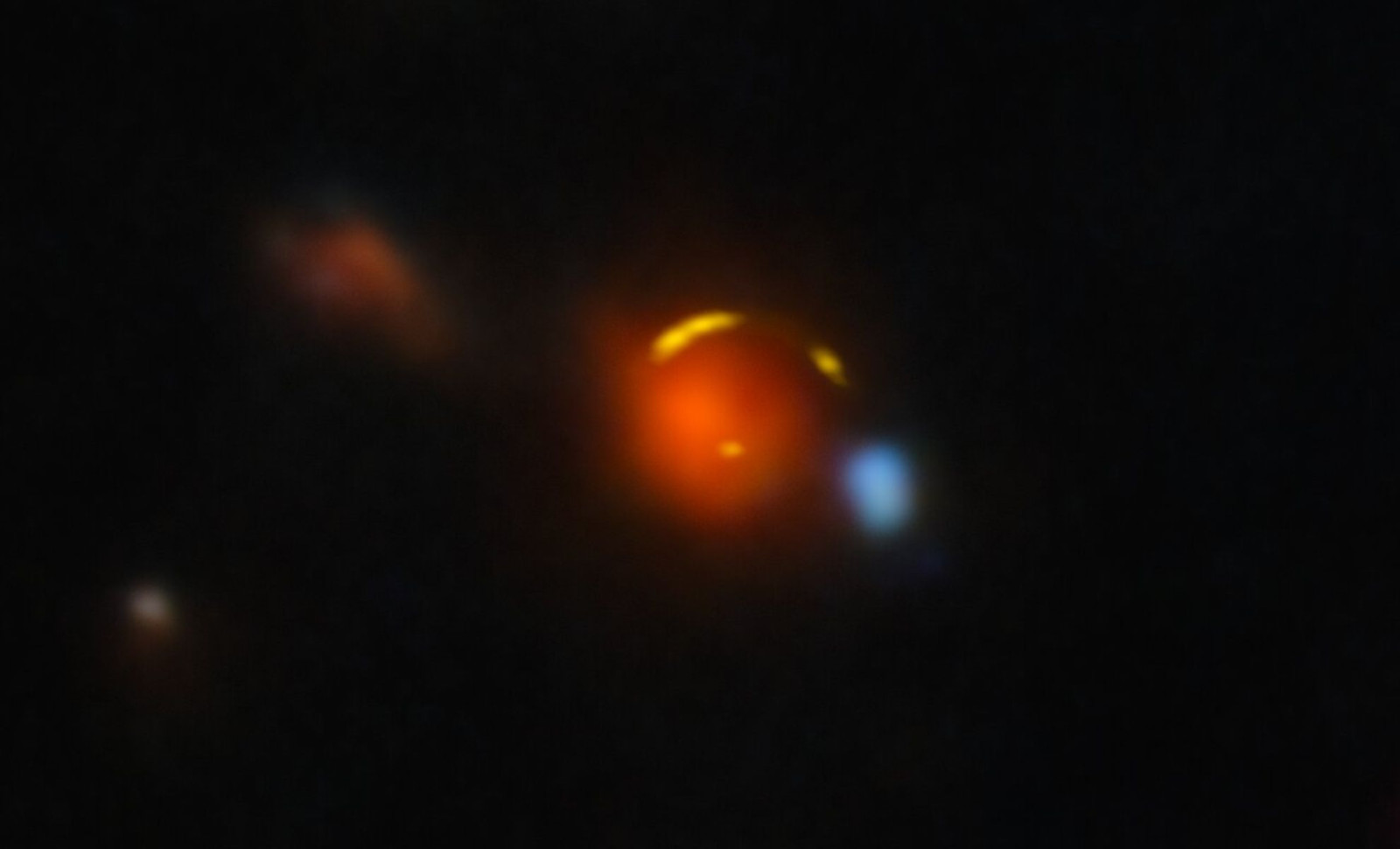
Scientists have traced a high-energy neutrino detected on Earth to a remote galaxy, nicknamed Shadow Blaster, situated approximately 11 billion light-years away. The neutrino, designated IC 210922A, was observed by the IceCube Neutrino Observatory in Antarctica. This discovery offers one of the most compelling connections yet between a specific galaxy and a detected high-energy neutrino.
Neutrinos are often called “ghost particles” because of their extremely weak interaction with matter, allowing them to pass through planets, stars, and even living beings virtually unimpeded. This elusive nature makes them notoriously difficult to track despite their vast numbers streaming through the cosmos constantly.
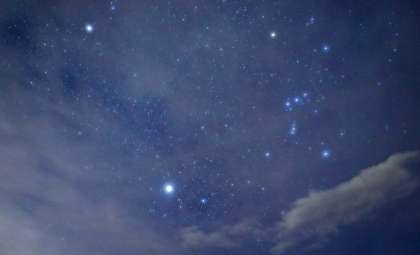
Detecting a neutrino is just the initial step; the greater challenge lies in identifying its origin. In this instance, researchers traced the particle's path back to the constellation Eridanus and conducted follow-up observations across various wavelengths to pinpoint any corresponding celestial phenomena.

Silent Skies Accompanying a Powerful Neutrino
Following IceCube’s detection of IC 210922A in 2021, astronomers swiftly sought an obvious source of the neutrino. Their investigation, detailed in Nature Astronomy, checked for gamma-ray bursts, supernovae, and tidal disruption events triggered by black holes consuming stars.
No signals in gamma rays, X-rays, or optical wavelengths accompanied IC 210922A, leaving its source unclear. Despite extensive monitoring by several observatories, the region remained unexpectedly quiet.
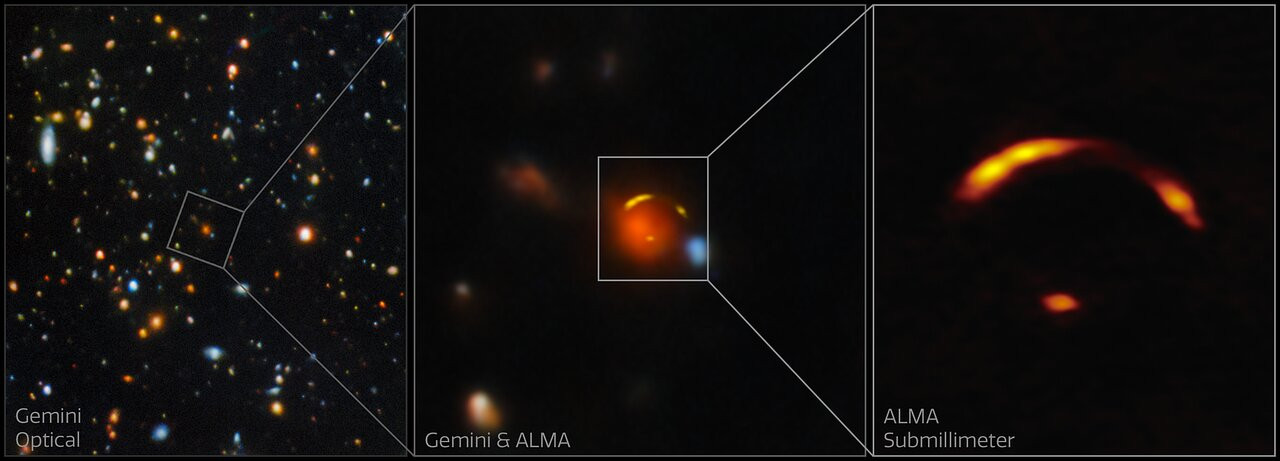
Broadening their search, the team shifted attention to longer wavelengths, where obscured, dusty galaxies are more detectable.
Unveiling Shadow Blaster Through Gravitational Lensing
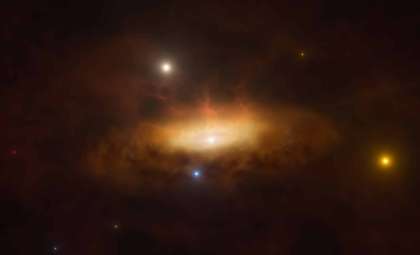
Critical insights emerged from observations with the James Clerk Maxwell Telescope (JCMT) and the Submillimeter Array (SMA), which identified a luminous infrared source dubbed JCMT0402−0424, later nicknamed Shadow Blaster.
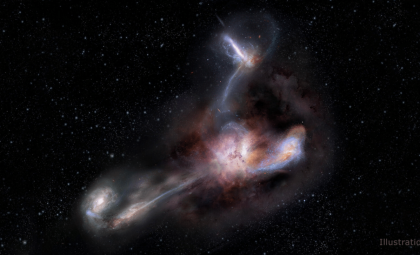
Subsequent data from ALMA in Chile and the Gemini North telescope revealed Shadow Blaster to be a dusty, gas-rich galaxy experiencing vigorous star formation.
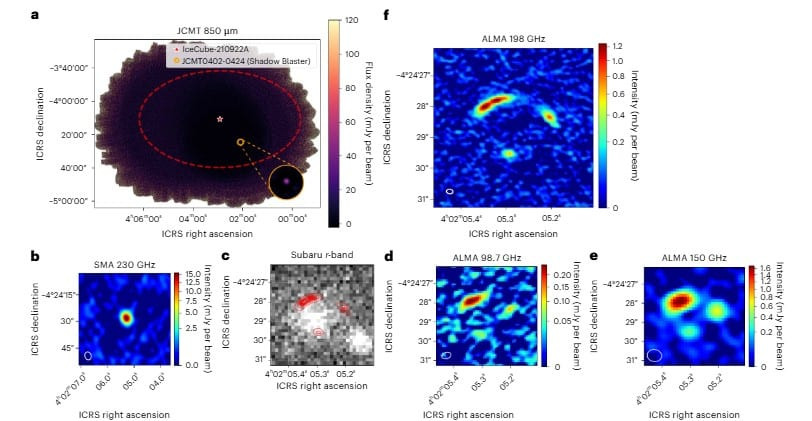
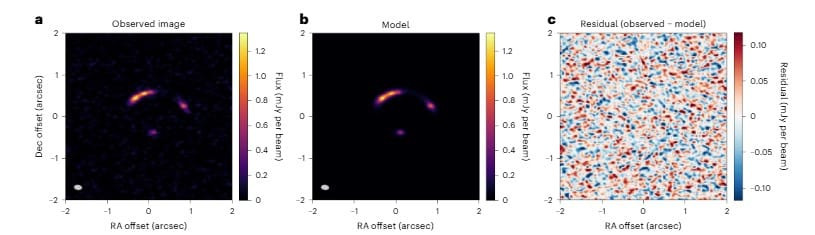
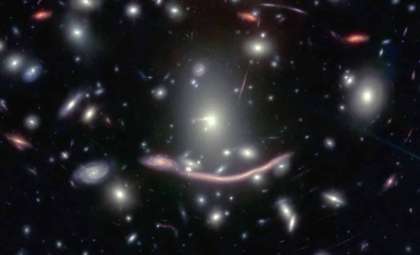
Gravitational lensing, caused by massive objects situated between Earth and Shadow Blaster, bends and amplifies its light, acting as a natural cosmic magnifier. This effect enabled astronomers to examine a galaxy that would normally be too faint and remote for detailed study.
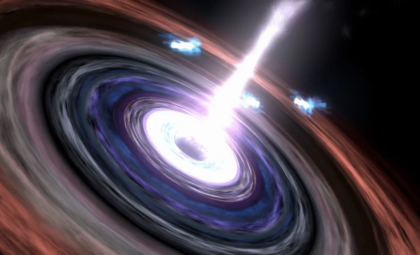
Significantly, Shadow Blaster exhibits no evidence of a highly active supermassive black hole with strong jet emissions. Instead, the galaxy’s energetic activity is primarily driven by intense star-forming processes within dense gas and dust clouds.
Illuminating Starburst Galaxies as Neutrino Factories
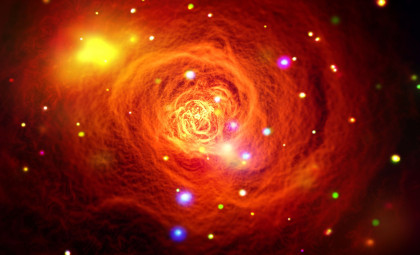
Classified among starburst galaxies, Shadow Blaster is characterized by an exceptionally high rate of star birth. These tumultuous environments, filled with dense molecular clouds and intense energy, are believed to accelerate particles to extreme energies, including neutrinos.
Researchers propose that such conditions can effectively generate the high-energy neutrinos detected by instruments like IceCube.
“Shadow Blaster possesses the kind of dense, gas-rich environment that theoretical models have long suggested could efficiently produce high-energy neutrinos,” Yuji Urata of MITOS Science Co. Ltd. in Taiwan noted in a statement.
He added that if confirmed, Shadow Blaster would mark the first direct association between a high-energy neutrino event and a dusty, star-forming galaxy.
This discovery also carries wider significance. Starburst galaxies were much more common roughly 10 billion years ago when star formation rates in the universe peaked. As a result, these galaxies may significantly contribute to the diffuse high-energy neutrino background observed today.
Current estimates suggest such galaxies might account for up to around 20% of IceCube's detected diffuse neutrino background, implying that these energetic particles may not solely originate from black hole activity, but also from rapid star formation and dense, evolving regions across cosmic time.
- Categories:
- Astronomy

0 comments
Sign in to Comment