
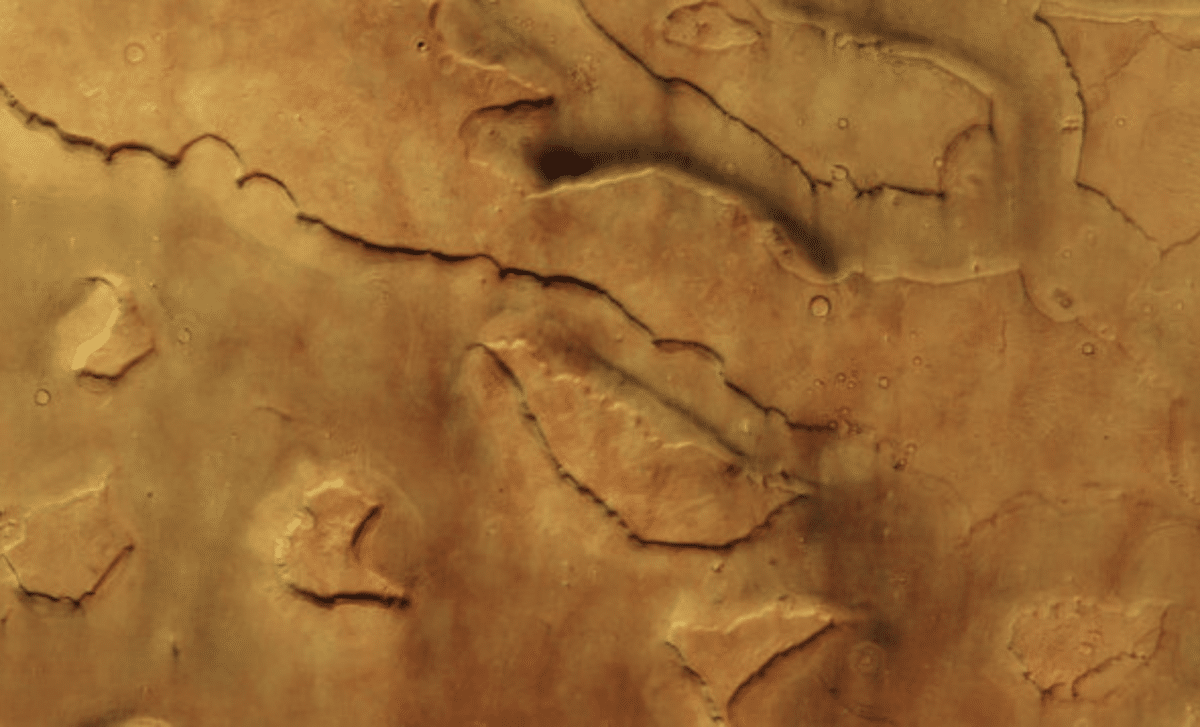
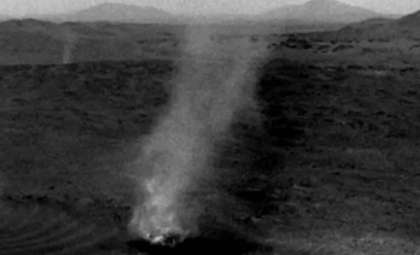
The European Space Agency (ESA) has unveiled captivating imagery of Mars’s Mamers Valles, showcasing numerous enormous dust devils sweeping across these aged valleys. Captured by the Mars Express orbiter’s High Resolution Stereo Camera, some of these swirling mini tornadoes reach heights of up to 8 kilometers, offering an unparalleled glimpse into Mars’s atmospheric behavior and dusty terrain.
Colossal Dust Devils Roaming Mars’s Atmosphere
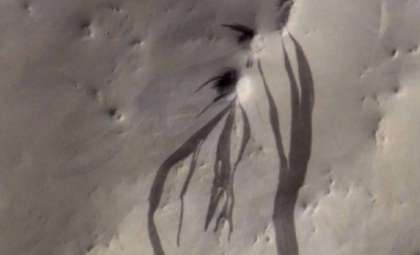
On Mars, dust devils form when localized ground areas heat quickly under sunlight, causing the air above to spin upward and pick up dust particles. While similar whirlwinds occur on Earth, Martian dust devils are far larger and more intense. They can stretch kilometers in height, dominating the landscape and reaching speeds of up to 45 meters per second. These vortices create visible dust trails that can last long enough to affect surface conditions. They significantly contribute to moving dust across the planet, impact local temperatures, and gradually reshape Martian terrain. Studying these dust devils aids researchers in understanding how wind transports materials on Mars, information critical for planning both robotic missions and eventual human exploration, as dust can affect solar panels, scientific tools, and habitat infrastructure.
Capturing Mars’s Twisting Dust Devils with Mars Express
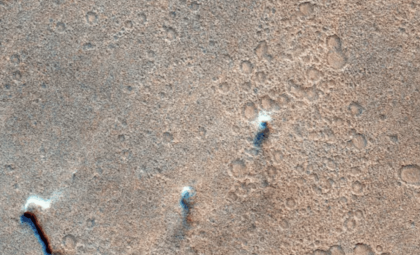
The Mars Express spacecraft, operational since 2003, has delivered a treasure trove of detailed images using its High Resolution Stereo Camera (HRSC). This sophisticated instrument captures multiple simultaneous images from different perspectives and color bands, which are then merged to form composite views. Stationary surface features align perfectly, but dynamic elements like dust devils stand out due to their movement, appearing as distinct streaks and shadows. In recent captures, over 30 dust devils can be identified, highlighted with yellow circles and accompanied by faint pink shadows. By combining data from both Mars Express and ESA’s ExoMars Trace Gas Orbiter, scientists have tracked more than 1,000 active dust storms planet-wide. These observations are essential for mapping Martian wind circulation, dust transport pathways, and their interactions with geological structures such as mesas and valleys.

The Maze-like Landscape of Mamers Valles
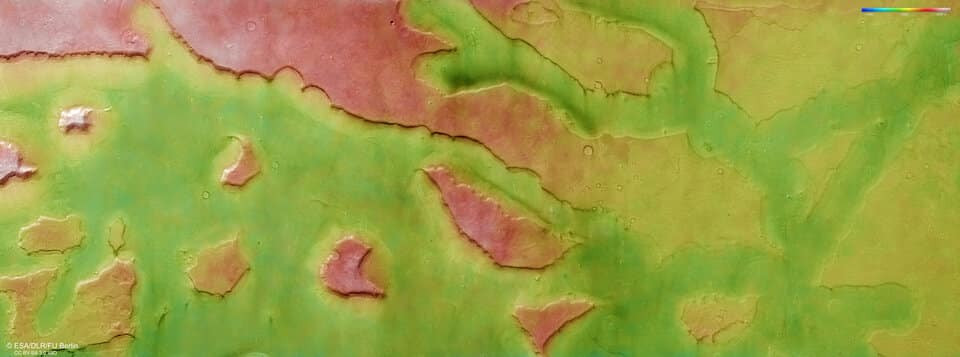
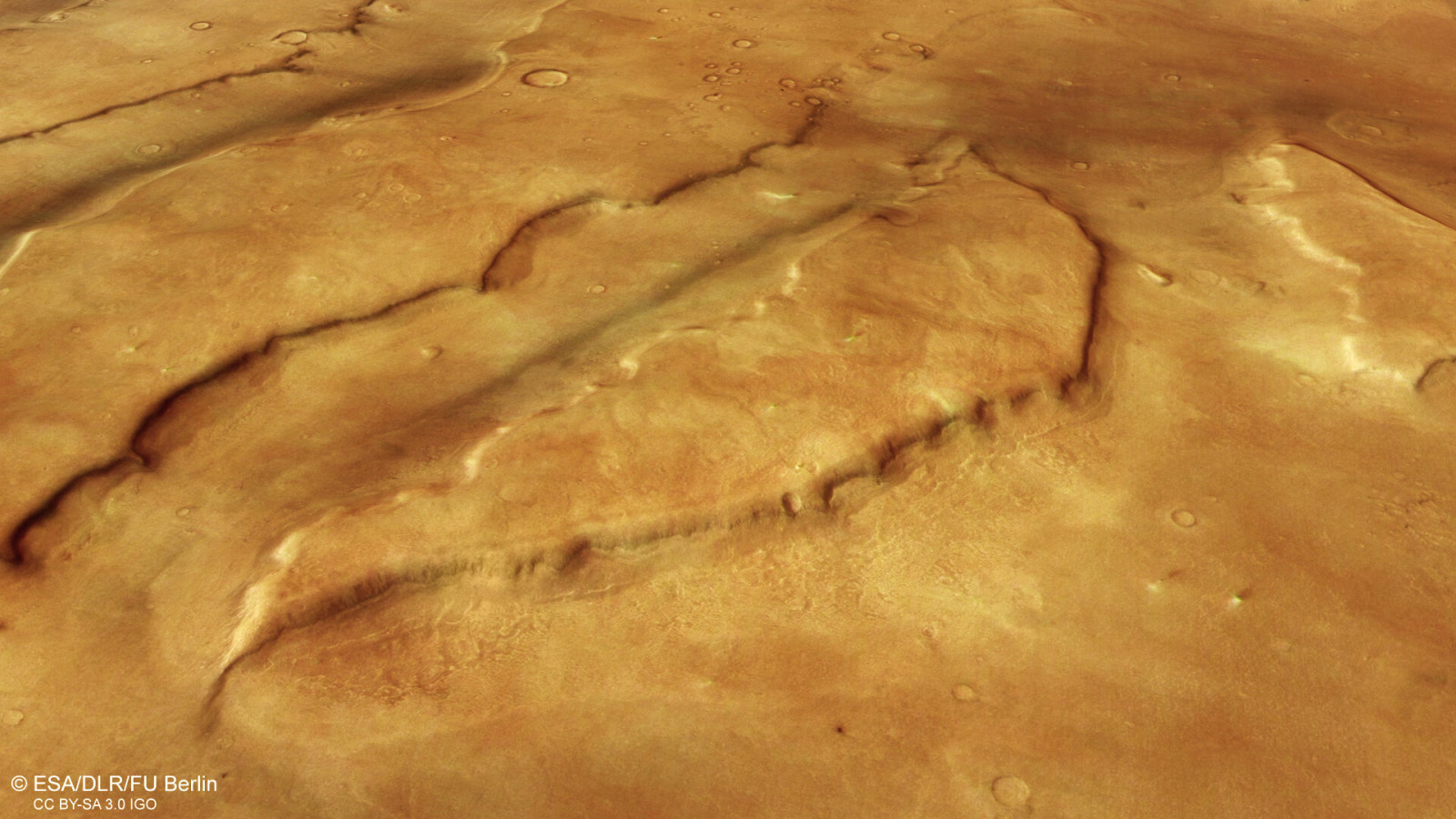
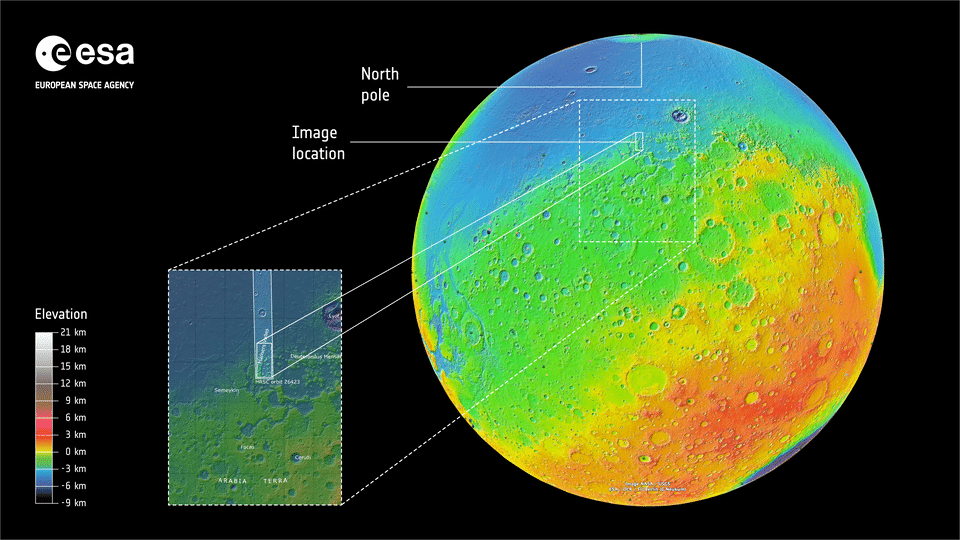
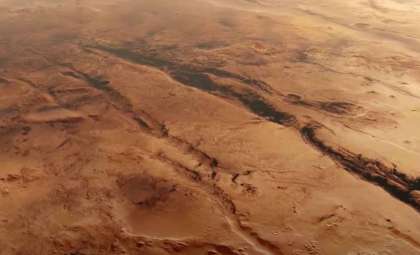
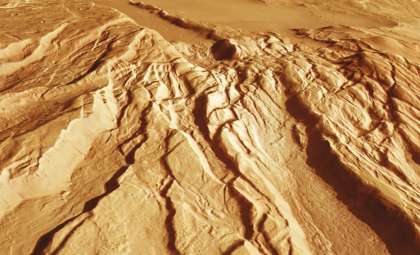
Mamers Valles consists of a sprawling, broken network of valleys stretching about 1,000 kilometers, linking the southern highlands with northern lowlands on Mars. The channels can be as wide as 25 kilometers and plunge more than 1 kilometer deep, framed by towering cliffs, flat-topped mesas, and debris-covered ice formations. This region features “fretted terrain,” where valleys are segmented by hills, cliffs, and ridged surfaces. The valley floors bear ridges and textures created by glaciers moving downslope, transporting rocks and dust in the process. Dark patches spread across the valley floors likely represent volcanic sands, either formed locally or transported by wind. These characteristics collectively tell a story of the influence of water, volcanic activity, and ice sculpting the Martian surface over billions of years, presenting a rare look into its ancient geologic activity.
Ice Deposits and Insights into Mars’s Hydrologic History
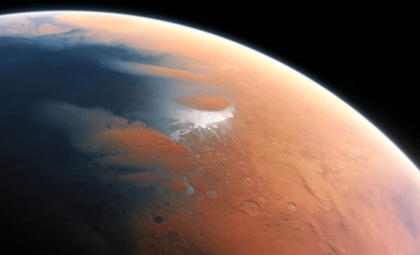
Hidden beneath rubble on valley floors, glacial ice endures, preserved under protective layers of dust and rock, some of it intact for millions of years. These icy remnants point to an era when Mars enjoyed warmer, wetter conditions and help researchers piece together its climate evolution. The various ridges and grooves across the valley floors reflect glacier movement, carving channels as they progressed downhill. Likewise, cliffs and mesas exhibit features shaped by glaciation, highlighting the pervasive influence of ice on Martian topography. Today, liquid water is unstable on the surface, but these frozen traces are key to understanding Mars’s shift into the cold, dry planet we see today.
More than Twenty Years of Mars Exploration with Mars Express
Since its 2003 launch, Mars Express has dramatically deepened scientific knowledge of Mars. Its HRSC camera, designed and managed by the German Aerospace Center (DLR), has created the most intricate color and 3D maps of the Martian surface, uncovering features never before seen from orbit. ESA researchers at the DLR Institute of Space Research and the Freie Universität Berlin have meticulously processed this data to produce stunning visuals, including images of dust devils spiraling through Mamers Valles. Over two decades, Mars Express has monitored evolving phenomena such as dust storms and seasonal ice shifts, contributing vital data for modeling Mars’s atmospheric processes, geological developments, and climatic history. These findings continue to guide upcoming missions and enhance our comprehension of the Red Planet’s environment.
- Categories:
- News



0 comments
Sign in to Comment