
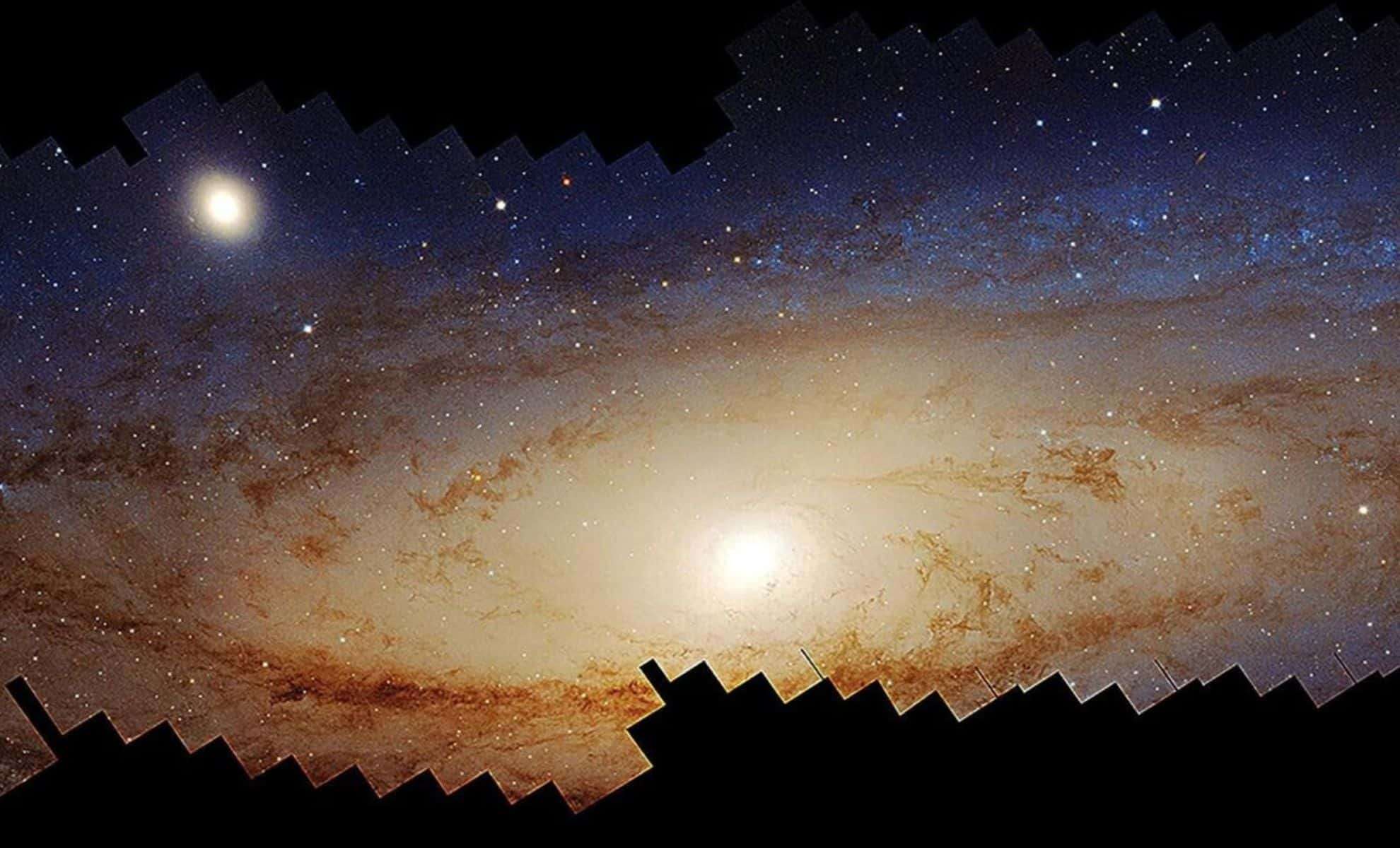
Over ten years, the Hubble Space Telescope diligently gathered data during more than 1,000 orbits focused on our nearest galactic neighbor. The effort culminated in a magnificent 417-megapixel image of the Andromeda Galaxy, showcasing an intricate display of over 200 million stars along with evidence of past cosmic violence. This extraordinary image not only highlights the galaxy’s striking complexity but also uncovers clues pointing to a dramatic collision that influenced its development.
An Unparalleled View of the Andromeda Galaxy
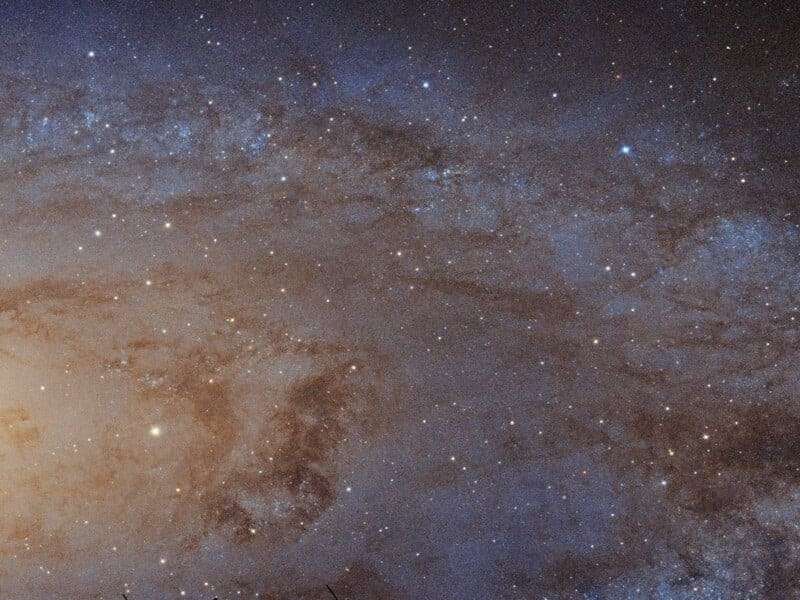
The Hubble Space Telescope, which has broadened our cosmic knowledge for nearly 35 years, has now achieved one of its most ambitious feats. The newly created image, spanning 42,208 by 9,870 pixels, stands as the most detailed visual map of Andromeda produced to date.
While Andromeda is believed to hold roughly one trillion stars, this image captures a meticulously detailed snapshot of 200 million stars—a mere fraction of the total. In comparison, our Milky Way contains approximately 100 to 400 billion stars. The sheer sharpness of this mosaic presents an exceptional chance for astronomers to analyze Andromeda’s composition and evolutionary history.

Cosmic Collisions That Shaped Andromeda
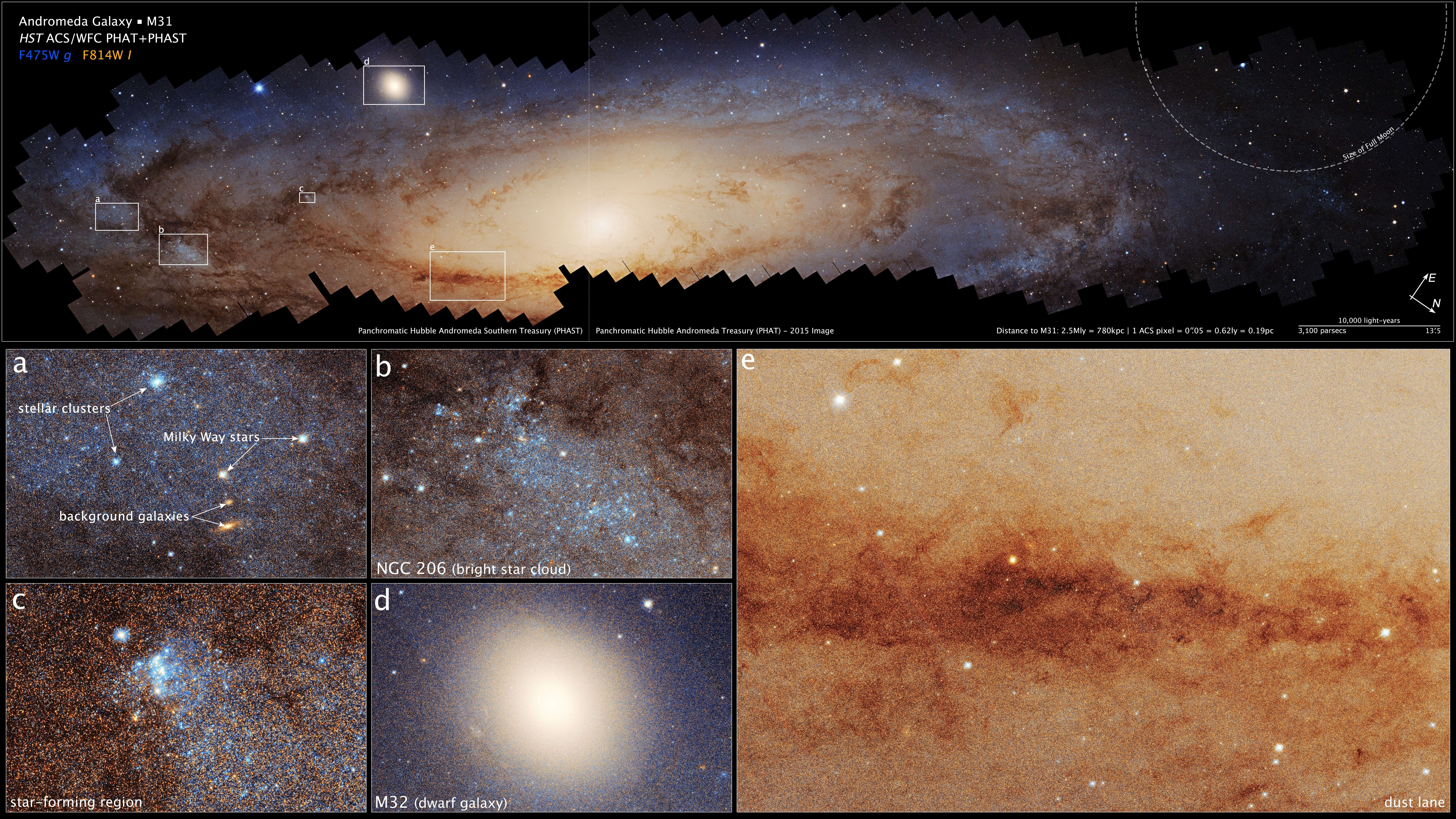
More than just a stunning snapshot, this image serves as a portal into the galaxy’s violent past. The formation and layout of Andromeda suggest it endured a significant cosmic impact that triggered a surge of star formation before abruptly halting.
Daniel Weisz, an astronomer at the University of California, likens Andromeda to a “cosmic train wreck”, shaped by turbulent galactic interactions. The prevailing theory proposes that Andromeda collided with a smaller galaxy—likely its satellite companion Messier 32—which removed much of its interstellar gas and halted new stars from forming.
Simulations indicate such collisions tend to leave behind dense stellar remnants, and Messier 32, a compact galaxy close to Andromeda, might be the core stripped from a former spiral galaxy. This ancient collision played a pivotal role in altering Andromeda’s trajectory, influencing the galaxy’s current form.
Looking Back to Predict Our Galactic Future
Beyond demonstrating Hubble’s remarkable capabilities, this image offers vital insights into the processes driving galaxy growth and transformation over eons. By examining Andromeda’s structure, researchers gain a deeper understanding of the life cycles of galaxies and the role of mergers and cosmic interactions.
The galaxy’s documented history may also hint at the Milky Way’s destiny, as astronomers anticipate a collision between Andromeda and our galaxy in about 4.5 billion years. Studying Andromeda today provides a glimpse of the dramatic cosmic event awaiting our own galactic neighborhood.
Advancing the Frontier of Space Observation
While Hubble continues to revolutionize our view of the universe, its operational lifespan is finite. Soon, next-generation observatories like the James Webb Space Telescope and the upcoming Nancy Grace Roman Space Telescope, scheduled for launch in May 2027, will continue the legacy with deeper, more insightful cosmic observations.
As technology progresses rapidly, scientists are now able to unravel the intricate histories hidden within galaxies such as Andromeda at unprecedented resolution. The breakthroughs to come promise to expand and enrich our understanding of the universe’s origins, makeup, and fate.
This article has been republished from the following materials. Note: material may have been edited for length and content. For further information, please contact the cited source.
- Categories:
- Astronomy ,
- Science ,
- Space







0 comments
Sign in to Comment