
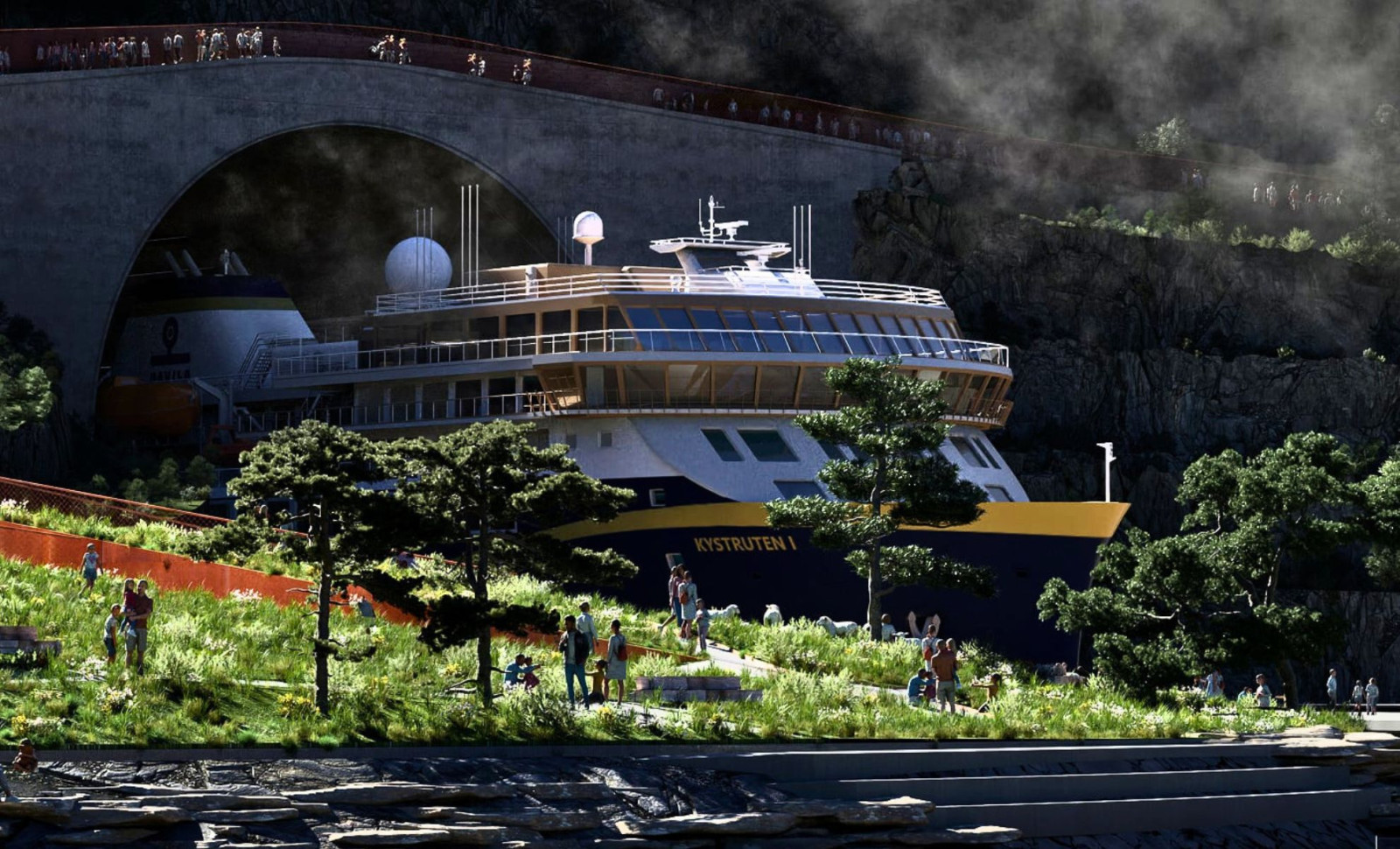
Vessels navigating near Norway’s Stadlandet Peninsula often face extreme weather, contending with storms about 100 days yearly, waves reaching 30 meters, and turbulent seas from multiple directions. To address these hazards, Norway intends to carve a massive ship tunnel through solid rock, measuring 50 meters in height and 36 meters in width.
The proposed Stad Ship Tunnel aims to link Moldefjord with Kjødepollen within the Vanylvsfjord, allowing ships to bypass the perilous peninsula tip by traveling through it instead. According to the Norwegian Coastal Administration, plans are set to begin construction after Norway’s center-left coalition agreed on a budget revision that finances the project.
This corridor is considered by the agency to be one of the most exposed and risky sea areas along Norway’s coastline. It touts the endeavor as the world’s first true full-sized ship tunnel designed for coastal vessels rather than small inland watercraft. The Norwegian Parliament’s final budget approval was scheduled for June 19, with groundwork expected to start in early 2027.

Frequent Storms Cripple Passage Around Stadlandet
Currently, ships must circumnavigate the Stadlandet Peninsula, where fierce storms turn normal voyages into lengthy waits. Approximately 100 stormy days annually disrupt the Stadhavet Sea, forcing fishing boats, cargo carriers, salmon transport vessels, and other coastal ships to delay departures or arrivals.
The challenges result not only from towering waves up to 30 meters high but also from unpredictably shifting seas, where multiple wave directions converge. This creates especially hazardous conditions for ships tasked with maintaining strict delivery schedules along the coast.
Fishing exports demonstrate the impact too: Tore O. Sandvik, the Trøndelag county mayor, emphasized that fresh salmon shipments can’t afford to be stalled near Stad by adverse weather. This underlines the tunnel’s practical value, offering a safer, quicker passage for critical cargo.
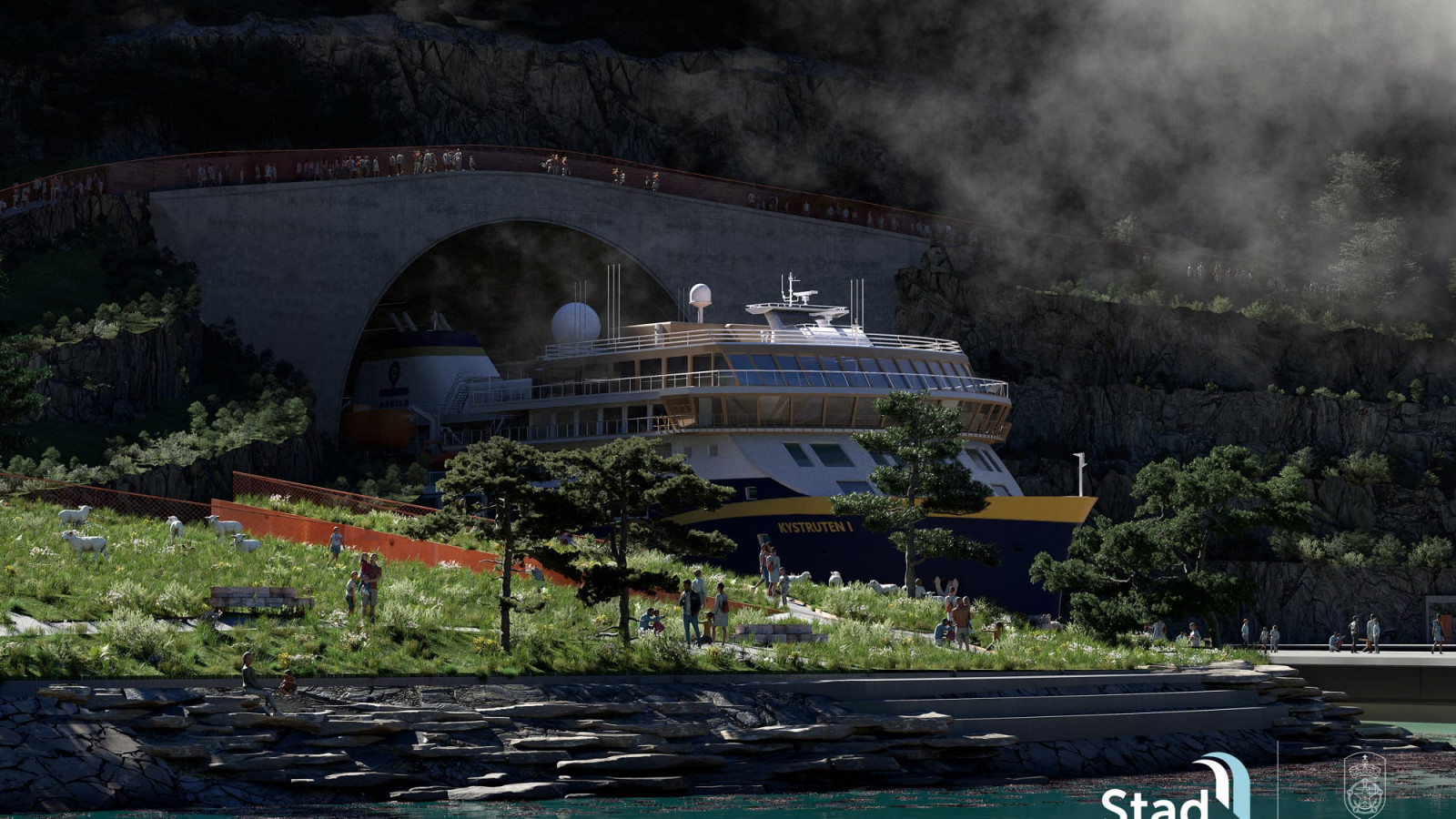
Stretching roughly 1.7 kilometers through mountain rock—and 2.2 kilometers including approach zones—the tunnel’s location at Stadlandet’s most slender point provides ships with a protected, predictable route between two fjords, avoiding the menacing outer seas.
Engineered for Large Coastal Vessels
Its considerable size distinguishes the Stad tunnel from typical ship passages. With dimensions of 50 meters tall and 36 meters wide, and a vertical clearance of 33 meters above sea level, it can handle ships with drafts up to 12 meters and widths up to 16 meters.
This design permits vessels of the Hurtigruten fleet, Norway’s renowned Coastal Route ships, to transit safely through the tunnel, as specified by the Norwegian Coastal Administration. The comparison highlights both the tunnel’s scale and its target vessel class—serving current coastal shipping needs.
While ship tunnels date back centuries, most have served inland canals and harbor areas. Stad’s tunnel is uniquely planned as an open sea ship tunnel chiseled through a coastal rock formation, coping with exposure to oceanic elements.
The administration’s goal is to enhance maritime safety and navigational reliability in the hazardous Stad stretch. Other anticipated advantages—like increased freight efficiency, growth in tourism, fuel savings, and emission reductions—remain speculative until the tunnel is operational.
Construction Contracts Near Award Stage
The project has progressed beyond proposal stages. The Norwegian Coastal Administration has evaluated bids from three construction consortia—AF Gruppen, Eiffage Génie Civil, and Skanska/Vassbakk & Stol—submitted in April for the main building contract.
Harald Inge Johnsen, Project Manager, announced the bid review is complete. Following a mandatory standstill period for potential appeals, the contract award will allow preparations to commence with construction anticipated to begin in 2027.
The primary contract is structured as a turnkey project, ensuring the builder delivers the tunnel under predefined conditions. Additional related contracts are ready, covering demolition of nearby structures and installation of new water mains at both tunnel ends, signaling active operational groundwork beyond budgeting.
Einar Vik Arset, head of the Norwegian Coastal Administration, stated that years of planning have positioned the agency for execution once directed by the Ministry of Trade, Industry and Fisheries. The administration aligns the tunnel project with broader efforts to enhance the safety and cleanliness of Norway’s coastal and marine environments.
Financials and Forecasted Outcomes
Although Parliament approved the tunnel in 2021, rising construction costs forced a pause in late 2025. The recent budget adjustment reinvigorates the initiative, allowing contract finalization and preparatory activities once remaining formalities conclude.
The estimated expenditure stands at NOK 8.6 billion (approximately US$805 million), with project completion projected five years post-build start. Officials expect the tunnel to boost fishing and salmon aquaculture, promote a shift of freight transport to maritime routes, and enhance tourism opportunities.
Government projections suggest up to a 60% reduction in fuel consumption and emissions, though these benefits remain theoretical until real-world tunnel usage can be measured.
- Categories:
- News







0 comments
Sign in to Comment