
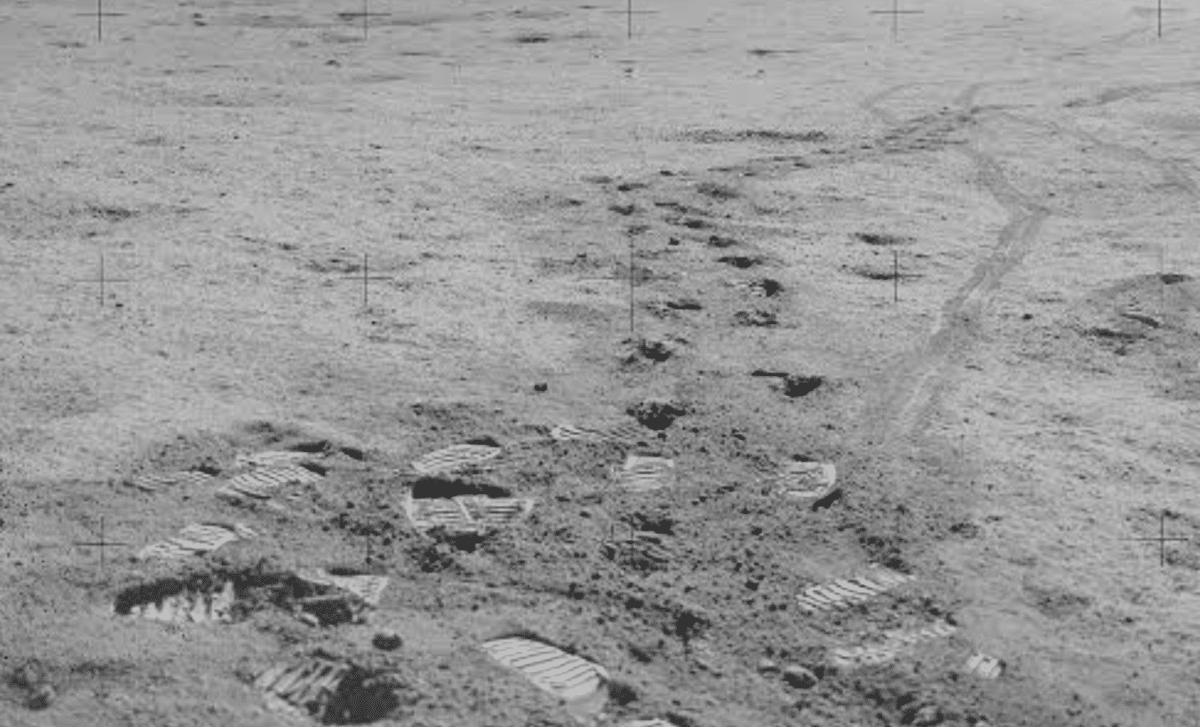
Emerging research suggests that the earliest tangible proof of extraterrestrial civilizations might already be present in the fine dust on the Moon. Astrophysicist Brian C. Lacki presents this perspective in a recent arXiv pre-print, proposing that durable physical evidence left by advanced societies could outlast fleeting radio signals. Instead of focusing solely on ephemeral transmissions, this approach highlights enduring structures and tiny debris that might endure for billions of years, potentially drifting through interstellar space as microscopic particles.
Pivoting to Long-Lasting Technosignatures
This hypothesis aligns with a growing movement within SETI research to seek persistent physical indicators of technology rather than transient radio waves. In his arXiv paper, Brian C. Lacki explores how advanced civilizations could leave behind lasting artifacts instead of temporary communications. This model prioritizes searching for materials and objects capable of surviving across immense spans of cosmic time, eliminating the need for precise synchronization between signal sending and detection.
Such remnants might take the form of remains from engineered megastructures, fragments resulting from their gradual disintegration, or microscopic debris formed through ongoing structural decay. Over extensive durations, enormous constructs could degrade into fine particles scattered throughout the galaxy. These tiny elements have the potential to migrate between stellar systems and settle within planetary surfaces.

Due to its absence of atmosphere and geological upheaval, the Moon offers a remarkably stable environment for preserving this kind of material. Lunar soil may serve as a repository for exceedingly ancient external particles, including those of artificial origin. This reframes the search for technosignatures, emphasizing the identification of physical traces left behind rather than catching active signals.
Megastructures, Technograins, and Cosmic Debris Evolution
Central to the theory is the concept of massive alien-built constructs, including Dyson swarms engineered to harness the power of stars. Although these megastructures could function for lengthy periods, they would still require ongoing upkeep to prevent deterioration. Without maintenance, components might drift apart, collide, and fragment, possibly triggering a chain reaction akin to the Kessler syndrome, in which debris begets more debris.
This cascading breakdown could reduce colossal artificial systems into minute fragments, or "technograins," which though no longer visibly structured, might retain chemical and physical markers of advanced manufacture. Once separated, these grains could be propelled across interstellar space by stellar winds and radiation pressure.
Across millions to billions of years, technograins might become widely distributed throughout the galaxy, occasionally intersecting with planets including Earth’s neighborhood. The hypothesis argues that remnants of bygone alien civilizations might be found not in massive structures but rather in dispersed cosmic dust.
The Moon as a Vault for Interstellar Relics
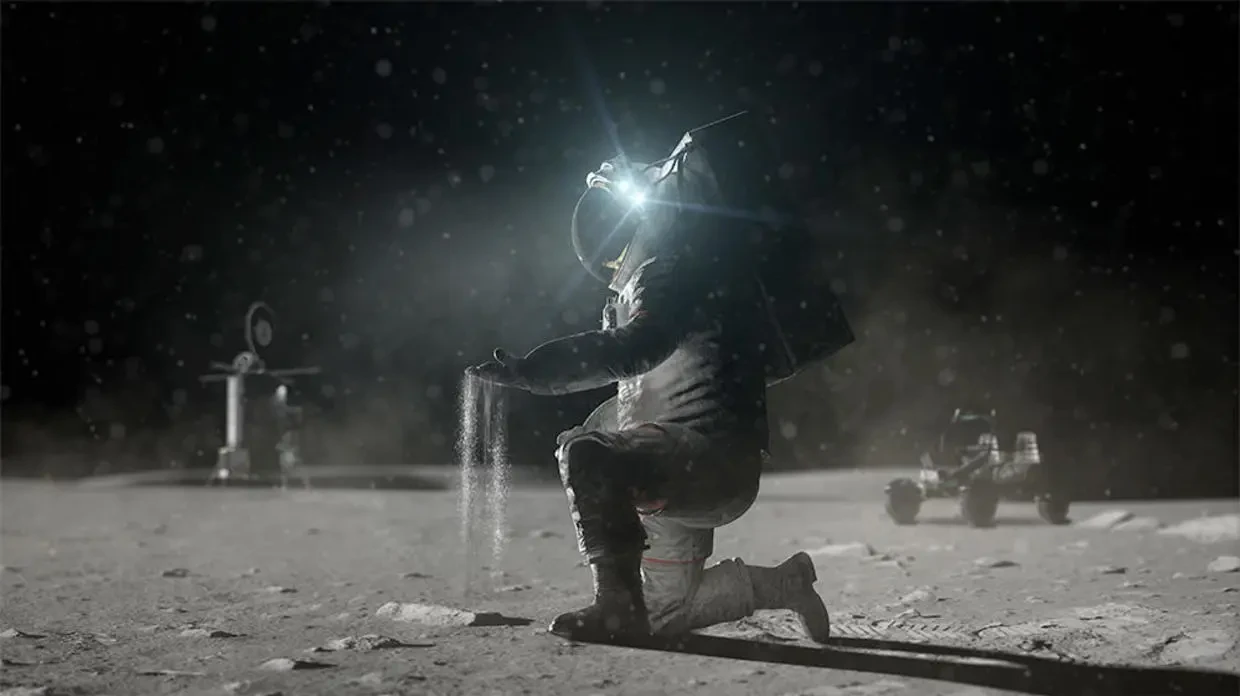
The lunar surface’s unique stability makes it an ideal candidate to preserve ancient spaceborne materials. Devoid of atmospheric effects, wind, or geological recycling, the Moon’s regolith remains largely unchanged for eons. As highlighted by Universe Today, this unaltered dust can accumulate particles arriving from outside the solar system, potentially including technograins.
Embedded in layers of lunar soil, these microscopic pieces might display unusual chemical compositions, structures, or isotope ratios not typically produced by natural astrophysical activity. While no definitive signs have yet been discovered, the Moon’s accessibility makes it one of the best places to validate this concept. Ongoing and future lunar missions coupled with sophisticated lab techniques could help identify such distinctive evidence.
A New Path for Detecting Alien Intelligence
This concept refocuses the traditional extraterrestrial intelligence search from distant stellar signals to long-term surviving physical artifacts. By highlighting enduring technosignatures, such as microscopic debris, this approach extends what scientists consider as evidence of alien technology. Space itself may serve as a dispersal medium for ancient artificial materials.
Planetary bodies like the Moon act as natural collectors of these cosmic relics, where detailed examination of regolith samples might uncover unexpected structures or anomalous chemical signatures. Although the odds of discovery are low, the potential scientific impact of locating direct physical proof of alien technology is immense. Presently theoretical, this idea creates a promising new avenue linking planetary science with the search for extraterrestrial intelligence.
- Categories:
- News








0 comments
Sign in to Comment