
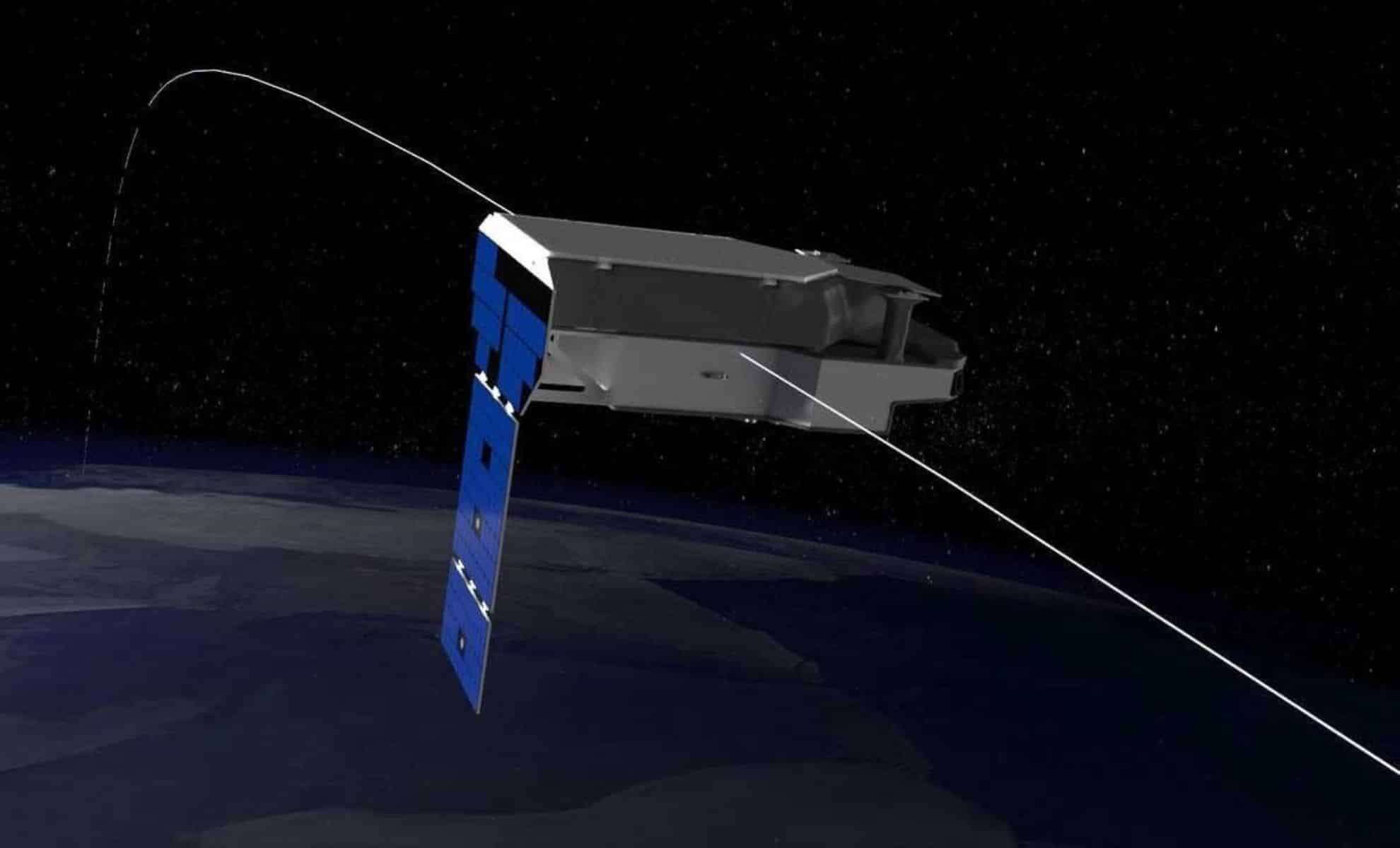
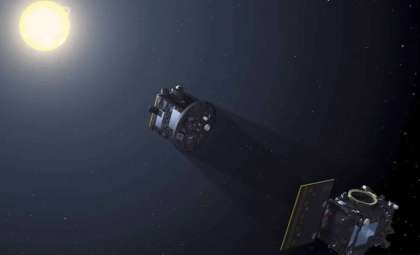
NASA is gearing up to deploy PUNCH (Polarimeter to Unify the Corona and Heliosphere), an innovative mission featuring a fleet of four satellites designed to investigate the solar wind’s 3D structure. Scheduled to launch on February 27 aboard a SpaceX Falcon 9 rocket, the mission aims to bridge two important heliophysics disciplines—solar physics and solar wind studies—to uncover how the Sun's corona evolves into the solar wind.
PUNCH will complement NASA’s Parker Solar Probe, which has been performing close approaches to the Sun's corona. Together, these efforts will study solar phenomena over a vast range of scales, from tiny particles to extensive solar storms. Scientists expect these investigations to shed light on the Sun’s influence across the solar system, enhancing space weather forecasts and possibly leading to surprising discoveries in astronomy.
The Groundbreaking Approach PUNCH Brings to Solar Science
Unlike conventional solar observatories, PUNCH consists of four satellites flying in low Earth orbit that generate a seamless, high-resolution 3D map of the heliosphere. The heliosphere is a vast bubble surrounding the Sun, formed as solar wind particles interact with the interstellar medium.

Utilizing polarimetry, PUNCH will capture sunlight scattered by solar wind particles, allowing scientists to pinpoint their 3D positions. This represents a significant advancement beyond previous missions, which were limited to 2D solar images.
Craig DeForest, PUNCH’s lead investigator, noted: “PUNCH is the first mission crafted to unite two main branches of heliophysics: solar physics and solar wind physics.” The mission aims to solve a fundamental question—how the corona generates the solar wind?
Simulating a Constant Solar Eclipse
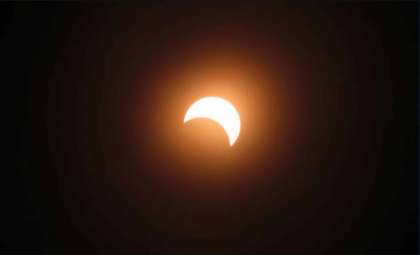
A remarkable feature of PUNCH is its ability to create an artificial solar eclipse, enabling scientists to observe the Sun’s corona continuously—the brilliant halo visible only during natural eclipses. Instead of transient glimpses, PUNCH will provide ongoing, detailed corona imagery as it extends outward.
Nicholeen Viall, a NASA Goddard Space Flight Center scientist on the PUNCH team, highlighted this benefit: “PUNCH will observe a total solar eclipse all the time, and in high resolution. Instead of a few minutes, we’ll have continuous views of coronal dynamics.”
This capability will enable experts to monitor solar storms in real-time, boosting efforts to anticipate space weather phenomena that can disrupt satellites, endanger astronauts, and affect Earth's energy infrastructure.
A Leap Forward in Space Weather Prediction
PUNCH promises to transform space weather forecasting by delivering the first-ever uninterrupted 3D solar wind data. These insights are crucial for understanding solar storms, which can interfere with Earth's magnetic environment, impair satellites, and threaten human space travelers.
Craig DeForest explained: “We anticipate reshaping how space weather is predicted. This mission is the first to enable routine 3D tracking of space weather events throughout the solar system.”
Alongside solar wind studies, PUNCH will assemble the most detailed polarimetric star map of the visible sky, offering vital information for astronomers examining stars and distant cosmic objects.
Charting a New Course in Solar Exploration
Through PUNCH, NASA is boldly moving toward integrating solar physics with space weather science. This mission will deepen our grasp of how the Sun influences the space environment and may spark breakthroughs in astrophysics and planetary science.
“We’re opening new avenues in astronomy by generating the world’s most expansive polarimetric star map covering over three-quarters of the visible sky,” said Craig DeForest, principal investigator at the Southwest Research Institute.
By linking solar surface phenomena with their effects on space weather, PUNCH will deliver continuous, high-resolution 3D views of the solar wind, enhancing predictions of solar storms and their impact on Earth, orbiting satellites, and astronauts far from home.
As launch day nears, the scientific community eagerly awaits the first-ever real-time 3D perspective on the solar wind, poised to unveil the Sun’s long-hidden secrets.
- Categories:
- News





0 comments
Sign in to Comment