
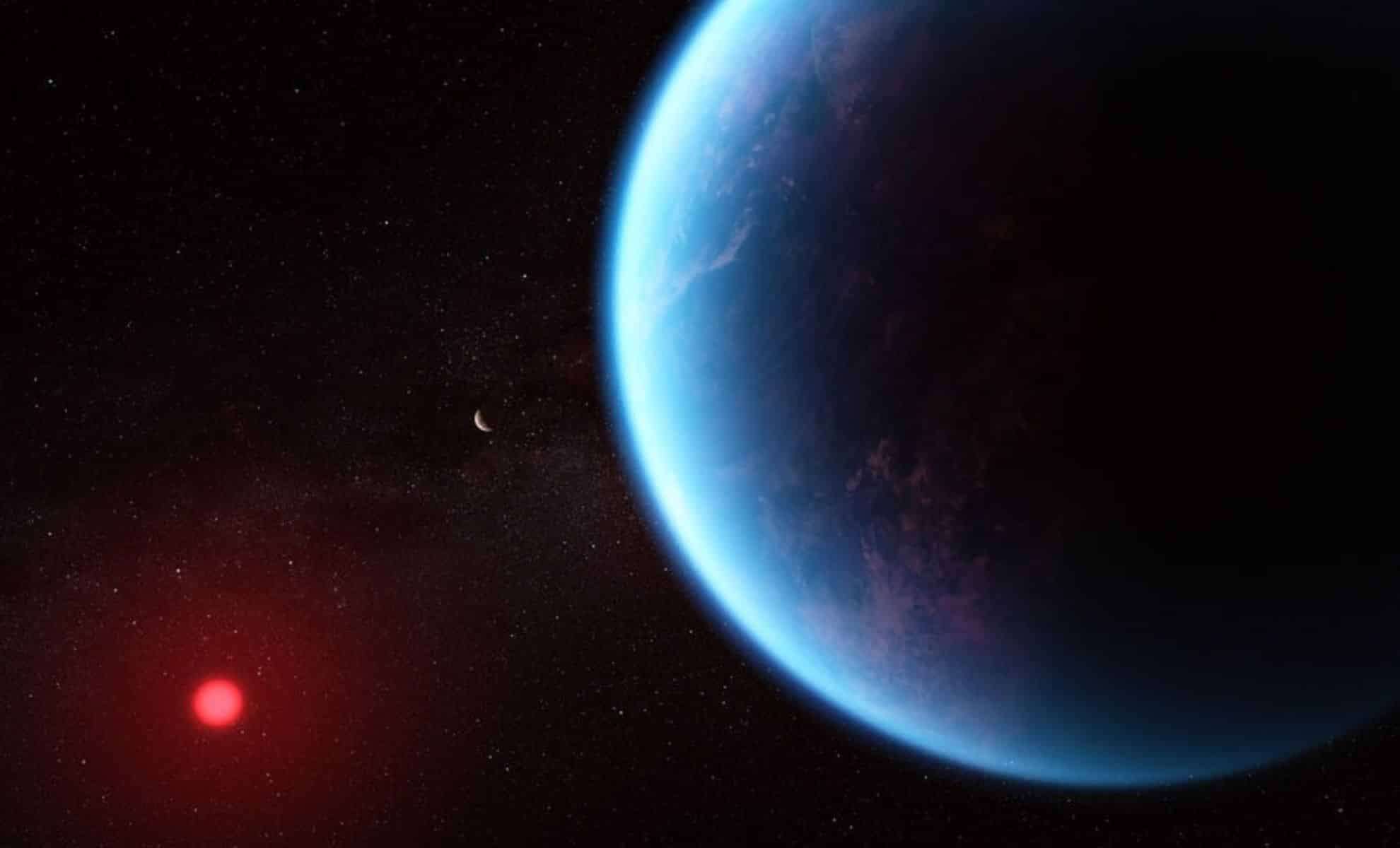
In a notable advancement in the hunt for extraterrestrial life, an international group of scientists has detected unique chemical substances in the atmosphere of a distant exoplanet, which might signal biological processes. This discovery, achieved through observations by the James Webb Space Telescope, focuses on K2-18b, a sub-Neptune-sized planet orbiting a star within the Leo constellation, located roughly 124 light-years from Earth.
Mysterious Chemicals Prompt Intriguing Possibilities
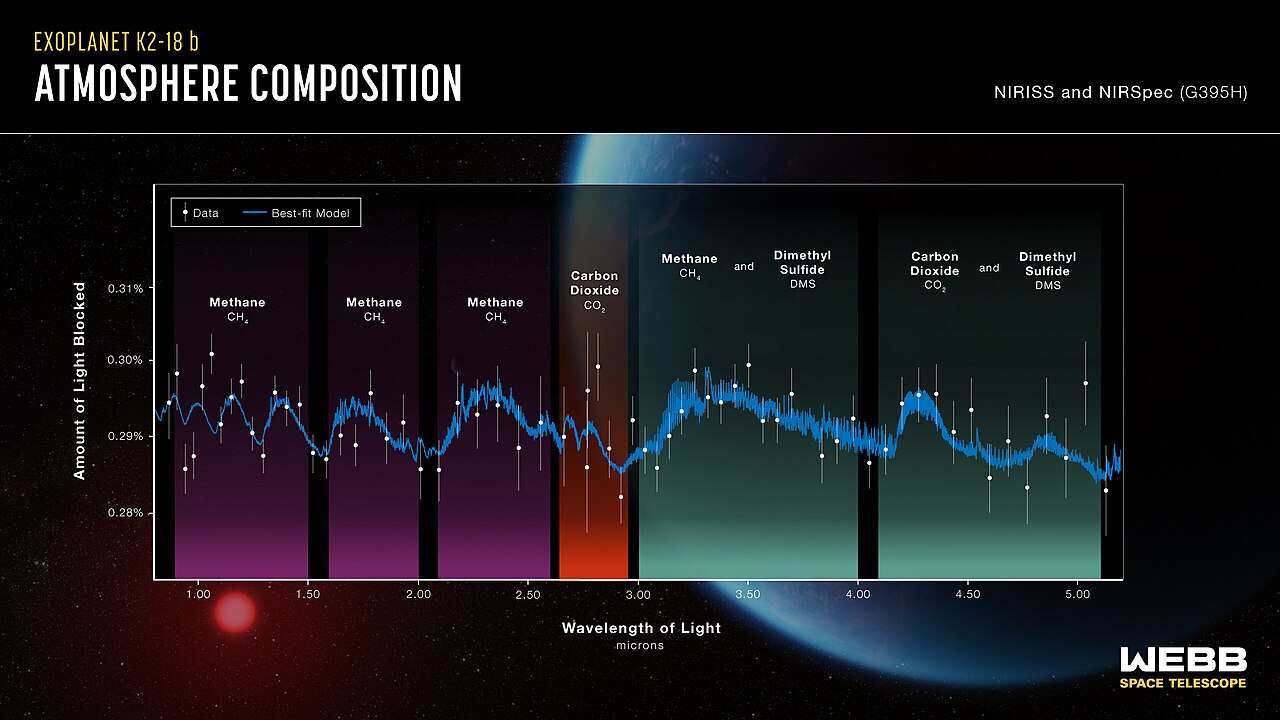
The principal outcome of this cutting-edge research, featured in THE ASTROPHYSICAL JOURNAL LETTERS, is the announcement of detecting dimethyl sulfide (DMS) and dimethyl disulfide (DMDS). On our planet, these compounds are generated exclusively by living beings, mainly produced by ocean-dwelling phytoplankton.
These gases appeared in conjunction with previously observed atmospheric gases like methane and carbon dioxide. Lead scientist Nikku Madhusudhan of the University of Cambridge expressed his enthusiasm at a recent briefing.

“What we are seeing right now are signs that may indicate biological activity outside the solar system,” he explained. “To be honest, I believe this is the closest we’ve come to observing something that we could confidently associate with life.”
Yet, Madhusudhan cautioned the public that additional evidence is essential to solidify these findings. Although the signals are now clearer than before, they have not reached the statistical rigor necessary to confirm a definitive detection.
K2-18b: Oceanic Haven or Scorching World?
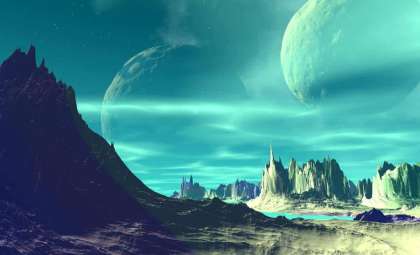
K2-18b has long fascinated astronomers due to its location within the habitable zone, where conditions may allow liquid water to persist. This, combined with its atmospheric characteristics, has led scientists to propose it could be a Hycean world, a theoretical class of planets characterized by hydrogen-rich atmospheres and extensive global oceans.
Nonetheless, skepticism remains among some researchers. Raymond Pierrehumbert, a planetary expert at the University of Oxford, highlighted that K2-18b’s mass—eight times that of Earth—and rapid 33-day orbit might create extreme temperatures hostile to life. “If water exists there, it may resemble a blazing ocean, rendering it inhospitable,” he remarked, also considering the chance of lava oceans on its surface.
Adding to the discourse, Sara Seager, a planetary scientist at the Massachusetts Institute of Technology, reminded that earlier assertions about water vapor on K2-18b were premature, suggesting other bodies in our solar system—like Mars, Venus, or moons such as Enceladus—currently provide more promising locations to search for life.
Questions Persist, But Further Observations Could Provide Answers
New measurements taken by James Webb utilized wavelengths previously unexplored, enhancing the visibility of potential biosignatures. Despite this, the detected concentrations of DMS are thousands of times greater than what is found on Earth—an anomaly that lends some weight to biological theories but also indicates unidentified chemical reactions may be involved.
Emerging research reveals that dimethyl sulfide can originate from abiotic sources like comets, complicating efforts to associate these chemicals unequivocally with life. The scientific community remains divided; the evidence is intriguing but falls short of definitive proof.
Madhusudhan noted that securing an additional 16 to 24 hours of telescope observation might clarify the situation. Such data could either confirm or dismiss the presence of these putative biosignatures, offering a clearer perspective on the prospect of life beyond our solar system.






0 comments
Sign in to Comment