

New research highlights distinctive industrial gases as promising indicators of alien civilizations on distant worlds.
These findings offer fresh avenues in the quest for extraterrestrial intelligence and deepen insights into how life might develop beyond Earth.
Advancing the Search for Alien Civilizations
Scientists at the University of California, Riverside (UCR) have pinpointed certain greenhouse gases—including methane, ethane, propane, along with nitrogen and fluorine-based compounds—that could serve as markers for technologically advanced life on exoplanets.

On Earth, such gases often originate from industrial activity, which suggests that their identification in exoplanet atmospheres could indicate artificial sources. Astrobiologist Edward Schwieterman from UCR explained, “While on Earth these gases contribute to warming, an alien civilization might intentionally use them to mitigate freezing conditions or terraform inhospitable planets, as proposed for Mars by humans.”
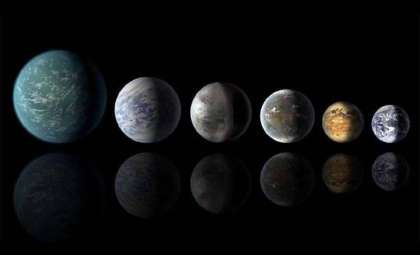
Employing the Planetary Spectrum Generator (PSG), researchers simulated these industrial emissions on a theoretical world orbiting within the TRAPPIST-1 system—home to seven rocky planets and a key target in the quest for extraterrestrial life. Results indicated that NASA’s James Webb Space Telescope (JWST) could identify these gases, similar to its detection capabilities for Earth’s ozone. Remarkably, JWST might detect these markers within just five planetary transits, highlighting its power to uncover alien technosignatures.
Scientific Foundations and Consequences
Central to this breakthrough is the durability of these greenhouse gases in planetary atmospheres, which may endure for as long as 50,000 years. This longevity enhances their visibility and reduces the need for constant replenishment. As Schwieterman noted, “Such persistence ensures a stable climate and acts as a strong clue to ongoing industrial processes.”
The extended atmospheric lifetime of these compounds means their presence likely signals active technology-driven modifications, providing compelling evidence for advanced extraterrestrial life.
Focusing on the accessible TRAPPIST-1 system and leveraging simulations, the study lays groundwork for targeted JWST observations in the near future.
Daniel Angerhausen from the Swiss Federal Institute of Technology emphasized the study’s impact: “Our work highlights the unprecedented reach of modern telescopes. Today’s generation is uniquely positioned to explore signs of life and intelligence within our galactic neighborhood.”
Exploring New Frontiers with Space Telescopes
This discovery underscores the extraordinary promise of existing and next-gen space observatories to detect indications of extraterrestrial life. Schwieterman explained that hunting for these technosignatures can be integrated seamlessly with current planet characterization missions: “Looking for these signals doesn’t require additional resources if the telescope is already examining the planet. Finding such signs would revolutionize our understanding.”
Beyond detecting alien life, these insights deepen our grasp of how civilizations might engineer their environments and the technological feats necessary to do so. This could guide future endeavors in planetary science, exploration, and even terraforming.
The revelation of novel detection strategies for alien life involving industrial atmospheric pollutants marks a pivotal advancement in astrobiology and SETI efforts. Equipped with the James Webb Space Telescope and other cutting-edge instruments, astronomers stand on the brink of potentially confirming life beyond Earth, expanding the horizons of cosmic discovery.
- Categories:
- News ,
- Space ,
- Extraterrestrial life ,
- Evolution









0 comments
Sign in to Comment