
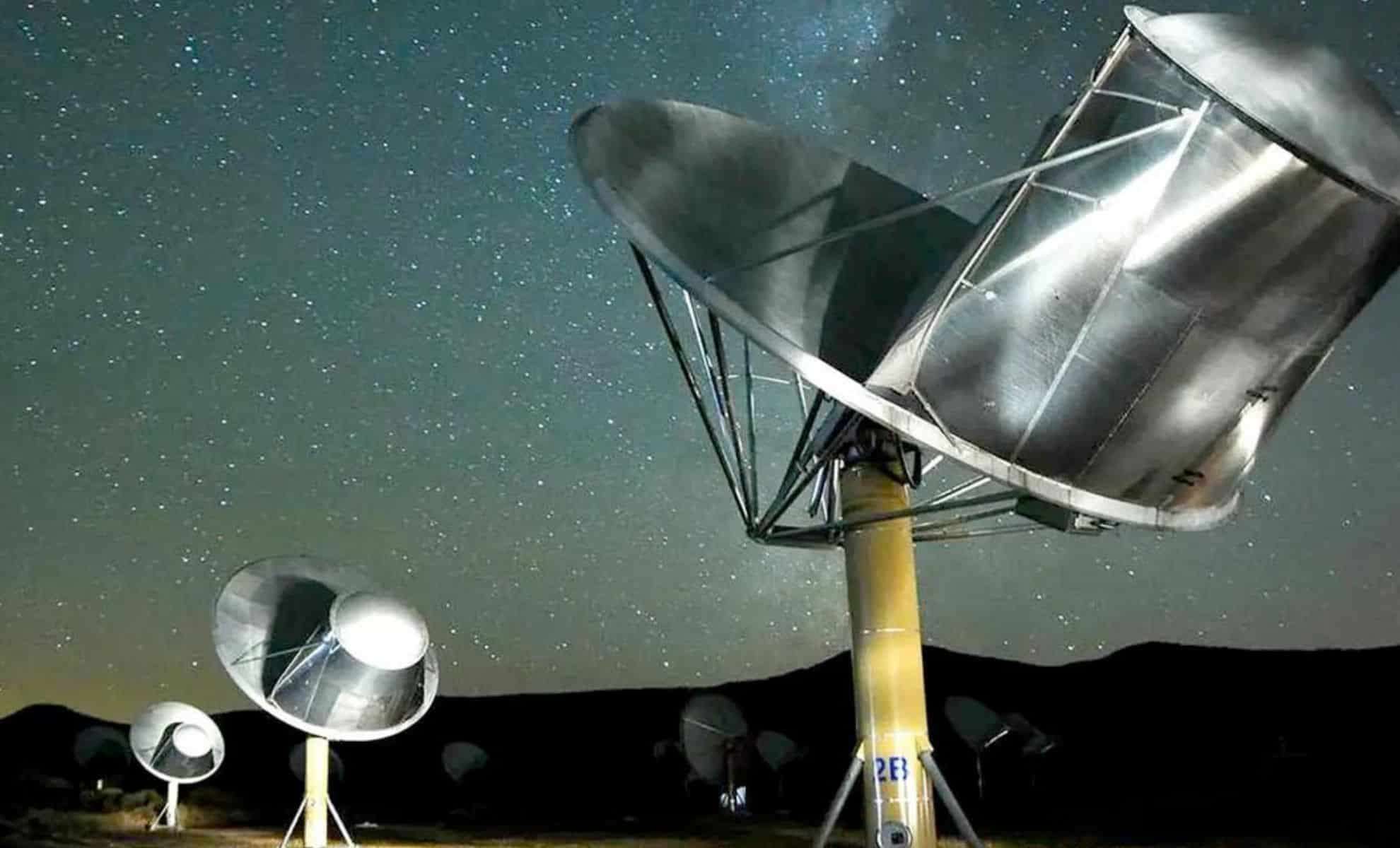
Researchers from the SETI Institute have expanded their hunt for extraterrestrial intelligence by scanning nearly 3,000 galaxies for evidence of highly developed civilizations.
By employing the Murchison Widefield Array (MWA) located in Australia, Dr. Chenoa Tremblay and Professor Steven Tingay from Curtin University led one of the earliest searches beyond our galaxy in the low-frequency radio range of 80 to 300 MHz.
This novel technique enables scientists to explore regions well past the Milky Way, targeting potential technosignatures—signals produced by advanced technologies indicating alien activity.

Understanding Galactic Civilizations through the Kardashev Scale
The investigation takes inspiration from the Kardashev scale, proposed in 1964 by Soviet astronomer Nikolai Kardashev. This scale classifies civilizations by the amount of energy they manage: a Type 1 controls a planet’s resources, Type 2 harnesses energy from a star, and Type 3 exploits power from an entire galaxy. Identifying transmissions from such civilizations would require detecting signals powered by extensive stellar systems, potentially visible across massive cosmic distances.
Dr. Tremblay highlighted the significance of these advanced entities: “Detecting such signals implies technologies far beyond what humanity currently possesses.” The target list included 1,317 galaxies with well-established distances, allowing the team to estimate the transmitting capabilities of any possible civilizations. Although no artificial emissions were discovered, the study refined future detection strategies and expectations.
Advantages of Investigating Low-frequency Bands
Historically, SETI efforts favored higher radio frequencies, like the 1,420 MHz hydrogen line. However, this new research demonstrates the untapped potential of low-frequency observations, a relatively untrodden path in the search for alien signals. According to Tremblay, “The MWA’s ability to cover large sky areas at these frequencies makes it a powerful instrument, and the constraints we’ve developed will help direct future research.”
Expanding the frequency scope increases the likelihood of uncovering atypical or unforeseen signal patterns. As noted by both Tremblay and Tingay, strong terrestrial transmitters often utilize low-frequency bands, suggesting that extraterrestrial intelligences might employ similar communication strategies.

Looking Ahead: Challenges and Future Directions in SETI
Though this search did not uncover extraterrestrial signals, it lays crucial groundwork for deeper future expeditions. “It’s a resource-intensive process, but without persistent effort, discovery remains out of reach,” remarked Tremblay. The team aims to build on the current study’s insights by enhancing their methodologies and potentially widening both the number of galaxies examined and the frequency bands surveyed.
Exploring extragalactic technosignatures represents a bold expansion of SETI’s horizons, stretching the limits of present-day technology and our cosmic understanding. Each investigation enriches our collective knowledge, pushing humanity closer to solving the profound mystery of whether we are alone in the universe.
Dr. Tremblay and Professor Tingay‘s findings appear in The Astrophysical Journal, providing essential benchmarks for upcoming low-frequency searches for intelligent life.
- Categories:
- News ,
- Space ,
- Extraterrestrial life







0 comments
Sign in to Comment