
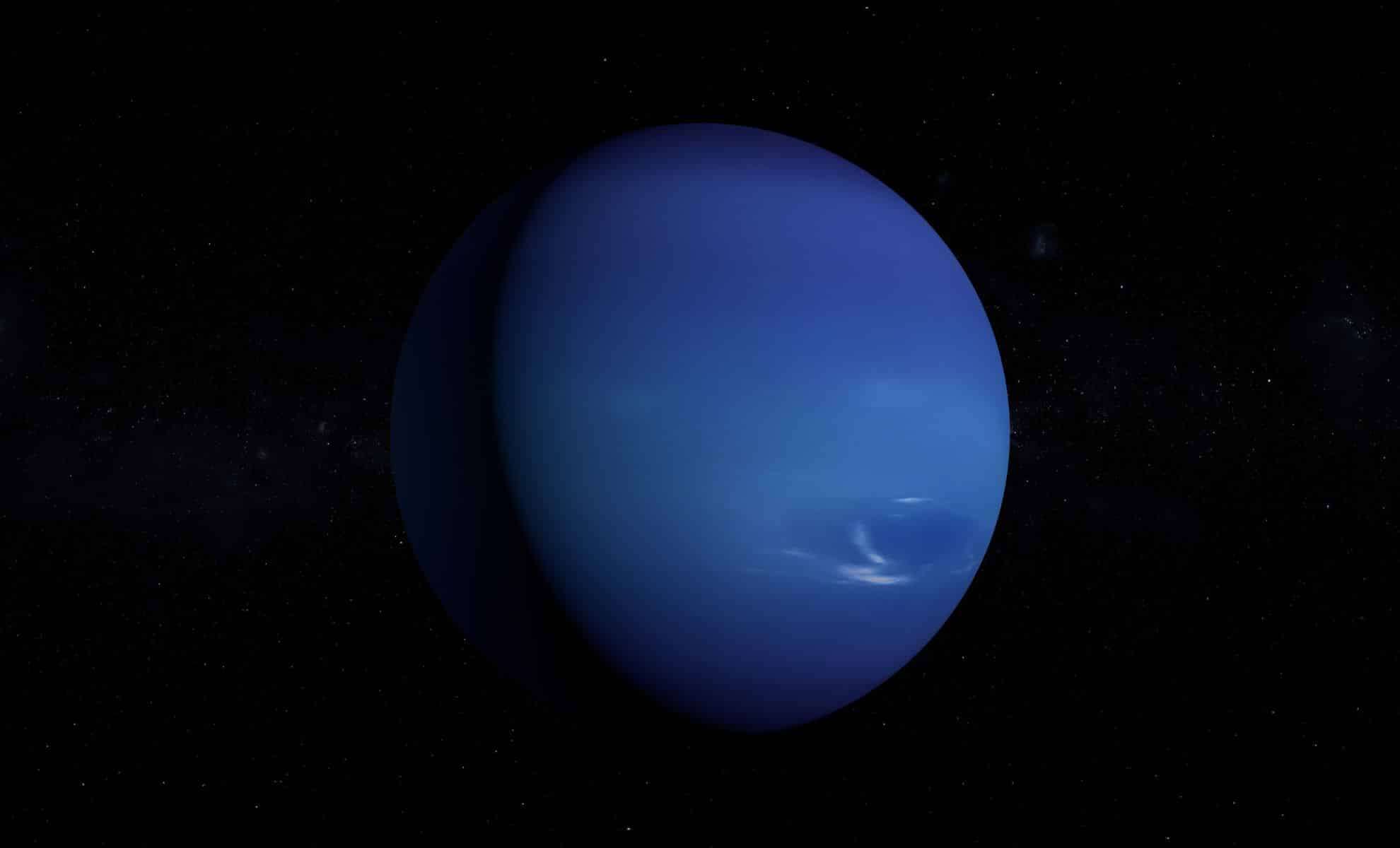
Although Pluto's planetary status was downgraded to that of a dwarf planet, emerging research points toward the existence of an elusive ninth planet lurking in the far reaches of our solar system, beyond the orbit of Neptune. This theory, originally proposed in a landmark 2016 study by Konstantin Batygin and Mike Brown published in The Astronomical Journal, remains one of the most intriguing and debated topics in planetary astronomy. A recent feature by Yahoo News revisits this ongoing investigation, highlighting both growing support and persistent doubts surrounding the Planet Nine concept.
Unusual Gravitational Effects in the Kuiper Belt
The foundation of the Planet Nine theory comes from an unexpected orbital alignment discovered among six Kuiper Belt Objects (KBOs) — icy bodies orbiting the Sun past Neptune. These KBOs display highly elongated orbits clustered tightly in a localized region of space and tilted significantly away from the typical plane of the solar system. The odds of this alignment happening by coincidence were estimated to be a mere 0.007%, or roughly 1 in 15,000, leading Batygin and Brown to propose a hidden planetary mass influencing their paths.
Once believed to be a sparse region, the Kuiper Belt has since revealed itself to be densely populated with complex orbital dynamics. The six highlighted objects, including famed KBOs such as Sedna and 2012 VP113, have extremely distant closest approaches to the Sun and remain largely unaffected by Neptune’s gravity. Their shared orbital traits, especially in terms of argument of perihelion and longitude of ascending node, point to a shepherding force — potentially a sizable planet, approximated at 5 to 10 times Earth's mass, orbiting well beyond Pluto.

Modeling the Size and Path of Planet Nine
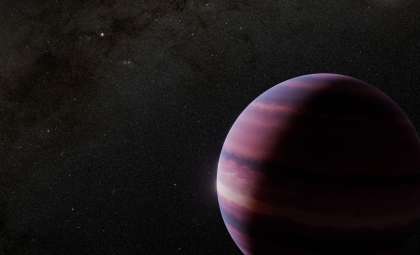
To explain these orbital groupings, Batygin and Brown ran detailed computer simulations to estimate the characteristics of the proposed planet. Results indicate that it would likely be a gas or ice giant, smaller than Uranus or Neptune but still several times Earth's mass. Its predicted distance is between 400 and 800 astronomical units (AU) from the Sun, with an orbital period spanning between 10,000 and 20,000 years.
Notably, the planet's orbit is anti-aligned relative to the clustered KBOs, meaning it reaches its closest point to the Sun on the opposite side. This special alignment acts like a gravitational anchor, preserving the unusual orbital arrangement of these bodies over millions of years. The complex gravitational interplay laid out in The Astronomical Journal suggests that only a planet-sized object can induce such patterns in the outer solar system.
Should Planet Nine exist, it would have profound implications for our understanding of planetary genesis and solar system development. Its size and remote orbit hint that it may have initially formed much closer to the Sun before being ejected into its distant stable path during early planetary migrations.
Controversy Within the Astronomy Field
Despite the attraction of the Planet Nine hypothesis, some astronomers remain skeptical. Critics argue that the apparent orbital alignment of the KBOs could be caused by observational biases — our current surveys focus more on certain sky regions, possibly skewing the discovery of distant objects. Uneven observation coverage, especially in less studied high-inclination or faint regions, makes it difficult to conclusively rule out statistical anomalies.
One notable challenge has been the detection of the trans-Neptunian object (TNO) Ammonite, whose orbit does not fit neatly within Planet Nine’s predicted gravitational effects. Recent TNO finds have also complicated the model but haven’t completely disproved it. Some researchers propose that the clustered orbits can be explained by the combined gravitational influences of numerous smaller bodies—a phenomenon called “self-gravity”—rather than a single massive planet.
Nevertheless, the topic remains unsettled. Independent modeling efforts have yielded mixed outcomes: some support Batygin and Brown's results, while others suggest a lower probability for the planet’s existence. A 2023 statistical analysis mentioned on Yahoo News estimates the likelihood at around 40%, though this figure is still debated. The question stands as one of the most tantalizing mysteries in planetary science.
The Enigmatic Quest for an Unseen World
The biggest hurdle for Planet Nine proponents is the fact that it has never been directly observed. Its extreme distance means it shines very faintly, making detection difficult even with powerful telescopes such as Subaru and Pan-STARRS. Upcoming observatories, like the Vera C. Rubin Observatory, may offer the sensitivity necessary to detect such a dim, remote planet.
Given its remoteness, a space mission would require over a century to reach its orbit using current propulsion technology, necessitating astronomers to depend heavily on extensive sky surveys, infrared observations, and refined orbital simulations to home in on its location. Batygin and Brown have publicly acknowledged that its exact position along its vast orbital path is still unknown—a cosmic game of hide-and-seek likely to continue for many years.
Despite the uncertainty, fascination remains strong. Discovering Planet Nine would not only restore the solar system’s planetary count to nine but also represent the first instance where a planet was predicted on the basis of gravitational effects before direct visualization—echoing the 19th-century discovery of Neptune driven by orbital perturbations.
A Puzzle That Continues to Intrigue
Nearly a decade after its initial proposal, the Planet Nine hypothesis lives on as a dynamic story, evolving with each new astronomical discovery and model advancement. The scientific community’s cautious approach, emphasizing rigorous evidence and healthy skepticism, exemplifies modern scientific inquiry into one of the solar system’s most captivating enigmas.
This theory serves as a powerful reminder that our cosmic surroundings might still harbor unknown wonders. It highlights the vast unexplored regions beyond Neptune and inspires continued exploration. Regardless of whether Planet Nine is found, the ongoing research is reshaping how we comprehend the solar system’s structure and instills wonder about the mysteries that await beyond.
- Categories:
- News





0 comments
Sign in to Comment