
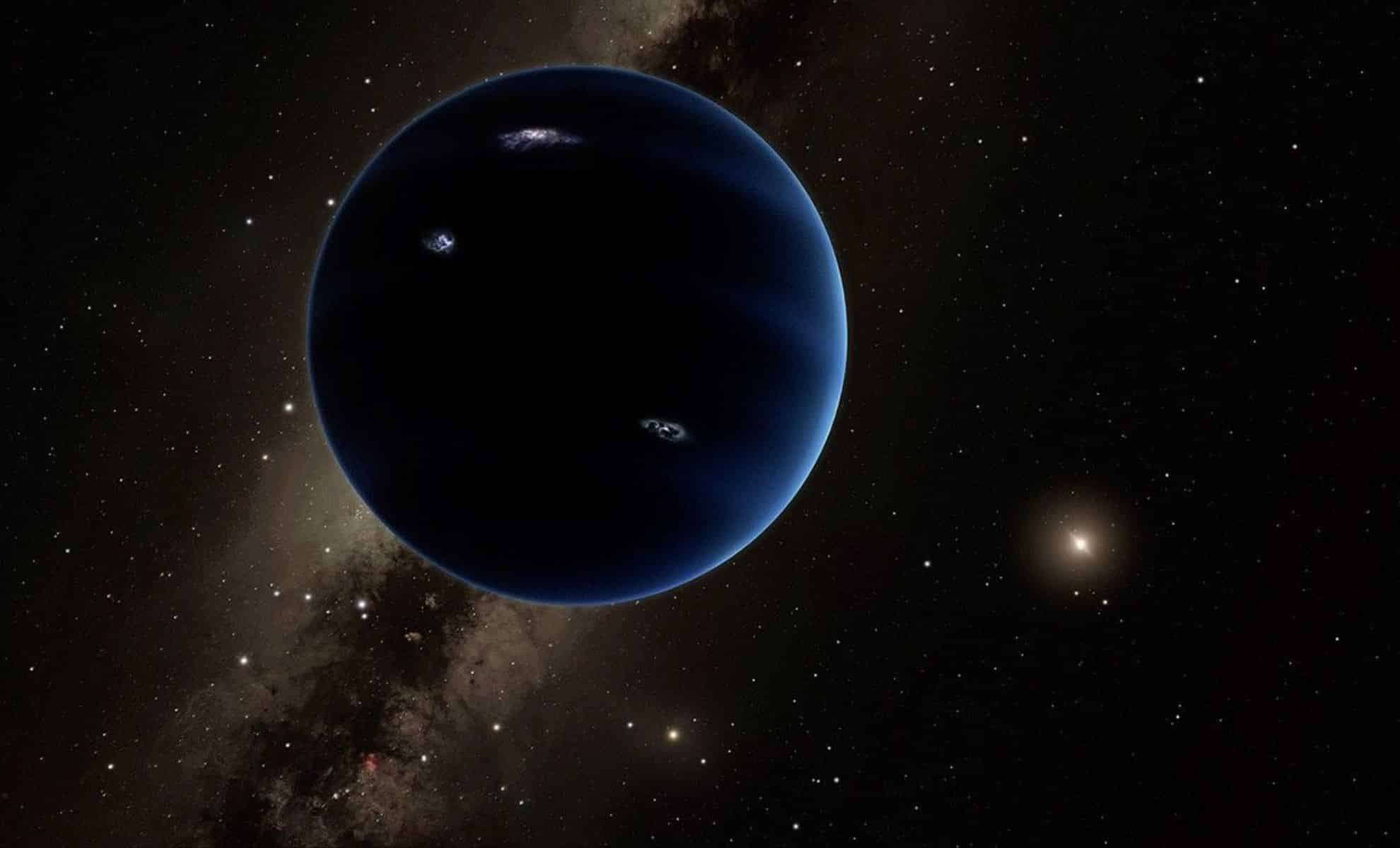
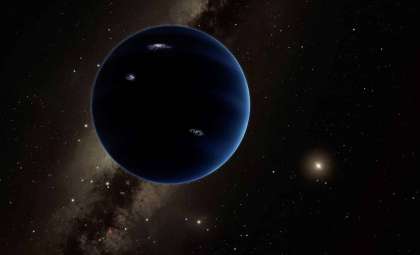
A recent advancement in planetary science has raised the probability of a ninth planet—commonly called Planet Nine or Planet X—existing within our solar system to 40%. This elusive celestial body has long been suspected due to unusual orbital patterns observed among objects in the distant Kuiper Belt. The findings, detailed in a Nature Astronomy paper, propose that wide-orbit planets can naturally arise from the processes that shape planetary systems. Conducted by scientists at Rice University and the Planetary Science Institute, the research sheds new light on the solar system’s layout and may profoundly influence our understanding of how planets develop throughout the galaxy.
Study Highlights 40% Probability for Planet Nine’s Presence
Stimulating renewed interest in the potential existence of Planet Nine, the study estimated a 40% chance that a distant, undiscovered planet exists beyond Neptune’s orbit. This conclusion stems from extensive computer models suggesting that planets occupying very distant orbits might be common outcomes of planetary formation. André Izidoro, the project’s lead investigator, explained that these planets could result from chaotic gravitational interactions during the formation stage, where some planets are scattered into far-flung orbits much further away from the Sun than previously considered.
The implications of this research challenge traditional views on how the solar system formed and evolved. By exploring the gravitational interplay among emerging planets, the study reinforces earlier theories that Planet Nine might owe its existence to such dynamics. While astronomers have speculated about a hidden massive planet for decades, these results present stronger evidence supporting the possibility of its reality.

Planets Engaged in a Chaotic Gravitational Ballet
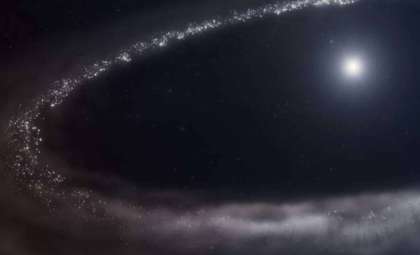
The creation of planets unfolds amid complex gravitational forces and turbulent cosmic interactions. During the solar system’s infancy, the young Sun was surrounded by a thick disk of gas and dust known as the protoplanetary disk. Within this environment, newborn planets competed for space, and dynamic gravitational interplay sometimes caused some to be pushed into very distant orbits.
"It’s much like watching pinballs bouncing around a cosmic arcade," said André Izidoro, assistant professor at Rice University’s Earth, environmental, and planetary sciences department, illustrating the randomness at play. These gravitational shoves among giant planets can fling some members into expansive orbits. If these planets avoid ejection from the solar system entirely, they might settle into stable but remote trajectories, consistent with what is hypothesized for Planet Nine.
The orbital paths of these distant worlds depend on a fine-tuned gravitational balance. Under certain conditions, some of these planets could become trapped in far-flung orbits that explain puzzling observations in the Kuiper Belt region. Izidoro notes, "There’s as much as a 40% likelihood that a Planet Nine-type object could have been caught in such an orbit during the solar system’s formative period."
The Kuiper Belt: Key to Finding Planet Nine
Efforts to locate Planet Nine have largely focused on studying the Kuiper Belt—a vast region beyond Neptune packed with icy bodies, dwarf planets, and comets. Within this zone, astronomers have detected unusual orbital alignments among several objects, which may be shaped by the gravitational pull of a massive, unseen planet hiding beyond our current frontier.
Notable Kuiper Belt members, like dwarf planet Eris, follow atypical orbital paths that might indicate the presence of a large, distant world shepherding smaller objects. The gravitational influence of such a planet could explain many of the observed anomalies, fueling ongoing speculation about Planet Nine’s existence. If present, this world would likely reside far beyond the orbits of known planets.
Upcoming astronomical surveys, particularly those conducted by the Vera C. Rubin Observatory slated to begin operations in late 2025, promise to revolutionize the search for Planet Nine. Equipped with the most advanced camera of its kind, this observatory is expected to detect or definitively rule out the existence of this distant planet. The new research has already helped refine search strategies and improved our understanding of the data that these next-generation observations will yield.
- Categories:
- News



0 comments
Sign in to Comment