
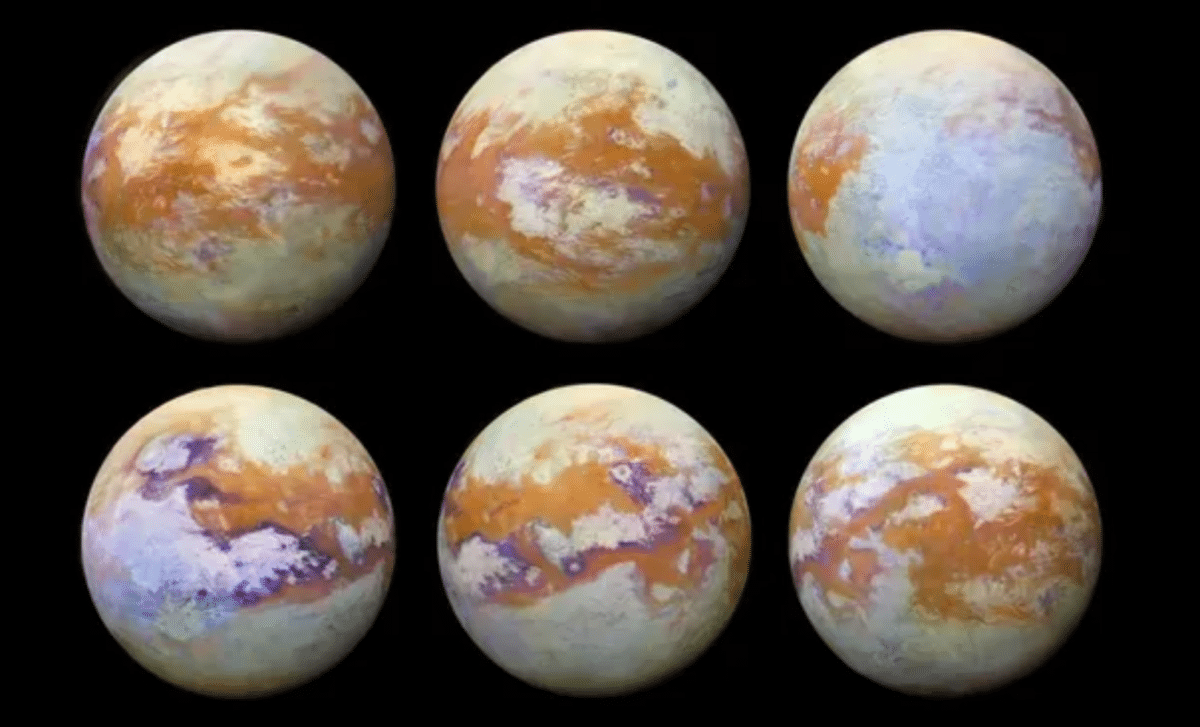
Titan, Saturn’s largest moon, continues to captivate researchers interested in extraterrestrial life. Recent research challenges previous assumptions of a vast sub-ice ocean, proposing instead that Titan’s interior contains networks of slushy channels and meltwater reservoirs. This novel understanding, published in Nature, reshapes ideas about the moon’s potential to support life.
Exploring Titan’s Interior: A Shifting View on Its Habitability
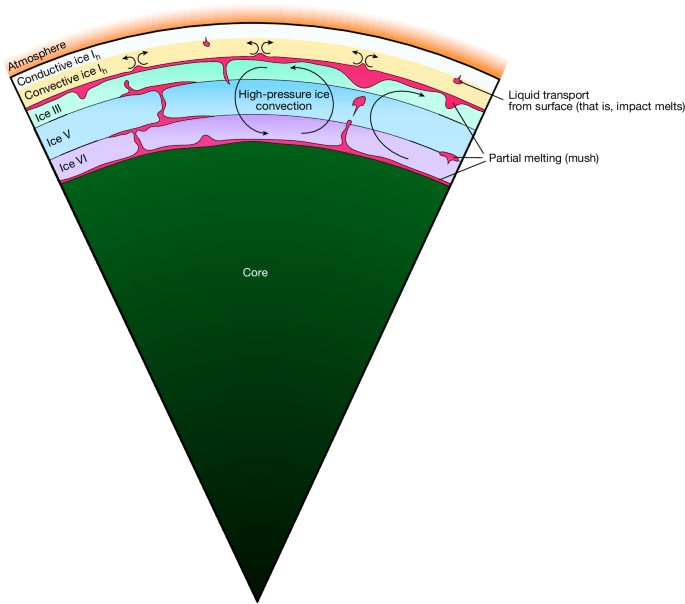
For years, this mysterious moon orbiting Saturn has sparked intense scientific interest due to its dense, hazy atmosphere and intriguing landscape. Initial models suggested a deep, liquid water ocean under its frozen shell, offering a possible habitat for life. However, fresh evidence now hints that Titan’s interior is marked by partially melted zones and interconnected slushy passages, resembling the partially frozen Arctic sea ice on Earth.
These insights derive from extensive observations made by NASA’s Cassini mission, which monitored Titan’s atmospheric and surface characteristics. Baptiste Journaux, assistant professor at the University of Washington and a study co-author, remarked,

“Instead of an open ocean like we have here on Earth, we’re probably looking at something more like Arctic sea ice or aquifers, which has implications for what type of life we might find, [and] also the availability of nutrients, energy and so on.”
These revelations suggest Titan’s subsurface presents a far more intricate environment than a simple liquid ocean. Rather than vast expanses of water, its underground layers may contain frozen structures interspersed with liquid pockets, creating diverse niches where life might arise.
Discovering Unexpected Internal Energy Dissipation on Titan
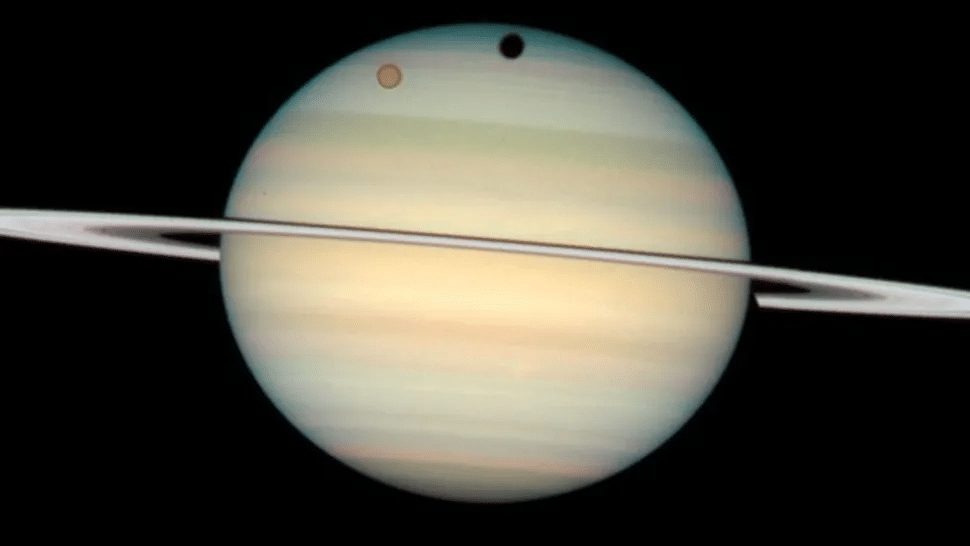
A remarkable element of the recent findings reported in Nature is the presence of intense energy loss within Titan’s interior. Researchers observed Titan’s shape began to deform just 15 hours after Saturn’s strongest gravitational influence, indicating a delayed response. This unexpected behavior challenged previous structural models. Lead author Flavio Petricca from NASA’s Jet Propulsion Laboratory explained,
“Nobody was expecting very strong energy dissipation inside Titan. That was the smoking gun indicating that Titan’s interior is different from what was inferred from previous analyses.”
This discovery provides crucial clues about the moon’s internal dynamics, implying more complex conditions that could impact its capacity to support life. The ways Titan’s interior shifts and moves under Saturn’s gravitational pull suggest an environment unlike anything known before.
Rethinking Alien Life: The Slushy Layers of Titan
Previously, scientists assumed Titan housed a large subsurface ocean that could foster life, supported by data showing Titan’s icy shell flexing from Saturn’s gravitational tug. However, the current study paints a different scenario: Titan’s outer layers may consist of thick slushy ice similar to Earth’s polar shelves, presenting an alternative habitat for life.
This revised model holds exciting implications for the search for life within Titan’s depths. Even without a liquid ocean, the slushy environment might still nurture life forms adapted to extreme conditions. Baptiste Journaux notes,
“The watery layer on Titan is so thick, the pressure is so immense, that the physics of water changes. Water and ice behave in a different way than sea water here on Earth.”
Such altered physical properties could lead to life emerging in ways unfamiliar to terrestrial biology, opening new frontiers for science.
Implications of a Slushy Subsurface for Life on Titan
Though the absence of a vast ocean might seem discouraging, it could actually broaden the scope of potential habitats. The team suggests that smaller, localized reservoirs of liquid water embedded in the icy matrix could provide stable, nutrient-rich oases. These concentrated environments might facilitate biochemical activity more effectively than a widespread ocean.
Additionally, Titan’s subsurface may harbor an array of organic compounds essential to life’s chemistry. When confined within slushy enclaves, these molecules could create diverse and fertile habitats. According to the study, Titan’s unique ice-water interplay offers a compelling platform for life forms distinct from Earth’s, yet equally viable in their own right.
- Categories:
- Astronomy




0 comments
Sign in to Comment